
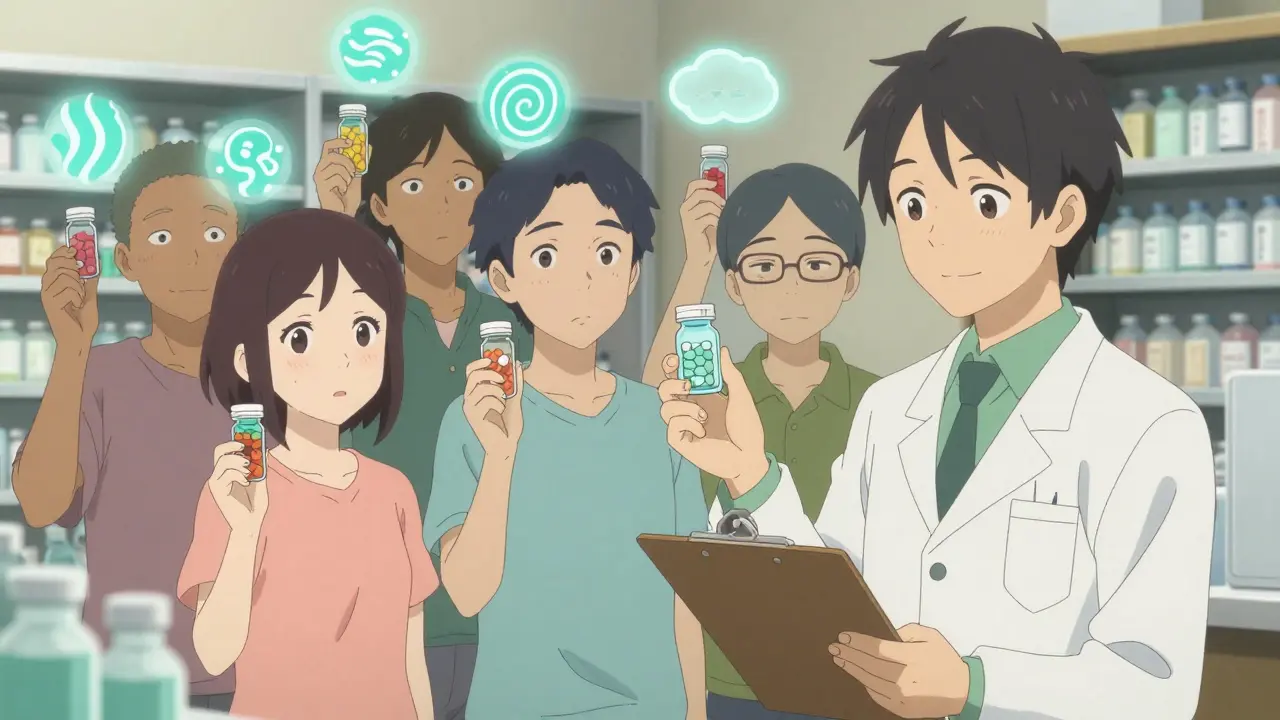
Let’s say you’ve been prescribed a medication for high blood pressure, diabetes, or depression. You know it’s important. You even meant to take it every day. But then came the side effects - the dizziness, the nausea, the weird sleep schedule, or the feeling that you’re just not yourself anymore. So you skip a dose. Then another. Before you know it, you’re not taking it at all. And you’re not alone. Medication adherence isn’t just about forgetting your pills. It’s often about the side effects you didn’t expect - or weren’t told enough about.
Why People Stop Taking Their Medication
The numbers don’t lie. Around half of all people taking long-term medications don’t take them as prescribed. That’s not because they’re careless. It’s because they’re overwhelmed. A 2025 report from ISPOR found that nonadherence stays stubbornly stuck at 30%-50%, even after decades of public health campaigns. And side effects? They’re one of the biggest reasons why.Many patients don’t realize how common this is. They think they’re the only ones struggling. But research shows that after starting a new drug, 1 in 5 people never even fill their first prescription. Of those who do, nearly half stop within the first few months - often because of side effects. For mental health meds, the drop-off is even steeper. One study found patients with depression were twice as likely to skip their meds compared to those without symptoms. Why? Because the side effects felt worse than the condition.
It’s not just about feeling bad. It’s about fear. Fear of interactions. Fear of long-term damage. Fear that the medicine is changing who they are. And if no one asks - if the doctor doesn’t follow up, if the pharmacist doesn’t call - patients assume it’s normal. They assume they’re just "not a medication person." But the truth? It’s not about personality. It’s about unmanaged side effects.
The Hidden Cost of Skipping Doses
When you skip medication, it doesn’t just hurt you. It costs the whole system.In the U.S., nonadherence causes up to 125,000 preventable deaths each year. That’s more than traffic accidents. It also leads to 25% of all hospitalizations. For people with chronic conditions like heart disease or diabetes, missing doses can trigger a cascade: high blood sugar, unstable blood pressure, worsening depression - all leading to ER visits, ICU stays, and longer recovery times.
The financial toll? Up to $44,000 per person annually in avoidable costs. That includes hospital bills, emergency care, and lost productivity. But here’s the kicker: when patients stick to their meds, pharmacists can help them save an average of $1,200 a year. That’s not just money. It’s fewer hospital trips, fewer missed workdays, and more stable health.
And it’s not just about physical health. For mental health meds, skipping doses doesn’t just make symptoms return - it makes them worse. Studies show that stopping antidepressants suddenly can trigger rebound anxiety, mood crashes, or even suicidal thoughts. Yet many patients stop because of weight gain, sexual side effects, or feeling "numb." They don’t know how to talk about it. Or worse - they think their doctor doesn’t care.
Side Effects Aren’t Always What You Think
Not all side effects are listed on the pill bottle. Some are subtle. Some are delayed. Some are emotional.Take statins for cholesterol. The most common side effect? Muscle pain. But many patients don’t connect it to the drug. They blame aging. Or gym workouts. So they stop taking it - even though their heart risk is still high.
Or consider antipsychotics. Weight gain, fatigue, tremors - these are well-known. But what about the shame? Patients report feeling like a "medical failure" because they can’t handle the side effects. They don’t tell their doctor. They stop cold turkey. And then they spiral.
Even small side effects matter. A dry mouth. Trouble sleeping. A weird taste. If you’ve been on the same med for months and suddenly feel off, you might think it’s stress. Or bad luck. But it could be your body adjusting - or the drug building up. The key? Talk to someone before you quit.

What Actually Works to Fix This
Most advice out there is useless. "Set a phone alarm." "Use a pill box." Those help - but only if the side effects aren’t driving you away.The real solution? Personalized support. And the best place to start? Your pharmacist.
Pharmacists are the most overlooked resource in healthcare. They’re not just the people who hand out pills. They’re trained to spot side effects, adjust timing, suggest alternatives, and even help you talk to your doctor. A 2025 study showed that pharmacist-led interventions increased adherence by up to 40%. Face-to-face consultations? Success rates hit 83%. Phone calls? Only 38%. That’s a huge gap.
Here’s what works:
- Side effect mapping: Your pharmacist asks you: "What’s changed since you started this med?" Not just "Do you have nausea?" but "Have you noticed your sleep is worse? Your energy dropping?" They listen. Not just to symptoms - to your life.
- Dosing tweaks: Maybe you’re taking a med at night that causes drowsiness. Switching to morning could fix it. Or splitting a dose. Or switching to a long-acting version.
- Alternative options: Not every drug in a class works the same. If one causes headaches, another might not. Your pharmacist knows which ones have lower rates of specific side effects.
- Cost transparency: Sometimes, people stop because they can’t afford it. Pharmacists can find coupons, patient assistance programs, or generic swaps that cut costs by 70%.
- Simple regimens: Fewer pills per day = better adherence. If you’re taking 6 meds at 3 different times, ask if any can be combined or eliminated.
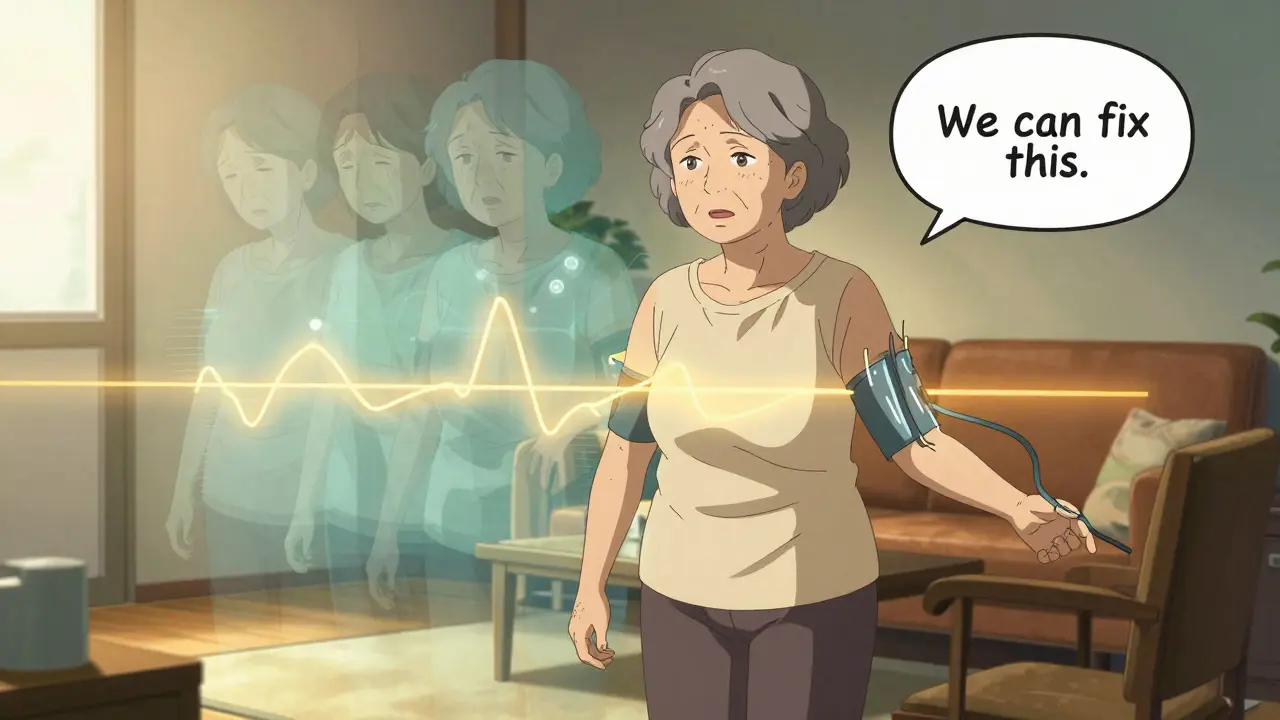
One real example: A 68-year-old woman in Sydney was prescribed a new blood pressure med. She got dizzy every afternoon. She thought it was normal. She stopped taking it. Her BP spiked. Her doctor blamed her for "noncompliance." But when she went to her local pharmacist, they discovered the med was causing orthostatic hypotension - a drop in blood pressure when standing. The pharmacist switched her to a different class, adjusted the dose, and taught her to stand up slowly. Within two weeks, she was back on track. No more dizziness. No more guilt.
Doctors Aren’t Always the Answer
Here’s a hard truth: doctors don’t always catch nonadherence. A 2025 study in the British Journal of Clinical Pharmacology found pharmacists documented nonadherence just 52% of the time - compared to 85% for nurses. Why? Time. Pressure. Assumptions.Doctors focus on symptoms, lab results, and diagnoses. They don’t always ask: "Are you still taking your meds?" Or "What’s been hard about them?"
That’s why you need to speak up. If you’re having side effects, say it. Even if it feels embarrassing. Even if you think it’s "not that bad." Write it down. Bring it to your next appointment. Or better yet - go see your pharmacist first.
What You Can Do Right Now
You don’t need a miracle. You need a plan. Here’s how to start today:- Make a side effect log: For the next 7 days, write down every physical or emotional change after taking your med. Even small stuff. "Felt foggy after lunch." "Had trouble sleeping." "More irritable."
- Call your pharmacist: Most pharmacies offer free consultations. Ask: "Can we review my meds and side effects?" They’ll do it in 15 minutes - no appointment needed.
- Ask about alternatives: "Is there another drug with fewer side effects?" or "Can we try a lower dose?" Don’t be afraid to push.
- Check for cost help: Ask if your med has a generic, coupon, or patient assistance program. You’d be surprised how much you can save.
- Use one pill organizer: Pick one that matches your dosing schedule. Don’t overcomplicate it. One box. One routine.
If you’re on mental health meds, be extra careful. Stopping suddenly can be dangerous. Talk to your pharmacist before making any changes. They can help you taper safely - or find a better option.
The Bigger Picture
Medication adherence isn’t just about willpower. It’s about design. About communication. About systems that ignore the human experience.Healthcare still treats side effects like glitches - something to endure. But they’re not. They’re signals. Your body is telling you something. And if no one listens, you’ll stop taking the medicine. And that’s when the real damage begins.
The future of adherence isn’t apps or reminders. It’s personalized care. It’s pharmacists who know your name. It’s doctors who ask, "How’s the medication treating you?" - not just "Are you taking it?"
And it starts with you speaking up.

10 Comments
Write a comment