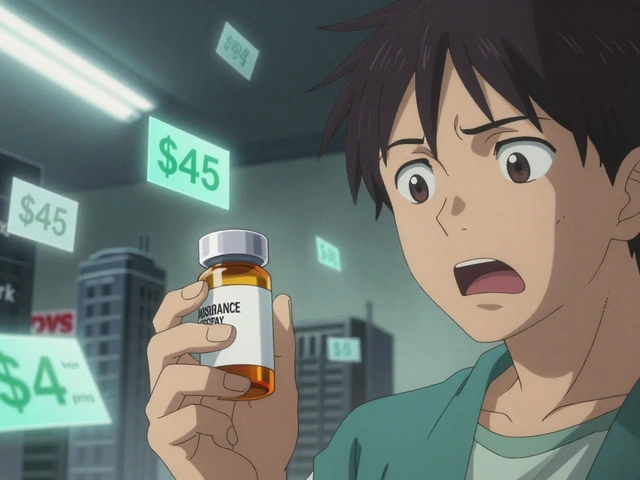
If you're trying to navigate your benefits, you need to know that insurance companies aren't just looking for the cheapest pill. They are balancing clinical safety with economic viability. For most people, this means a huge push toward generics, but for some, fighting for a brand-name version is a medical necessity. Here is a breakdown of how these policies actually work and how you can navigate them.
The Cost Gap and the Tier System
Most insurance plans organize their drugs into "tiers." Think of these as price brackets. Generic drugs, which are chemical copies of original medicines with the same active ingredients, almost always sit in Tier 1. This is the lowest cost level, where you might only pay a copay of $5 to $15 for a 30-day supply.
Brand-name drugs usually land in Tier 2 or Tier 3. Depending on your plan, a brand-name drug can cost you $40 to $100, or you might have to pay a percentage of the total cost-known as coinsurance-which can be as high as 33%. The financial incentive for you to pick the generic is massive because generics typically cost 80% to 85% less than the brands. Because of this, about 90% of prescriptions filled in the U.S. are generics, saving the system hundreds of billions of dollars.
| Tier | Drug Type | Typical Copay/Cost | Patient Financial Impact |
|---|---|---|---|
| Tier 1 | Generics | $5 - $15 | Lowest out-of-pocket cost |
| Tier 2 | Preferred Brands | $30 - $50 | Moderate cost |
| Tier 3 | Non-Preferred Brands | $60 - $100+ | High cost/Coinsurance |
Automatic Substitution and 'Dispense as Written'
In almost every state, insurance policies give pharmacists the green light to substitute a brand-name drug with a generic one automatically. This is based on the FDA's requirement that generics must have the same safety, strength, and efficacy as the original. However, this isn't always a perfect switch for every patient.
If your doctor believes the brand-name version is essential, they can mark the prescription as "dispense as written" or "do not substitute." But be careful: just because your doctor writes this doesn't mean your insurance will pay for it. Many plans, including those from Blue Cross Blue Shield, use a "cost-sharing" rule. If you choose the brand when a generic is available, you pay the generic copay PLUS the entire price difference between the two drugs. This makes the brand-name option incredibly expensive for the patient.

Jump Through the Hoops: Prior Authorization and Step Therapy
When a drug is expensive, insurance companies add "friction" to the process to discourage its use. The most common tool is prior authorization, which is a requirement that your doctor must get approval from the insurer before the drug is covered. This happens to roughly 22.7% of brand-name drugs, compared to only 2.1% of generics.
Then there is "step therapy," often called "fail first." This policy requires you to try a cheaper generic version and prove it didn't work-or caused a bad reaction-before the insurance will agree to pay for the brand-name alternative. For specialty medications, this happens in about 35.6% of cases. This can create a treatment gap of 6 to 8 weeks while you wait for the generic to "fail" and the insurance to approve the brand.
When the Generic Isn't Enough: Medical Necessity
While the FDA says generics are the same, some patients react differently to the inactive ingredients (fillers and binders). This is particularly common with Narrow Therapeutic Index (NTI) drugs, which are medications where a small difference in dose or bioavailability can lead to serious side effects or treatment failure. Examples include warfarin or levothyroxine.
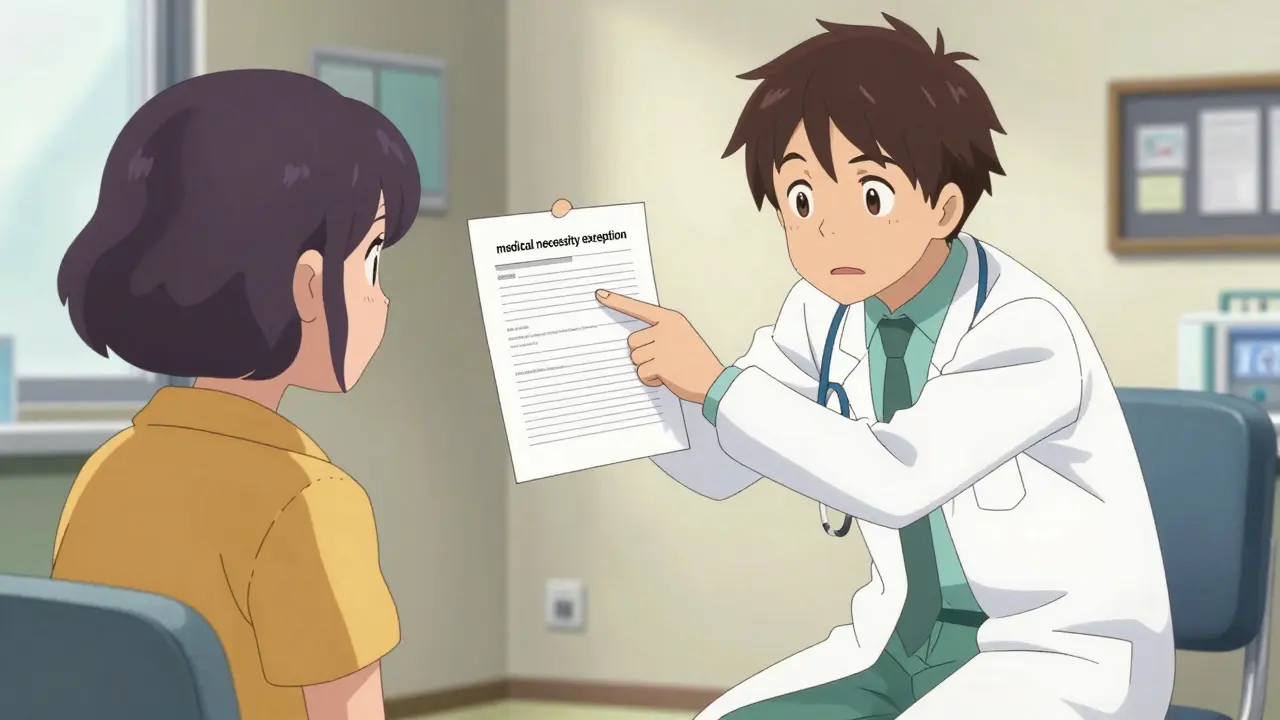
Because of this, many states have policies that allow for a "medical necessity exception." In about 42 states, doctors can submit specific documentation to bypass the generic requirement. If you are experiencing side effects or a lack of efficacy with a generic, you need to ask your doctor about the "YN1" modifier-a standardized code used by many insurers to signal that a brand-name drug is medically required.
Different Rules for Different Plans
Not all insurance is created equal. Commercial plans usually have the tiered structure mentioned above. Medicare Part D plans also use tiers but have the added complexity of the "coverage gap" or donut hole. In this phase, patients often pay a percentage of the cost for both generics and brands, though recent laws like the Inflation Reduction Act are working to cap these out-of-pocket costs.
Medicaid is different again. It often operates under "best price" requirements, meaning the government pays the absolute lowest price available for generics. This results in reimbursement rates for generics that are often 87% lower than their brand-name counterparts.
How to Get the Best Coverage
If you find yourself stuck between a high brand-name cost and a generic that doesn't work, you have a few options. First, check for "authorized generics." These are generic versions made by the original brand-name company. They are often viewed more favorably by insurers and can be a middle ground for patients sensitive to third-party generics.
Second, look into manufacturer copay cards. Many brand-name companies offer these to commercially insured patients to bring the cost down to $0 or $10. However, keep in mind that these are illegal for Medicare and Medicaid patients due to federal anti-kickback laws.
Finally, if your insurance denies a brand-name drug you truly need, don't just give up. File a formal appeal. Documentation from your doctor regarding a "therapeutic failure" (meaning the generic didn't treat the condition) is the strongest evidence you can provide to get a policy exception.
Are generic drugs as effective as brand-name drugs?
According to the FDA, generic drugs must be bioequivalent to the brand name, meaning they have the same active ingredient, strength, and dosage form. While the active part is identical, the inactive ingredients (fillers) can differ, which in rare cases may cause different side effects for some patients.
What is a 'dispense as written' prescription?
This is a instruction from your doctor to the pharmacist stating that only the brand-name version of the drug should be given. However, this does not guarantee the insurance company will cover the higher cost; you may still be charged the price difference.
What is step therapy in insurance?
Step therapy is a policy where the insurance company requires you to try a lower-cost medication (usually a generic) before they will agree to cover a more expensive brand-name drug. You must essentially "fail" the cheaper option first.
How do I get my insurance to cover a brand name if the generic causes side effects?
You should ask your doctor to file a "medical necessity exception." They will need to provide documentation of the adverse reaction to the generic. In some cases, using the 'YN1' modifier on the prescription can help the insurance company process the request faster.
Do copay cards work for everyone?
No. Copay cards are typically only available for people with private commercial insurance. They are prohibited for anyone on Medicare or Medicaid due to federal laws.