Many people assume that if a drug has the same active ingredient, the result will be the same regardless of the label. But our brains don't work like simple calculators. We bring a lifetime of expectations, trust, and cultural biases to every pill we swallow. When we perceive a drug as "high quality" or "premium," our brain triggers a biological response that can actually amplify the drug's efficacy. Conversely, if we view a generic as "cheap" or "inferior," we might experience the nocebo effect, where negative expectations create actual physical side effects.
The Power of a Label: Branding vs. Chemistry
The gap between what a drug does chemically and how we perceive it is wider than most realize. A striking study published in Health Psychology by Faasse et al. looked at undergraduate students suffering from headaches. They gave participants placebo painkillers-tablets with no active medicine. When these placebos were labeled as Nurofen (a well-known brand), the participants reported pain relief that was nearly equal to taking an actual 400mg dose of ibuprofen. However, when the exact same fake pills were labeled as "Generic Ibuprofen," the pain reduction was significantly lower.
This suggests that branding adds a layer of "psychological potency" to the medicine. In pain management, brand-name labeling can increase the magnitude of the placebo response by 30-40%. It's not that the generic is bad; it's that the brand name acts as a trigger for the brain to release its own natural painkillers, like endorphins, before the drug even hits the bloodstream.
What's Happening in the Brain?
If you're skeptical, the proof is in the scans. Neuroscientists using fMRI (functional Magnetic Resonance Imaging) have seen this happen in real-time. A study from the University of Hamburg showed that when people received a placebo labeled as a brand-name aspirin, there was much stronger activity in the prefrontal cortex-specifically the dorsolateral and dorsomedial regions. These areas are the brain's "expectation centers."
When we expect a drug to work, these regions signal the body to modulate pain and anxiety. In fact, research published in Science showed that brand-name labeled placebos triggered 22-35% more activation in these regions than generic-labeled ones. This means the "belief" in the brand creates a physical change in brain chemistry that mimics the effect of the drug itself.
| Factor | Brand-Name Perception | Generic Perception | Observed Outcome |
|---|---|---|---|
| Pain Relief | High Expectation | Lower Expectation | ~30-40% higher placebo response for brands |
| Side Effects | Higher Trust | Skepticism | 25-40% fewer reported side effects with brands |
| Brain Activity | High PFC Activation | Lower PFC Activation | 22-35% more activity in expectation regions |
| Adherence | Higher Confidence | Lower Confidence | 27% more likely to quit generics in 30 days |

The Dark Side: The Nocebo Effect
While the placebo effect is the "good" side of expectation, the nocebo effect is its mirror image. This happens when a patient's negative expectations cause them to experience adverse effects, even when the drug is inert. It's a powerful psychological trap. For instance, in large statin trials, between 4% and 26% of patients stopped taking the medication because they felt muscle pain-even though they were in the group receiving a placebo with no active drug.
Why does this happen? As Dr. Ulrike Bingel explains, when we are anxious about a drug or have heard it causes muscle aches, we start monitoring our bodies more closely. A tiny, normal twinge in your leg that you would usually ignore suddenly becomes "proof" that the drug is causing a problem. When people perceive a generic drug as "low quality," they are more likely to attribute every random ache or pain to the medication, leading them to quit a treatment that might have actually helped them.
Price and Value: The Cost of Perception
Price tags aren't just about money; they are psychological cues. In a study published in Science, participants were given a cream for pain. Those who were told the cream was expensive reported feeling *more* pain in some cases, or conversely, felt the treatment was more effective, depending on the context of the study's framing. Specifically, when people believe they are using a high-cost product, their spinal cord recordings actually showed a greater physiological response. It wasn't just that they *said* they felt different; their nervous system was reacting to the perceived value of the product.
This creates a paradox for healthcare. Generics are designed to save money, but if a patient feels that a "cheap" drug is less effective, the actual medical outcome drops. Some estimates suggest that negative perceptions of generics reduce real-world effectiveness by 8-12% in conditions like depression or chronic pain, where the placebo response is naturally high.
How to Bridge the Gap
So, how do we stop our brains from sabotaging our health? The key is "expectation management." If you are a patient, understanding that therapeutic equivalence is a legal requirement can help. In the US, the FDA requires generic drugs to deliver the same amount of active ingredient as the brand-name version, usually within a very tight 8-13% range. This is well within the therapeutic window, meaning the chemical impact is the same.
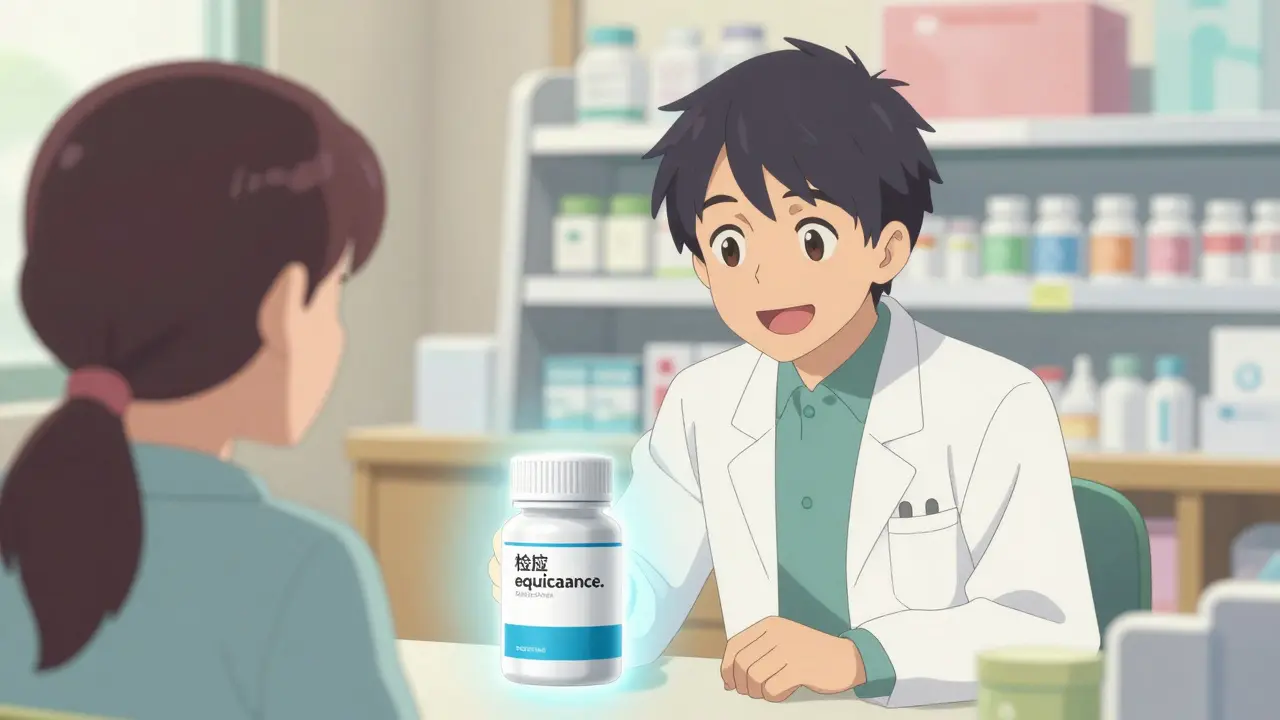
For healthcare providers, the approach is simple but effective: communication. Spending just two or three extra minutes explaining why a generic is just as good as a brand-name drug can increase patient adherence by up to 22%. Instead of saying "this is just a generic," which sounds dismissive, using phrases like "this is an FDA-approved equivalent" shifts the perception from "cheap replacement" to "validated alternative." Some pharmacies have even seen a 34% increase in patient confidence simply by adding a label that explicitly states the generic is an approved equivalent to the brand name.
The Future of "Expectation-Optimized" Medicine
We are moving toward a world where medicine isn't just about the molecule, but the experience. Some companies are experimenting with "premium generics"-drugs that are chemically generic but have high-end packaging and colors (like blue and white, which are associated with trust and cleanliness) to trigger a positive placebo response. Others are using "expectation priming," like short educational videos that explain how the brain works, which has been shown to increase treatment efficacy by 28%.
Ultimately, the goal is to decouple the price of the drug from the perceived value. When we stop equating "expensive" with "effective," we can fully realize the benefits of generic medications without leaving the healing power of the mind behind.
Are generic drugs actually less effective than brand-name drugs?
Chemically, no. Regulatory bodies like the FDA require generics to have the same active ingredient, strength, and dosage form as the brand-name drug. However, they can *feel* less effective due to the placebo effect, where the lack of a trusted brand name reduces the brain's psychological response to the treatment.
What exactly is the nocebo effect?
The nocebo effect is the opposite of the placebo effect. It occurs when negative expectations lead to negative outcomes. For example, if you believe a generic drug is low quality, you may be more likely to perceive normal bodily sensations as adverse side effects, even if the drug is an inert placebo.
Can the placebo effect really change a physical medical outcome?
Yes. It is not just "imaginary." Placebo responses can trigger the release of endorphins and dopamine, change activity in the prefrontal cortex, and even alter heart rate and blood pressure in certain contexts, particularly in pain and anxiety management.
Why is the placebo effect stronger in some medications than others?
It is strongest in conditions that are subjective, such as chronic pain, depression, and anxiety. These depend heavily on the patient's perception and the brain's internal chemistry, making them more susceptible to the power of expectation than, for example, a drug meant to lower blood pressure.
How can I make my generic medication work better?
The best way is through education and mindset. Focus on the fact that the active ingredient is identical to the brand-name version. Discussing the science of therapeutic equivalence with your doctor can help build the trust and positive expectations necessary to trigger a beneficial placebo response.