

Every morning, you apply sunscreen like a habit. But do you know what’s actually happening on your skin when you do? Most people think SPF 50 means twice the protection of SPF 25. It doesn’t. And that misunderstanding is costing people real skin damage-year after year.
What SPF Actually Measures (And What It Doesn’t)
SPF stands for Sun Protection Factor. It’s a number that tells you how long it takes for UVB rays to burn your skin when sunscreen is applied correctly. If your skin normally burns in 10 minutes without protection, SPF 30 means it should take 30 times longer-about 5 hours-to burn. Sounds great, right? But here’s the catch: almost no one applies enough.
The American Academy of Dermatology says most people use only 25 to 50% of the recommended amount. That means if you’re using SPF 30 but only applying half the right dose, you’re getting the protection of SPF 15 or even SPF 7.5. That’s not just a small drop-it’s a massive gap in defense.
SPF only measures UVB protection. UVB is the ray that gives you sunburn. But it’s not the only threat. UVA rays are quieter, deeper, and more dangerous over time. They don’t burn you. They age you. And they’re just as present on cloudy days, through windows, and in winter.
UVA vs. UVB: The Silent War Inside Your Skin
UVA rays make up 95% of the UV radiation that reaches Earth. They’re long wavelengths that slip past the surface and hit your dermis-the layer where collagen and elastin live. Over time, they break those fibers down. That’s why you get wrinkles, sagging, and sunspots even if you never get a burn.
UVB rays are shorter. They mostly stay in the epidermis, the top layer. That’s why they cause sunburns and directly damage DNA in skin cells. That DNA damage is what leads to skin cancer-melanoma, squamous cell, basal cell. The World Health Organization says UV exposure has increased 8% since 2010, especially near the equator. Australia, where I live, has one of the highest skin cancer rates in the world. That’s not luck. That’s sunlight.
Here’s the math: SPF 15 blocks 93.3% of UVB. SPF 30 blocks 96.7%. SPF 50 blocks 98%. The jump from 93% to 97% is huge. The jump from 97% to 98%? Tiny. But most people chase SPF 100 because they think it’s “much better.” It’s not. It’s a marketing trick. What matters more than the number is whether it’s broad spectrum.
What “Broad Spectrum” Really Means
In 2011, the FDA made rules to stop companies from calling anything “sunscreen” unless it protected against both UVA and UVB. To be labeled “broad spectrum,” a product must pass a test called critical wavelength. It needs to block UV rays up to at least 370 nanometers. That’s the point where UVA starts doing serious damage.
But here’s what most people don’t know: broad spectrum doesn’t mean equal protection. The FDA requires that UVA protection be at least one-third of the SPF number. So SPF 30 must offer at least SPF 10 UVA protection. SPF 50 must offer at least SPF 17. But the Skin Cancer Foundation updated its standards in 2023 and now requires SPF 50+ products to deliver UVA protection equivalent to SPF 20 or higher. That’s a big upgrade.
If you’re using a sunscreen that says “SPF 50” but doesn’t say “broad spectrum” on the front? Put it down. It’s not protecting you from the real long-term damage.

Mineral vs. Chemical: Which One Should You Use?
There are two types of sunscreens: mineral (physical) and chemical. They work in opposite ways.
Mineral sunscreens use zinc oxide and titanium dioxide. They sit on top of your skin and reflect UV rays like a mirror. They start working immediately. They’re less likely to irritate sensitive skin or trigger breakouts. That’s why 78% of Reddit users with acne or rosacea say they switched to mineral and saw improvement.
But there’s a downside: white cast. Especially on darker skin tones. Zinc oxide can leave a gray or chalky residue. Some newer formulas use micronized particles or tinted bases to fix this. Brands like Suntribe and CeraVe have made big strides here.
Chemical sunscreens use ingredients like avobenzone, octinoxate, and oxybenzone. They absorb UV rays like a sponge, converting them into harmless heat. They’re usually lighter, more invisible, and blend better under makeup. But they need 15-20 minutes to activate. And they can sting eyes or irritate sensitive skin. Oxybenzone, in particular, is linked to allergic reactions and is banned in some places because it harms coral reefs.
Here’s the truth: chemical sunscreens generally offer broader UVA coverage. Mineral ones, especially older formulas, are better at blocking UVB than UVA. But modern zinc oxide formulations are catching up. If you have acne-prone or reactive skin, go mineral. If you hate the white cast and don’t have sensitivity, chemical might be your friend.
How to Actually Use Sunscreen-Not Just Apply It
Most people think sunscreen is a one-and-done thing. It’s not.
For your face, you need about a quarter teaspoon. That’s the size of a nickel. For your whole body? About one ounce-a shot glass full. If you’re using less, you’re wasting your money.
Reapply every two hours. If you’re sweating, swimming, or wiping your face? Reapply right after. “Water resistant” doesn’t mean waterproof. It means it lasts 40 or 80 minutes in water-then it’s gone.
Apply it as the last step in your skincare routine. If you put moisturizer or serum on top, you’re rubbing the sunscreen off. Let it sit for 15 minutes before makeup. If your sunscreen pills under foundation? Try switching brands or applying a thinner layer first, then building up.
And don’t forget your ears, neck, hands, and feet. Those are common spots for skin cancer. I’ve seen too many cases where people wore sunscreen on their face but not their neck. The result? A sharp line of aging and damage right where the shirt collar ends.
What’s Changing in 2025 and Beyond
The FDA is pushing for a cap on SPF labels at 60+. They say higher numbers like SPF 100 or 110 mislead people into thinking they’re invincible. That’s smart. No sunscreen blocks 100%. And the extra 1-2% protection isn’t worth the false confidence.
By December 2025, all sunscreens sold in the U.S. must clearly display “broad spectrum” on the front label. Products that don’t meet the new UVA standards will be pulled. That’s a win for consumers who’ve been misled by SPF numbers alone.
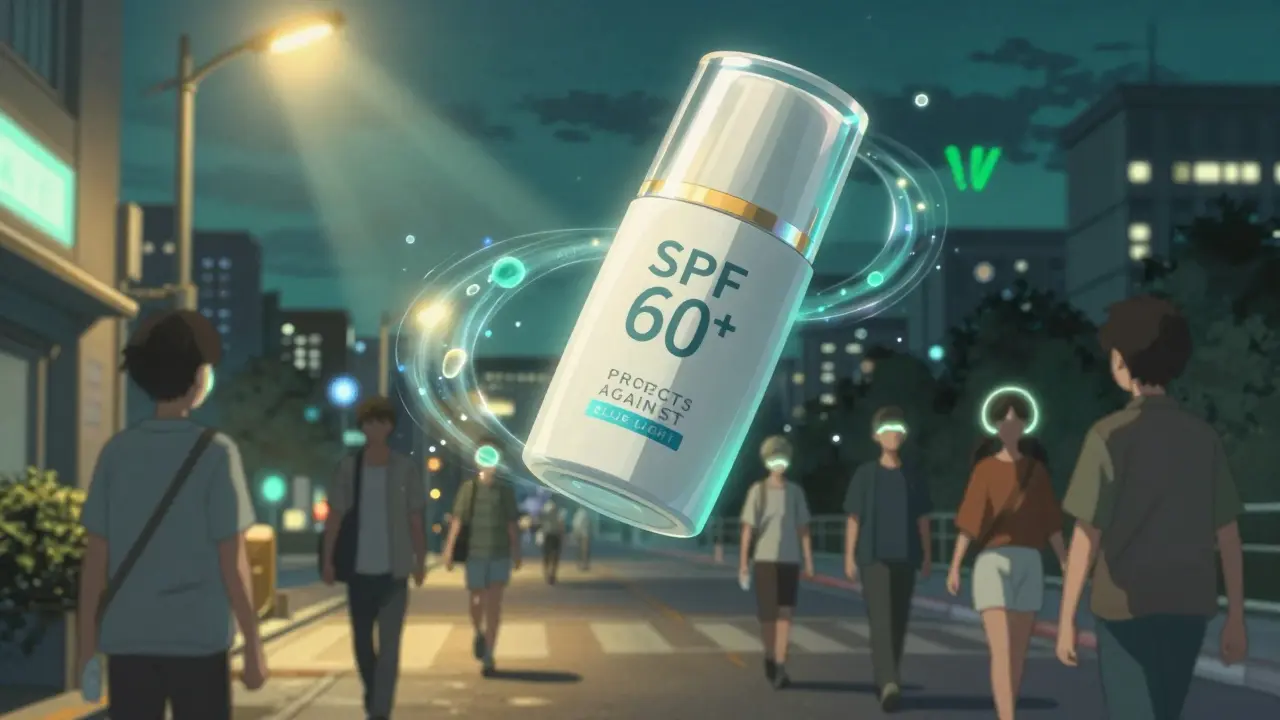
Next up? Protection from blue light and infrared radiation. Screens, LED lights, even the sun emit these. Early studies show they may contribute to skin aging. Dermatologists are already testing new formulas with antioxidants like niacinamide and ferulic acid to neutralize that damage. In five years, sunscreen might not just block UV-it might fight digital aging too.
What to Look For When You Buy
Here’s your quick checklist before buying:
- Broad spectrum-non-negotiable.
- SPF 30 or higher-anything lower won’t cut it for daily use.
- Mineral or chemical-choose based on your skin type, not trends.
- Water resistant-if you sweat, walk outside, or live in a hot climate.
- No oxybenzone or octinoxate-if you care about reefs or sensitive skin.
- Tinted-if you have darker skin and hate white cast.
Top brands that consistently meet these standards: La Roche-Posay Anthelios, CeraVe Hydrating Mineral Sunscreen, Neutrogena Ultra Sheer, and Suntribe. Amazon reviews for La Roche-Posay SPF 50 have over 8,700 ratings with 4.4 stars-mostly because it doesn’t leave a white cast and doesn’t sting.
Why Daily Use Isn’t Optional
Dr. Leslie Baumann says it best: UVA rays are just as strong at 6 p.m. as they are at noon. They go through clouds. They go through windows. You’re exposed driving to work, sitting by the window, walking the dog. Daily sunscreen isn’t about beach days. It’s about stopping the slow, silent damage that builds up over decades.
One study showed people who used sunscreen daily had 24% less skin aging after four years. Not just fewer wrinkles-fewer spots, firmer skin, less redness. That’s not magic. That’s science.
If you’re not using sunscreen every day, you’re not protecting your skin. You’re just hoping for the best. And in Australia, where the sun doesn’t take days off, hoping isn’t a strategy.

SPF 100 is a scam. I used to buy it thinking I was invincible until I got a sunburn on my nose in December. Turns out I was slathering on a quarter of what I needed. Now I use CeraVe mineral and reapply like it’s my job. No more fake confidence.
Let’s be honest-sunscreen is the last bastion of performative self-care. You slather it on like a sacrament, post a pic of your ‘healthy glow’ on Instagram, then spend the rest of the day in air-conditioned oblivion. The real tragedy? You still age like a dried fig because you forgot your ears. UVA doesn’t care about your aesthetic.
You people act like SPF 50 is some kind of holy grail. It’s not. You’re all just chasing numbers like they’re lottery tickets. I’ve seen guys in Florida with SPF 100 and peeling skin like a snake. The truth? You need to apply it right, not buy the fanciest bottle. Stop being lazy and use a shot glass. That’s it.
For anyone with sensitive skin or rosacea-mineral is non-negotiable. I switched from chemical to zinc oxide after years of redness and stinging. The white cast? Yeah, it’s there. But I found a tinted version from Suntribe that blends like a dream. And honestly? I’d rather look like a ghost than have a flare-up that lasts weeks. Your skin is not a canvas for trends.
Stop acting like SPF 30 is enough. You’re all just clinging to ‘minimalist skincare’ because you’re too lazy to reapply. I work outside. I sweat. I wipe my face. SPF 30 is a joke. I use SPF 60, reapply every 90 minutes, and still get a little pink if I’m dumb enough to be out at noon. If you’re not treating sunscreen like armor, you’re just decorating your skin for the grave.
mineral sunscreen gives me breakouts. chemical is fine. stop shaming people for using what works. also oxybenzone is not banned everywhere. you’re just repeating influencer nonsense. also i dont care about coral reefs. i live in nebraska.
Thank you for saying this. I used to skip sunscreen on cloudy days because I thought ‘it’s not sunny’. Then I noticed my left cheek was way more wrinkled than my right-because I always sat by the window at my desk. Now I wear it every day, rain or shine. It’s not glamorous. But my skin doesn’t look like a dried prune anymore.
bro i just found out uva goes through windows and now i’m paranoid. i’m sitting here in my apartment in chicago with my laptop and i swear i can feel my collagen dying. i just bought a tinted mineral one and now i look like a ghost but at least i’m not gonna look like a raisin by 40. also can we talk about how sunscreen pills under foundation like its personal? i’ve tried 5 brands. none work. help.
So let me get this straight-you’re telling me the FDA is capping SPF at 60 because people think SPF 100 makes them invincible? Meanwhile, in Japan, they’ve got SPF 150 with blue light protection and antioxidant cocktails. We’re still arguing about white cast while they’re engineering skincare for the digital age. We’re not just behind-we’re stuck in the Stone Age.
SPF 30 is enough if you’re not a sunbathing idiot. All this fearmongering about UVA and blue light and coral reefs is just corporate marketing. People get skin cancer from vacations, not from walking to their mailbox. Stop selling anxiety. And no, I don’t need a shot glass of sunscreen. I’m not a toddler.