
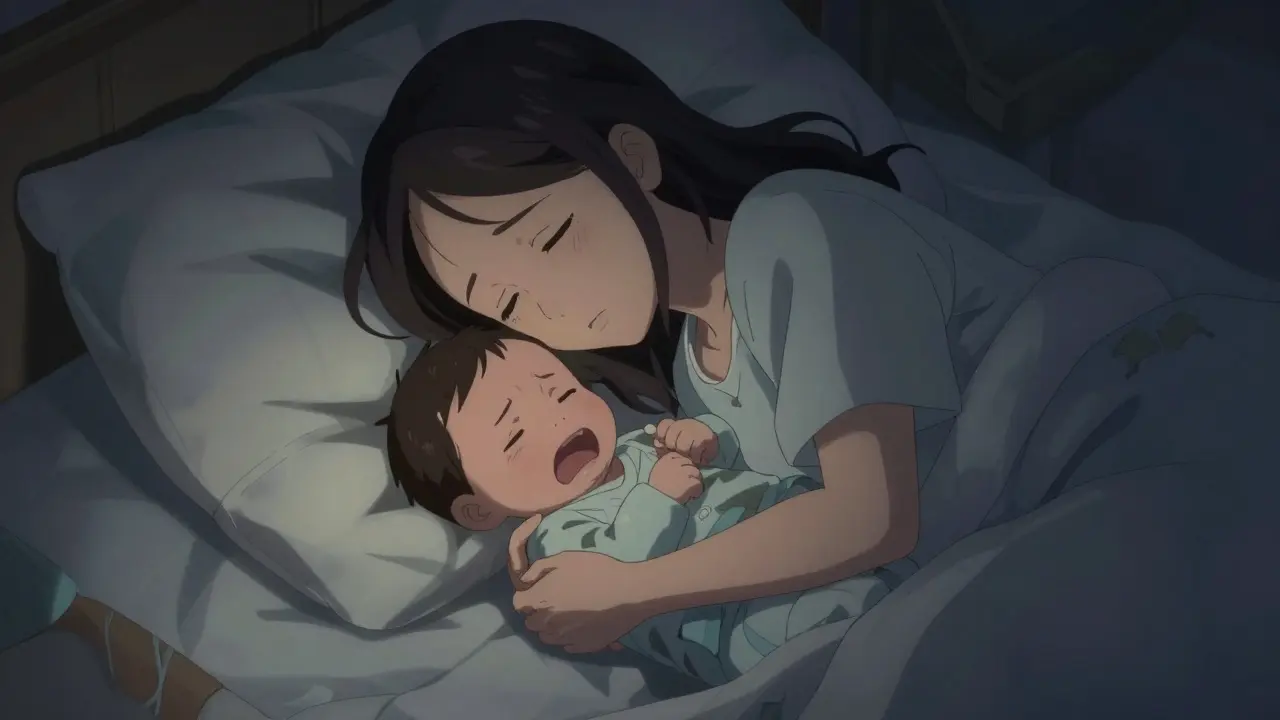
Every year, postpartum depression affects approximately 1 in 7 new mothers in the U.S., according to the Cleveland Clinic (2023). This isn't just feeling sad-it's a serious condition that can make it hard to care for yourself or your baby. Let's break down what causes it and how treatment can help.
What Is Postpartum Depression?
Postpartum Depression is a mood disorder that occurs after childbirth, distinct from the transient 'baby blues'. While 'baby blues' affect up to 80% of new mothers and usually fade within two weeks, PPD is more severe and lasts longer. Symptoms include intense sadness, anxiety, fatigue, and trouble bonding with your baby. Unlike baby blues, PPD can interfere with daily life and requires professional help. The DSM-5 classifies it as 'Depressive Disorder with Peripartum Onset', which can start during pregnancy or up to one year after birth.
The NHS (2023) clarifies that PPD isn't just hormonal. It's a complex mix of biological, psychological, and social factors. Left untreated, it can lead to chronic depression and harm both mother and child. Early intervention is key to recovery.
How Hormonal Changes Affect Your Mood
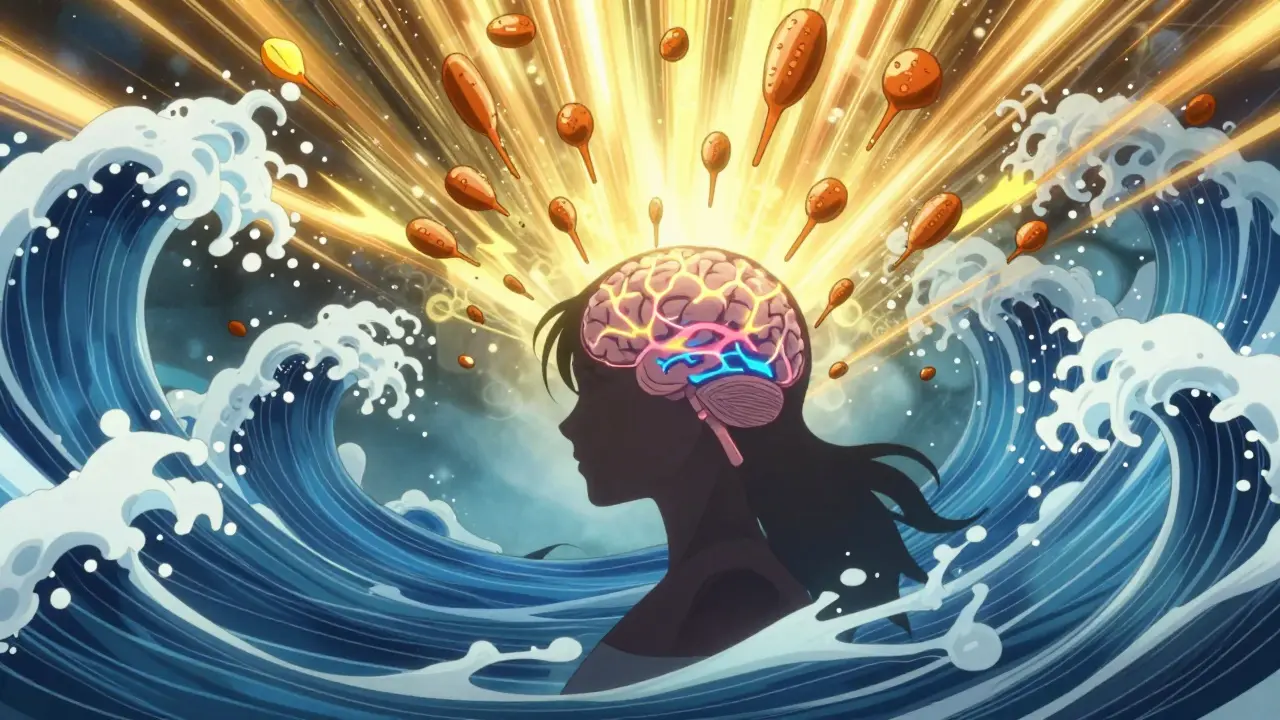
During pregnancy, estrogen and progesterone levels spike tenfold. Right after birth, they drop sharply-sometimes within 48 hours-returning to pre-pregnancy levels in just three days. This sudden shift disrupts brain chemistry. Research shows these hormones regulate mood, sleep, and stress response. For example, progesterone's metabolite allopregnanolone helps calm the nervous system. When levels crash, irritability and anxiety can spike.
But here's the twist: studies disagree on whether hormonal changes directly cause PPD. The PMC review (2015) notes that 'several studies failed to detect an association between hormone concentrations and PPD symptoms.' Experts like Dr. Vivien K. Burt from UCLA explain it's not just hormones-it's how your body reacts to them. Women with a history of depression or anxiety may have a biological vulnerability that makes them more sensitive to these shifts.
Oxytocin, the 'love hormone', also plays a role. Lower levels during pregnancy link to higher depression risk, while breastfeeding boosts oxytocin, which can improve mood. Yet some women don't experience this mood lift, hinting at deeper issues.
Other Biological Factors at Play
Research from Bränn (2019) identified five biomarkers that may increase PPD risk: TRANCE, HGF, IL-18, FGF-23, and CXCL1. HGF, for instance, is linked to inflammation and subclinical depression. Meanwhile, the HPA axis-your body's stress response system-often stays overactive in PPD. Women with the condition show higher cortisol levels and poor stress regulation, even months after birth.
Thyroid function matters too. Postpartum thyroiditis affects 5-10% of new mothers, causing fatigue and mood swings that mimic depression. The CDC's 2021 data also shows stark racial disparities: American Indian/Alaska Native mothers face PPD rates of 20.1%, compared to 13.9% in non-Hispanic white mothers. This points to systemic factors like access to care and social stressors.
Treatment Options: What Works
Treatment
How It Works
Effectiveness
Safety During Breastfeeding
SSRIs (e.g., Sertraline)
Increases serotonin in brain
50-70% response rate
L2 (safer)
Brexanolone (Zulresso)
IV allopregnanolone infusion
68% remission in 60 hours
Requires hospitalization; limited data
Zuranolone (Zurzuvae)
Oral allopregnanolone
73% improvement in 14 days
L2 (safer)
Cognitive Behavioral Therapy (CBT)
Talk therapy to change thought patterns
52% response rate
Safe
Medication is often part of treatment. SSRIs like sertraline are first-line choices because they're safe during breastfeeding (rated L2 by Hale's Medication and Mothers' Milk). Brexanolone, an IV treatment approved in 2019, works fast but requires hospitalization. Newer oral medication zuranolone (Zurzuvae), approved in 2023, offers similar benefits without IV infusions.
Therapy is equally important. Cognitive Behavioral Therapy (CBT) helps reframe negative thoughts and has a 52% response rate. Peer support groups like Postpartum Support International's warmline (1-800-944-4773) help 25,000 callers yearly, with 87% finding it 'helpful' or 'very helpful'.

Who Is at Risk? Understanding Risk Factors
PPD doesn't discriminate. While it affects 14.3% of cisgender women, 1 in 10 new fathers also experience it. Risk factors include:
- History of depression or anxiety
- Low income or financial stress
- Lack of social support
- Unplanned pregnancy
- Physical or emotional trauma
Transgender and nonbinary parents face similar rates as cisgender women, per a 2019 PsychCentral analysis. Adoptive parents also report 6-8% PPD rates. The key takeaway? Anyone can develop PPD-and knowing your risks helps you seek help sooner.
Screening and Early Intervention
Massachusetts became the first state to mandate PPD screening in 2012. Today, the Edinburgh Postnatal Depression Scale (EPDS) is used worldwide. It's a simple 10-question test that scores depression severity. A score of 10 or higher suggests further evaluation. The 2019 BMC Psychiatry meta-analysis confirms its 91.8% sensitivity and 88.5% specificity.
Early screening saves lives. The American Academy of Pediatrics recommends checking for depression during well-baby visits. If symptoms emerge, don't wait. Talk to your doctor, a therapist, or call a helpline. Recovery is possible with the right support.
Is postpartum depression my fault?
No. PPD is a medical condition caused by biological, psychological, and social factors. It's not your fault. The American College of Obstetricians and Gynecologists states that PPD is treatable, and seeking help is a sign of strength, not weakness.
Can I breastfeed while taking medication for PPD?
Yes, many antidepressants like sertraline are safe during breastfeeding (rated L2 by Hale's Medication and Mothers' Milk). Always consult your doctor before starting medication. They'll choose a treatment that minimizes risks to your baby.
How long does PPD treatment take?
Response time varies. Medication like zuranolone shows improvement in 14 days, while CBT may take 8-12 weeks. Most people see progress within 3 months. Patience is key-recovery is a process.
Can PPD affect my baby?
Untreated PPD can impact bonding and child development. Studies link it to delays in language skills and emotional regulation. But treating PPD improves outcomes for both mother and child. Early intervention is crucial.
What if I feel embarrassed to ask for help?
Feeling embarrassed is common, but millions of parents experience PPD. Asking for help is brave. Your doctor, therapist, or support groups like Postpartum Support International are there to help-not judge. You're not alone.
Big Pharma is hiding the real cause of postpartum depression! It's all about the government's secret agenda to control new mothers through synthetic hormones. I've read studies showing that the FDA knowingly allows toxic chemicals in prenatal vitamins to keep women docile. Wake up, people! This is a coordinated effort to suppress the truth!
I've been through this so painfully!!! It's like no one understands the depth of suffering!!! Every single day is a battle!!!! The lack of support is just heartbreaking!!! Why can't people see how hard this is??????
True understanding requires examining the existential crisis of motherhood in a patriarchal society. Perhaps we should question why society expects women to be perfect mothers without offering adequate support. This is not just a medical issue-it's a societal failure.
I've learned a lot about PPD treatments. Zuranolone is interesting! Typos happen, sorry! 😅 Let's all support each other through this! 💕
As an American patriot, I find it disgraceful that our healthcare system allows foreign influences to dictate our medical practices! The real problem is weak leadership! We need strong national policies to protect our mothers! This is unacceptable!!!!
While the emotional pain is real, it's important to remember that PPD is treatable. Many find relief through therapy and support groups. You're not alone-there's help available. Let's focus on solutions together.
That's a great point! Different cultures have amazing ways of supporting new mothers. In some places, they have 'mothering' rituals that help. We should learn from them! 😊 ps: sorry for typos, im not perfect!
PPD is weakness.
Real experts know that PPD is a symptom of societal decay. The real solution is to abolish modern parenting norms. Only the elite can handle this. Your ignorance is showing.
Interesting! 🌟 I wonder how different cultures handle postpartum depression. Maybe there's a better way. Thanks for sharing! 😊
PPD is treatable. Many find relief with therapy.
Hormones aren't the main cause of PPD. Social factors like lack of support are often overlooked. This needs to change.
You're not alone. Seeking help is a strong step.
The truth is, PPD is a myth created by the medical industry. It's all in your head. The real issue is lack of discipline. People should just get over it. I've got all the answers.