
OTC Medication Red Flag Detector
Check for Dangerous Claims
Enter a product description, claim, or marketing phrase to see if it contains red flags associated with dangerous hidden ingredients.
Analysis Results
No dangerous red flags detected. However, remember that OTC medications may still contain hidden ingredients not covered by these claims.
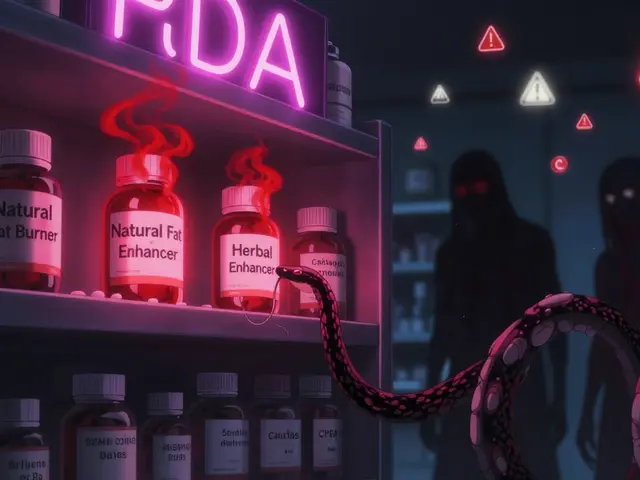
Every year, millions of people reach for over-the-counter (OTC) meds without a second thought. A headache? Grab some ibuprofen. Trouble sleeping? A diphenhydramine pill from the shelf. Trying to lose weight or boost performance? A little ‘natural’ supplement from a website with glowing reviews. But what if those pills weren’t what they claimed to be? What if the ‘natural’ weight loss powder you bought contained a banned heart-stressor? Or that ‘herbal’ sexual enhancer had the same active ingredient as Viagra-without the dosage warnings?
It’s not a scare tactic. It’s happening right now.
What’s Really in Your Medicine Cabinet?
OTC medications and dietary supplements are a $44.4 billion industry in the U.S. alone. And here’s the problem: they’re not held to the same standards as prescription drugs. Under the Dietary Supplement Health and Education Act of 1994, manufacturers don’t need to prove safety before selling. The FDA can only act after harm is done-and even then, it’s slow. A 2022 study found over 1,000 dietary supplements on the market between 2007 and 2021 contained hidden prescription drugs. Some had multiple unapproved ingredients. One product had six.
Let’s break it down by category. Weight loss supplements? Nearly 73% of those making bold claims contain undisclosed pharmaceuticals. The most common? Sibutramine. It was pulled from the market in 2010 because it raised the risk of heart attack and stroke by 16%. Yet it’s still in pills sold as ‘fat burners’ and ‘appetite suppressants.’
Sexual enhancement products? About 87% of those labeled ‘all-natural’ contain sildenafil or tadalafil-the active ingredients in Viagra and Cialis. These aren’t trace amounts. They’re full therapeutic doses. And they’re mixed with other dangerous compounds like phenolphthalein, a laxative linked to DNA damage and cancer.
Even pain relievers aren’t safe. Many OTC NSAIDs like ibuprofen and naproxen already carry serious risks: stomach ulcers, kidney failure, heart attacks. But when hidden ingredients like corticosteroids or opioids are added to joint pain creams or pills, the danger multiplies. One product found in 2021 contained three different unapproved drugs, including a steroid and a diuretic. No label. No warning. Just a pill you picked up at a gas station.
How Hidden Ingredients Kill
These aren’t just side effects. These are life-threatening events.
People have ended up in emergency rooms with blood pressure spikes over 180/110 after taking a ‘natural’ weight loss pill. Others suffered priapism-erections lasting more than four hours-requiring surgery to prevent permanent damage. Diabetics have gone into diabetic ketoacidosis after unknowingly consuming supplements that spiked their blood sugar. One man needed a liver transplant after his body reacted to undisclosed ingredients in a joint pain supplement.
And it’s not just adults. The ‘Benadryl challenge’-a social media trend where teens take massive doses of diphenhydramine to hallucinate-has led to at least three deaths and dozens of hospitalizations. Symptoms include seizures, cardiac arrhythmias, and extreme confusion. A single overdose can shut down your breathing.
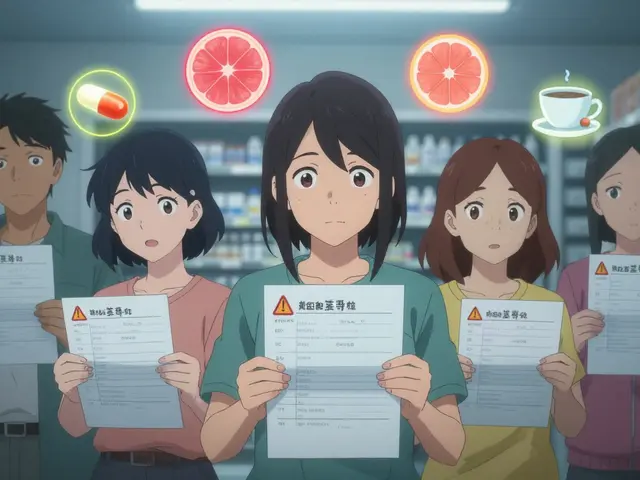
The real danger? You don’t know what you’re mixing. If you’re on blood pressure medication and take a supplement with sibutramine, your heart could go into overdrive. If you’re on antidepressants and take a product with hidden stimulants, you could trigger serotonin syndrome-a potentially fatal condition. If you’re on blood thinners and take a supplement with hidden NSAIDs, you could bleed internally without warning.
Who’s Responsible? And Why Does This Keep Happening?
The system is broken. The FDA has only 17 full-time staff members dedicated to monitoring dietary supplements. Meanwhile, over 700,000 products are sold online. Most are imported, often from countries with lax manufacturing standards. By the time the FDA identifies a dangerous product, it’s already sold millions of doses.
Companies know this. They deliberately hide ingredients because it’s cheaper and faster than going through proper clinical testing. They use fake names like ‘Artri’ or ‘Ortiga’ to avoid detection. When the FDA issues a warning, they just change the label and relaunch the product under a new name. One product was flagged for contamination five times over three years-and still kept selling.
And consumers? They’re misled by marketing. ‘All-natural,’ ‘clinically proven,’ ‘no side effects’-these phrases are legal loopholes, not guarantees. A 2023 survey found that 75% of U.S. adults trust supplements. That trust is being exploited.
How to Protect Yourself
You can’t rely on labels. You can’t trust websites with five-star reviews. But you can take control.
Step 1: Check the FDA’s Health Fraud Product Database. Type in the product name or brand. If it’s listed, don’t buy it. If it’s not listed? That doesn’t mean it’s safe. But at least you’re not buying something already flagged.
Step 2: Look for third-party seals. USP, NSF International, or ConsumerLab.com test for contaminants and label accuracy. These aren’t perfect-but they’re the best layer of protection we have. If a product doesn’t have one of these seals, treat it like a gamble.
Step 3: Use the 5-5-5 Rule before every purchase. Spend five minutes Googling the product. Five minutes checking the FDA database. Five minutes talking to your pharmacist. Pharmacists see the worst of this stuff every day. They know what’s dangerous. Ask them: ‘Is this safe with my other meds?’
Step 4: Keep a full medication list. Write down everything you take-prescription, OTC, vitamins, herbs, supplements. Bring it to every doctor’s visit. A 2021 study found that 63% of serious adverse events from supplements happened because the patient didn’t tell their doctor they were taking them.
Step 5: Be extra careful with high-risk groups. If you’re over 65 and take four or more prescription drugs, you’re at high risk for interactions. If you’re a teen or young adult, avoid social media trends that encourage OTC misuse. If you have heart disease, diabetes, or liver problems, avoid weight loss and sexual enhancement supplements entirely.
What’s Being Done? And Will It Be Enough?
There’s some movement. The 2023 OTC Medication Safety Act proposes mandatory adverse event reporting and stronger FDA powers. It has bipartisan support. But it’s still stuck in Congress. Meanwhile, the number of contaminated products keeps rising. McKinsey predicts contamination will grow 15-20% annually through 2025.
And here’s the hard truth: even if every product was perfectly labeled, OTC meds still carry risks. NSAIDs cause 100,000 hospitalizations and 16,500 deaths each year in the U.S. alone. That’s without hidden ingredients. So the real solution isn’t just better regulation-it’s better awareness.
You have more power than you think. You don’t need to avoid OTC meds entirely. But you do need to treat them like any other medicine: with respect, caution, and questions.
When to Walk Away
Here’s a simple rule: if it sounds too good to be true, it is.
- ‘Lose 20 pounds in 2 weeks’? Walk away.
- ‘All-natural sexual enhancement with no side effects’? Walk away.
- ‘Works faster than Viagra’? Walk away.
- ‘Made in a FDA-approved facility’? That’s meaningless. The FDA doesn’t approve supplements.
- ‘No preservatives, no chemicals’? Everything is made of chemicals. That’s marketing nonsense.
And if you’ve already taken something and feel off-racing heart, dizziness, nausea, chest pain, unusual bleeding-stop immediately. Call your doctor. Or go to the ER. Don’t wait. Don’t assume it’s ‘just a side effect.’
OTC doesn’t mean harmless. It just means you can buy it without a prescription. That doesn’t make it safe. It makes it easy to misuse.
Bro I took one of those 'natural' energy pills last year and woke up with my heart pounding like a drum machine. Ended up in the ER. No joke. They don’t tell you what’s in these things. 😵💫
This is why America is falling apart. People think because it’s sold at a gas station it’s harmless. No one takes responsibility anymore. You want to live like a lab rat? Fine. But don’t act surprised when your liver quits. No emojis. No excuses. Just facts.
I used to believe in 'natural' supplements too-until my mom had a stroke after taking a 'joint support' pill that had hidden steroids. Now I only buy things with USP or NSF seals. It’s not about being paranoid. It’s about being informed. We can do better than this.
The regulatory vacuum in the dietary supplement industry is a direct consequence of the 1994 DSHEA framework, which abrogated premarket safety validation obligations. The FDA’s resource constraints exacerbate systemic failure, resulting in a market saturated with adulterated entities containing pharmacologically active xenobiotics. Empirical evidence indicates that over 73% of weight-loss formulations contain unapproved anorectics, thereby constituting a public health hazard of proximate magnitude.
my grandma takes these 'herbal' sleep pills and swears by them. i asked her if she checked the label and she said 'it says natural so it's fine'. i just sigh and make her tea instead
Wow so we’re supposed to be scared of supplements now? What about all the people who’ve been taking turmeric for 20 years and are still alive? This feels like fearmongering with a side of corporate pharmacy propaganda.
Been working in pharmacy for 12 years. I’ve seen 3 people come in with kidney failure from 'natural' weight loss powders. One guy thought it was 'just a detox'. No one reads the fine print. The worst part? They all blame the doctor when it’s too late.
Why are you letting corporations poison you? You think the guy selling that 'miracle' pill at the flea market gives a damn if you die? He’s got another bottle in his trunk. Stop being a sheep. Stop trusting 'natural'. It’s just a word they use to sell you poison.
in india we have this problem too. people buy 'ayurvedic' pills from roadside shops that have hidden sildenafil or steroids. no one checks. my uncle took one for 'energy' and ended up in ICU. i told him to stop but he said 'but it says made in india' lol
Our country is weak when we allow this. We let foreign manufacturers dump dangerous chemicals into our medicine cabinets and call it freedom. No regulation means no safety. No safety means no future. The FDA is a joke. We need real action not talk
One thing people forget: OTC meds are still drugs. They interact. They build up. They affect liver enzymes. I always ask my pharmacist to run a med check when I add anything new-even a vitamin. It takes five minutes. Could save your life.
My niece got hooked on the Benadryl challenge after seeing it on TikTok. I sat her down with a printout of the ER reports and the FDA warning. She cried. Then she deleted the app. We need more of this kind of talk-not fear, just facts. And hugs.
my cousin died from one of these pills. they said it was 'heart failure' but the autopsy said it was sibutramine. he was 24. i still see his face every night. don’t take chances. if it’s not in a pharmacy with a barcode, don’t touch it