
When you see a commercial for a new prescription drug, what’s the first thing you think? Maybe it’s, "This could help me," or "I should ask my doctor about this." But what you’re not being told is that the drug in that ad is likely the most expensive version of a treatment that already exists in a cheaper, equally effective form-generic medication.
In the U.S. and New Zealand, drug companies can advertise directly to patients. No other developed country allows this. And it’s big business. In 2020, pharmaceutical companies spent over $6.5 billion on direct-to-consumer (DTC) ads for prescription drugs. That’s more than ten times what they spent in 1996. And it’s working. Every dollar spent on these ads brings in more than $4 in sales.
Here’s the twist: the drugs you see in ads are almost never the generics. They’re the branded versions-newer, pricier, and heavily marketed. Meanwhile, the generic versions, which have the same active ingredients, same effectiveness, and same safety profile, rarely show up on TV. And that’s not an accident. It’s strategy.
Ads Don’t Just Sell Drugs-They Shape Beliefs
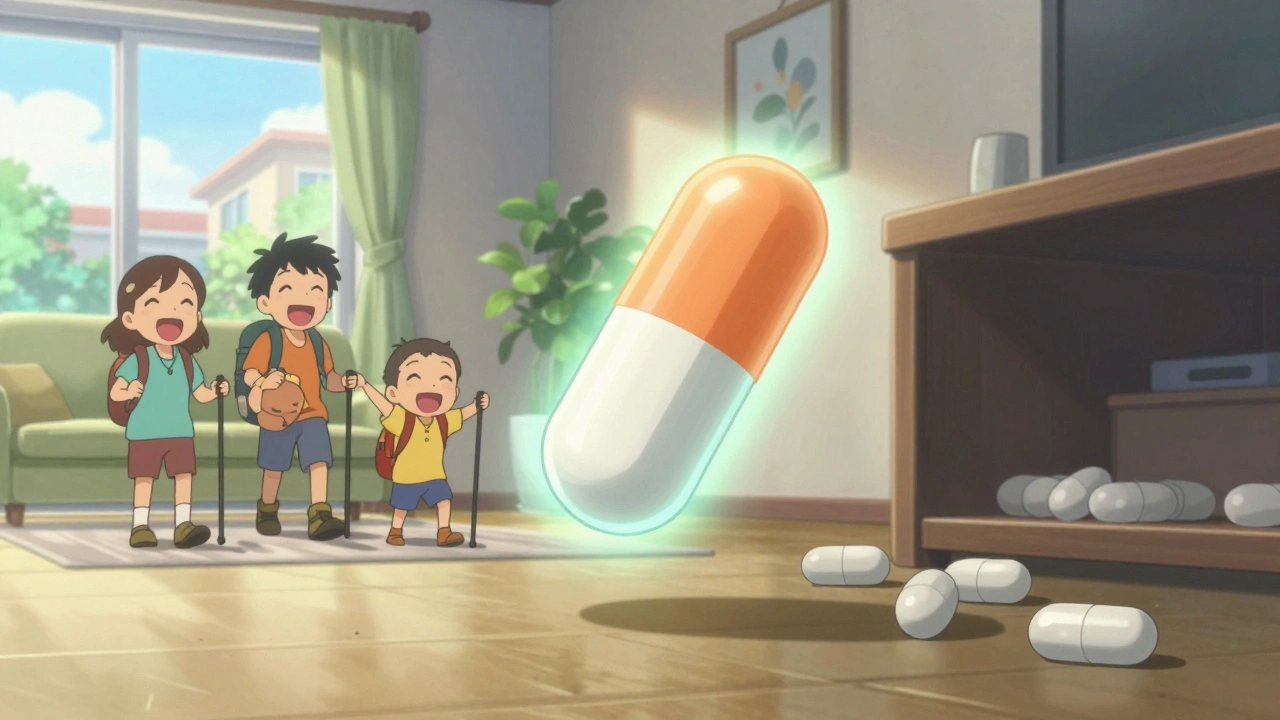
It’s not just about what you see. It’s about how you feel when you see it. Those commercials aren’t just listing side effects and dosage. They’re showing happy people hiking, laughing with family, playing with grandchildren. They’re using bright colors, soothing music, and peaceful nature scenes. The message? This drug will give you back your life.
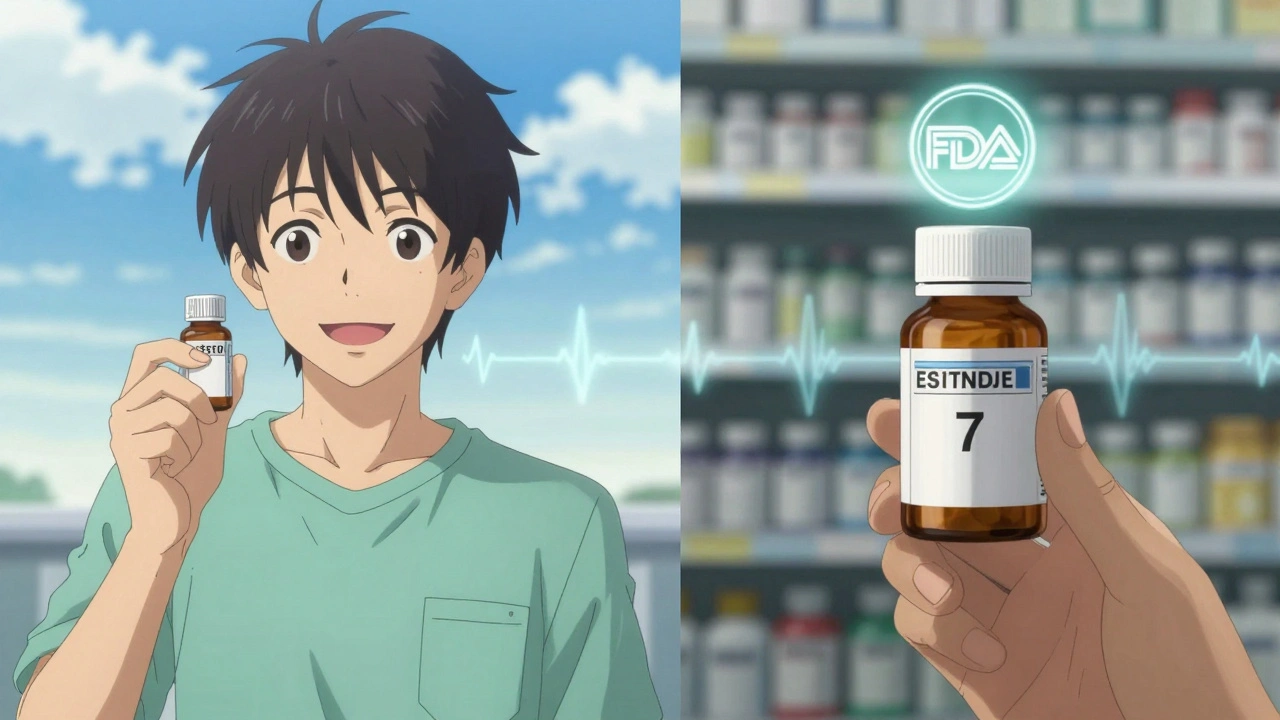
Meanwhile, a generic pill in a plain bottle with no ad campaign? It doesn’t come with a story. It doesn’t come with emotion. So your brain fills in the blanks: if it’s not advertised, maybe it’s not as good. Maybe it’s old. Maybe it’s inferior. But that’s not true. The FDA requires generics to be bioequivalent to the brand-name drug-meaning they work the same way in your body, at the same dose, with the same results.
Research from the Wharton School shows that when people see ads for a branded drug like Lipitor, they’re more likely to ask their doctor for something in that drug class. That’s the "spillover effect." Often, the doctor ends up prescribing the generic version because it’s cheaper and just as effective. So yes, advertising does increase generic use-but only indirectly. And even then, patients still believe they’re getting the "best" option when they get the branded one.
Patients Ask. Doctors Give. Even When It’s Not Best.
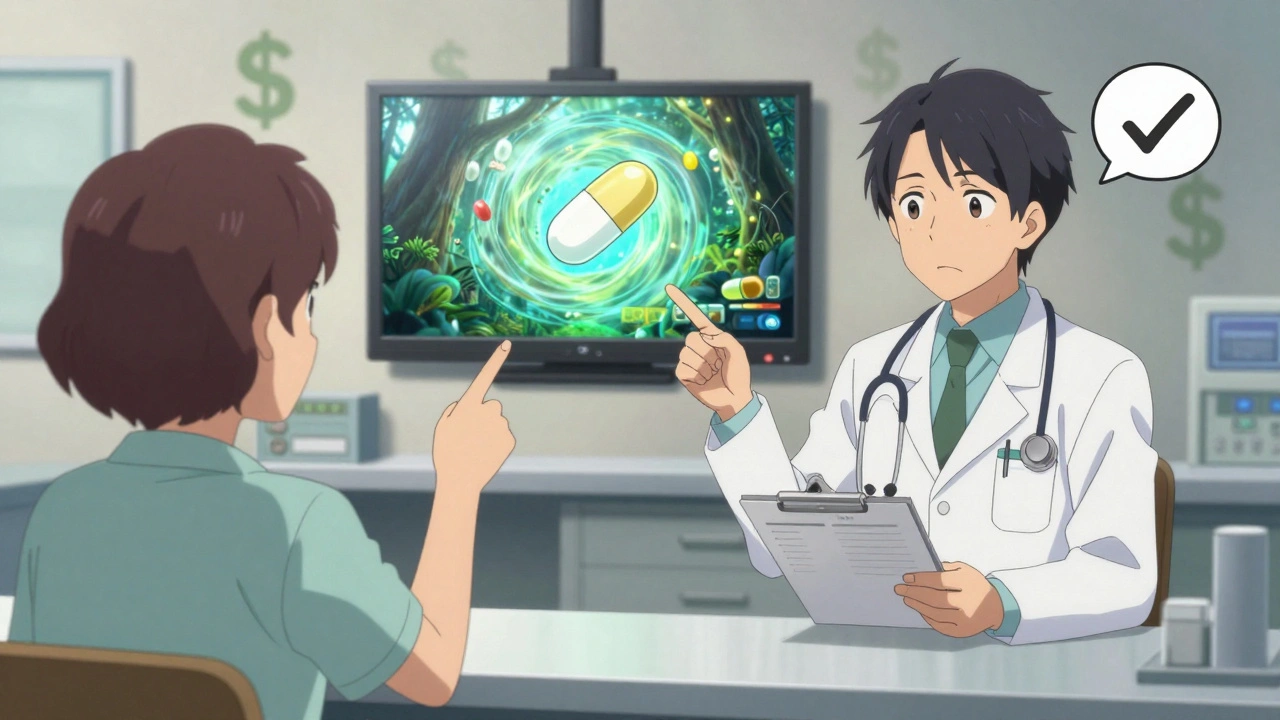
Studies show that when patients request a specific drug because they saw it on TV, doctors prescribe it 70% to 80% of the time-even when they believe it’s not the right choice. One study used "standardized patients" who were trained to ask for specific antidepressants. Those who asked for the branded version got it far more often than those who didn’t ask at all. Even when the doctor thought the patient didn’t need it, they still wrote the prescription.
Why? Because doctors don’t want to argue. They’re short on time. They don’t want to deal with a frustrated patient who’s convinced they need a certain drug. And when a patient says, "I saw it on TV," it’s hard to say no without sounding dismissive.
That’s dangerous. A national survey found that physicians agreed that nearly 7 out of 10 patient requests driven by advertising were for treatments they considered inappropriate. That means for every 10 people asking for a drug because of an ad, seven were being pushed toward something they didn’t need-or something cheaper and just as good was available.
Generics Are the Real Deal-But Ads Make Them Invisible
Let’s be clear: generics are not second-rate. They’re required by law to have the same active ingredient, strength, dosage form, and route of administration as the brand-name drug. They go through the same rigorous testing. The only difference? Price. Generics cost 80% to 85% less on average.
But because they’re not advertised, they’re invisible to most consumers. You won’t see a commercial for generic atorvastatin. You’ll see one for Lipitor. You won’t see ads for metformin. You’ll see ads for Januvia. The ad doesn’t mention the cheaper option. It doesn’t have to. It just needs to make you feel like you need this one.
And here’s the kicker: the FDA’s own research shows that even after seeing an ad four times, most people still don’t remember the risks. Benefit information sticks better than risk information. So you remember the hiking, the laughter, the relief. You forget the possible side effects, the drug interactions, the fact that a cheaper version exists.
Advertising Lowers Adherence-Even When It Increases Use
Here’s something most people don’t know: people who start taking a drug because they saw an ad are actually less likely to stick with it long-term. Research shows that while advertising increases the number of people starting a new medication, those people are more likely to stop taking it after a few months. Why? Because they weren’t truly sick. They weren’t guided by a doctor’s assessment. They were influenced by a 30-second emotional pitch.
And the effect on adherence is tiny. A 10% increase in advertising leads to only a 1% to 2% increase in adherence among people already taking the drug. That means most of the benefit of advertising isn’t better health-it’s more prescriptions, more spending, and more profit for drug companies.
Meanwhile, people who start treatment based on a doctor’s recommendation? They’re far more likely to stick with it. Because they understand why they need it. Not because a smiling person on TV made them feel like they were missing out.
The Cost Isn’t Just Financial-It’s Health
When you choose a branded drug over a generic because of an ad, you’re not just paying more. You’re adding pressure to the entire healthcare system. Higher drug costs mean higher insurance premiums. Higher out-of-pocket expenses. And in some cases, people skip their meds altogether because they can’t afford the brand-then end up in the ER later because their condition worsened.
It’s a vicious cycle. Ads create demand. Demand drives up prices. Higher prices make generics seem less appealing-even though they’re the better choice. And the cycle continues.
Some argue that DTC advertising raises awareness of conditions people didn’t know they had. Maybe. But awareness doesn’t require flashy commercials with actors pretending to be healthy. It requires public health campaigns, doctor education, and transparent information-not marketing designed to sell a product.
What You Can Do
You don’t have to be passive. When you see an ad:
- Ask your doctor: "Is there a generic version?"
- Ask: "Is this the best option for me-or just the most advertised?"
- Ask: "What happens if I don’t take this?"
- Check your pharmacy’s price list. Generics are often $5 to $10 a month. Brands? $100+.
Don’t let a 30-second TV spot make your healthcare decisions for you. The science doesn’t care if a drug has a catchy name or a jingle. It only cares if it works. And generics? They work just as well.
Next time you’re handed a prescription, pause. Ask the question. You might save hundreds-or even thousands-without sacrificing your health.
Are generic drugs really as effective as brand-name drugs?
Yes. The FDA requires generic drugs to have the same active ingredient, strength, dosage form, and route of administration as the brand-name version. They must also be bioequivalent, meaning they work the same way in your body. Generics are tested for safety and effectiveness just like brand-name drugs. The only differences are the inactive ingredients (like fillers) and the packaging-neither affects how well the drug works.
Why don’t generic drugs have commercials?
Because they don’t make enough profit to justify the cost of advertising. Generic manufacturers sell their drugs at low prices to compete with each other. A $5 generic pill doesn’t have the same profit margin as a $150 branded one. So there’s no financial incentive to run TV ads. Meanwhile, brand-name companies spend billions on marketing to protect their market share after their patent expires.
Do ads make people take drugs they don’t need?
Yes. Studies show that up to 70% of patient requests driven by direct-to-consumer advertising are for treatments physicians consider inappropriate. Patients often request drugs they saw on TV-even when their condition doesn’t warrant it, or when a cheaper, equally effective alternative exists. This puts pressure on doctors to prescribe, even if they believe it’s not the best medical choice.
Can advertising affect how doctors prescribe medication?
Absolutely. Doctors are human, and they respond to patient requests. When a patient says, "I saw this drug on TV," doctors are far more likely to prescribe it-even if they’d normally choose a generic or not prescribe anything at all. Research shows that patients who request a specific drug are significantly more likely to receive it, regardless of medical appropriateness.
Is it true that people who start drugs because of ads are less likely to stick with them?
Yes. Studies found that patients who begin taking a medication because of an ad are less likely to continue it long-term. They often weren’t truly in need of the drug-they were reacting to emotion, not medical need. In contrast, patients who start treatment based on a doctor’s recommendation are far more likely to stay on the medication because they understand why it’s necessary.
What’s the best way to find out if a generic is right for me?
Ask your doctor or pharmacist directly: "Is there a generic version of this medication?" Then ask, "Is it safe and effective for my condition?" You can also check your pharmacy’s price list-generics are often under $10 per month. Don’t assume the brand is better. The science says otherwise. Your wallet-and your health-will thank you.

OMG I JUST REALIZED I’VE BEEN PAYING $120 FOR LIPITOR WHEN GENERIC IS $8?? 😱 I’M SO MAD BUT ALSO SO GRATEFUL I READ THIS. THANK YOU!! 🙌
Bro this is wild. I used to think generics were like knockoff sneakers-looks the same but falls apart. Turns out they’re just the same shoe with a different label. Mind blown. 🤯
Ugh stop being so naive. Pharma doesn’t care about your wallet-they care about your life. If you don’t take the brand, you’re basically gambling with your health. And don’t even get me started on how generics sometimes have different fillers that mess with your gut. I’ve been there. Not worth it.
It is imperative to recognize that the regulatory framework governing generic pharmaceuticals in the United States, as enforced by the Food and Drug Administration, mandates bioequivalence through rigorous pharmacokinetic studies. The assertion that generics are inferior is not empirically supported. Furthermore, the economic disincentive for manufacturers to advertise low-margin products is a rational market phenomenon, not a failure of quality assurance.
we are all just atoms dancing to the tune of corporate symphonies… the pill you take is not medicine, it’s a ritual. the ad? a modern prayer. and the doctor? just the priest who whispers ‘amen’… 🌿
Y’all need to chill. I’ve been on generic metformin for 8 years. My blood sugar’s better than when I was on the brand. My insurance pays $4. I’ve saved over $10k. I’ve told my whole family. My mom switched and her cholesterol dropped. My brother switched and he’s not broke anymore. It’s not magic-it’s math. And the science? It’s rock solid. Stop letting ads make you feel guilty for being smart. You’re not cheap-you’re savvy.
This is why America is dying. We’ve turned healthcare into a reality TV show. People don’t want to think. They want to feel. So they swallow a $150 pill because some guy in a kayak smiled at them. Meanwhile, the people who actually need help can’t afford it because we let corporations turn medicine into a commodity. We’re not patients-we’re customers. And we’re being fleeced. Wake up.
I had no idea… I just thought generics were ‘budget’ options. I feel so silly now. My grandma took generics her whole life and lived to 94. I’m going to ask my doctor tomorrow. Thank you for this. ❤️
You think this is bad? Wait till you see how they market antidepressants to teenagers. They don’t even pretend it’s about health anymore. It’s about creating dependency. The system is designed to keep you sick and buying. Generics are the only thing keeping people alive. And they’re still being erased from the conversation. This isn’t negligence-it’s intentional.
Let’s be real-this isn’t about pills. It’s about narrative warfare. Brand drugs are Hollywood blockbusters. Generics? They’re indie films no one’s heard of. But guess what? The indie film has the same script, same director, same cast. You just gotta dig past the billboards. The FDA’s bioequivalence standards? That’s the plot twist. The real villain? The marketing budget. And we’re all just extras in their movie.
Everyone’s so excited about generics… but what about the people who actually need the brand? I have autoimmune issues. My body reacts differently. I tried the generic. I felt like I was drowning. Now I pay $200 a month. I don’t complain. I just wish people wouldn’t act like everyone’s the same.
Why are we letting foreign drug makers profit off American suffering? If we banned DTC ads, we’d be forcing companies to focus on innovation-not just selling sugar pills with a fancy logo. We need to protect American pharma, not enable cheap imports. This is economic weakness disguised as savings.
I work in pharmacy. I see this every day. People come in demanding the brand. We tell them the generic is cheaper and identical. They say ‘no thanks, I want the real one.’ I’ve had patients cry because they think they’re getting ‘fake medicine.’ It’s heartbreaking. And it’s all because of ads. Not ignorance. Fear.
My sister was diagnosed with high blood pressure. She was on the brand. $150/month. We switched her to generic. $7. She’s been stable for 3 years. No side effects. No complaints. Doctors don’t always know the price. Pharmacists do. Ask your pharmacist. They’re the real heroes. And no, generics don’t make you weaker. They make you wiser.
bro why are we even talking about this? just take the free sample they give you at the doctor’s office. if it works, great. if not, whatever. i don’t even know what my meds are called. just pop the little pills. 🤷♂️