
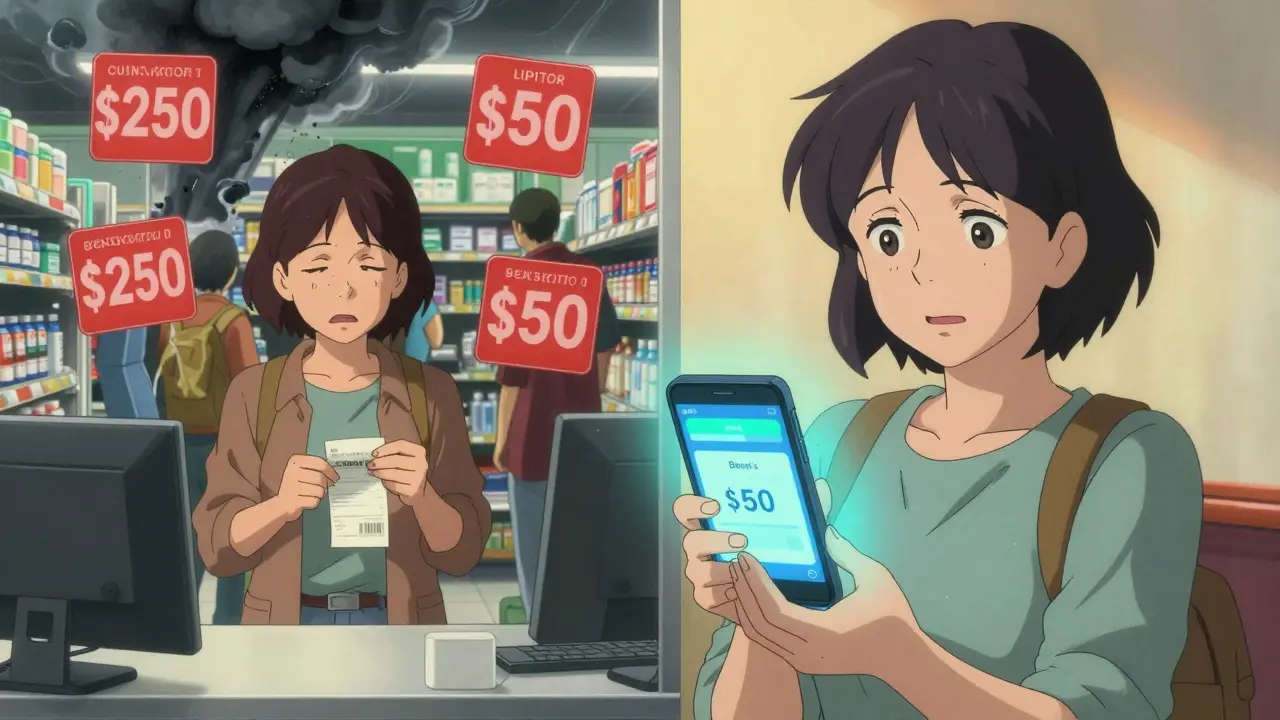
Want to save hundreds a year on your generic prescriptions? It’s not magic - it’s just where you buy them. If you’re paying full retail price at your local pharmacy for things like metformin, amoxicillin, or atorvastatin, you’re likely overpaying - sometimes by more than 80%. The truth is, generic drug prices can vary wildly depending on whether you buy online through an e-pharmacy platform or walk into a brick-and-mortar store. And the difference isn’t just a few dollars - it’s enough to change how you manage your health budget.
Why the same pill costs $250 at CVS and $50 online
It’s not a scam. It’s a broken system. Retail pharmacies don’t set prices based on what the drug actually costs to make. Instead, they use a formula called AWP - Average Wholesale Price - plus a markup and a dispensing fee. For example, a common pricing model is AWP + 20% + $5. That means if the AWP for a 30-day supply of Lipitor (atorvastatin) is $200, your cash price could easily hit $250. And that’s before insurance gets involved. Online platforms like Beem, GoodRx, and SingleCare don’t use that system. They cut out the middlemen - pharmacy benefit managers (PBMs), distributors, and complex insurance negotiations - and negotiate fixed, transparent prices directly with pharmacies. These platforms don’t sell drugs themselves. They’re price comparison engines that show you the lowest available cash price at nearby pharmacies. You pay that price, no insurance needed. Trybeem’s 2023 analysis found real-world examples: Metformin 500mg (30 tablets) costs $60 at CVS but only $20 online. Amoxicillin 500mg (30 capsules)? $30 retail, $10 online. Lipitor 20mg? $250 at Walgreens, $50 via Beem. That’s not a typo. That’s the system working as designed - just not for you unless you know where to look.Who’s winning: e-pharmacies or retail chains?
When it comes to generic medications, e-pharmacies win - badly. For routine, high-volume prescriptions, the savings are consistent and massive. A 2023 Ohio State University study found that for 76% of common medications, the difference between online cash prices and insured retail prices was under $200 per year. For many, it was almost zero. But here’s the twist: for uninsured patients, the online price was often lower than what insured people paid at retail. That’s because insurance doesn’t always mean cheaper. PBMs negotiate rebates with drugmakers, but those savings don’t always reach the patient. Your copay might be $15, but the actual cost to the system is $80. The pharmacy still gets paid based on that inflated AWP formula. Meanwhile, the person paying cash online gets the same pill for $10 because the platform negotiated a direct discount. Retail pharmacies still have advantages - immediate access, in-person pharmacists, same-day pickup. But if you’re refilling a stable medication like blood pressure pills, thyroid meds, or antibiotics, those perks don’t justify paying 3-5 times more.What e-pharmacies can’t do (and when retail still wins)
E-pharmacies aren’t perfect. They’re great for generics - the kind you take daily, long-term. But they struggle with specialty drugs. Take glatiramer acetate for multiple sclerosis: it costs $24,186 a year even through Mark Cuban’s Cost Plus Drug Company. That’s still cheaper than retail, but it’s still a huge bill. These drugs need special handling, cold shipping, and clinical support - things most discount platforms don’t offer. Also, if you need to talk to a pharmacist right now - maybe you’re confused about side effects, or you just had a new diagnosis - walking into a store matters. Online platforms don’t replace that human connection. They replace the overpriced markup. And not all online services are equal. Beem claims up to 80% savings and sometimes beats GoodRx by 50%. But you have to compare. Don’t just pick the first one you see. Run the same drug across Beem, GoodRx, SingleCare, and even Cost Plus Drug Company. Prices vary by location, pharmacy network, and even the day you check.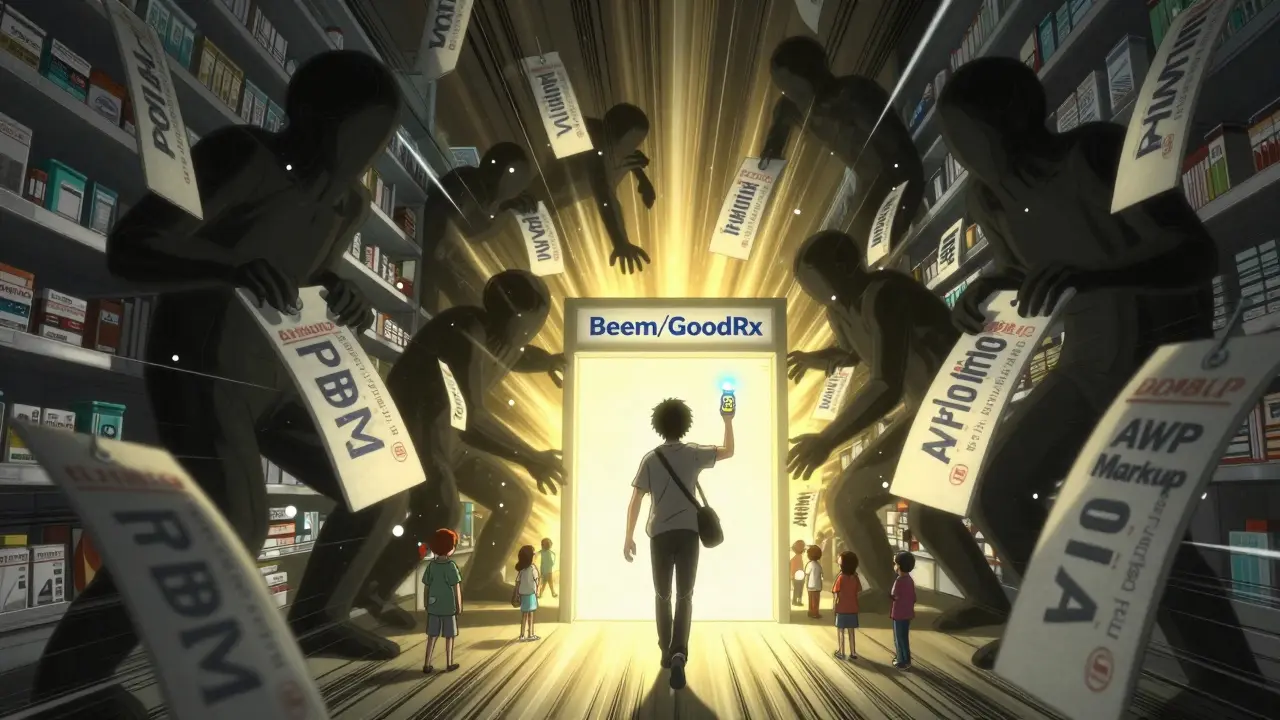
How to use e-pharmacy platforms like a pro
It’s easier than you think. Here’s how to do it:- Find your medication name and dose (e.g., “Metformin 500mg”)
- Go to Beem, GoodRx, or SingleCare on your phone
- Enter your zip code
- See the lowest cash price near you - usually within 1-3 miles
- Either print the coupon or show the digital card at the pharmacy counter
- Pay and leave - no insurance, no hassle
The bigger picture: Why this gap exists
The U.S. pharmacy system is built on layers of middlemen. Drug manufacturers sell to distributors. Distributors sell to PBMs. PBMs negotiate rebates with manufacturers - and then tell pharmacies what to charge. Pharmacies charge you based on AWP, which is often inflated. Insurance companies pay based on those same inflated numbers. You pay a copay that doesn’t reflect the real cost. E-pharmacies skip all that. They go straight to the pharmacy and say: “We’ll bring you 500 customers a month if you give us this price.” The pharmacy says yes - because they get volume. You say yes - because you pay less. Everyone wins except the system that’s been profiting off opacity. The Commonwealth Fund calls this “the evolving role of mail-order and e-commerce platforms.” That’s not jargon. That’s the future. In 2017, mail-order pharmacies handled 37% of retail prescriptions. By 2029, the global market for them is projected to hit $249 billion. That’s not a trend. That’s a takeover.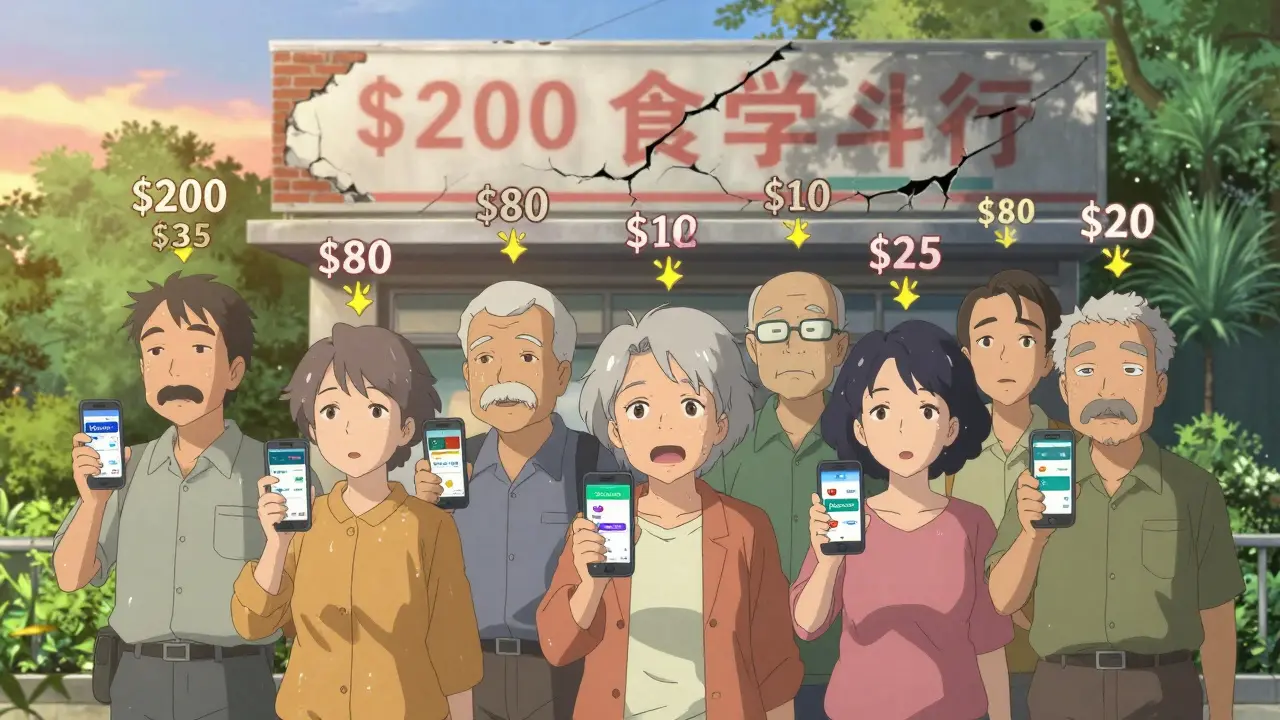
Real people, real savings
A 68-year-old in Sydney, Australia, told me last month she switched from her local chemist to Beem for her cholesterol and diabetes meds. She used to pay $180 a month out of pocket. Now she pays $35. That’s $1,740 saved a year. She didn’t need a new insurance plan. She didn’t need a new doctor. She just needed to know the price wasn’t fixed. J.D. Power’s 2025 U.S. Pharmacy Study found overall satisfaction with mail-order pharmacies is rising steadily. People aren’t just using them because they’re cheap - they’re using them because they’re reliable. And that’s the key. Once you try it, you won’t go back.What’s next for drug pricing?
The Congressional Budget Office says brand-name drug prices have risen 4% annually since 2018. Generics? They’re still the bargain - if you know where to look. But if the system stays broken, more people will keep leaving retail behind. Retail pharmacies aren’t going away. But their pricing model is under siege. As more consumers demand transparency, and as platforms like Beem and Cost Plus Drug Company expand their networks, the gap between online and retail will widen - not close. The question isn’t whether you should use an e-pharmacy. It’s why you’re still paying retail prices when you don’t have to.Are online pharmacy prices really cheaper than retail?
Yes, for most generic medications. Platforms like Beem, GoodRx, and SingleCare negotiate direct discounts with pharmacies, cutting out middlemen. For common drugs like metformin, amoxicillin, or atorvastatin, you can save 50-80% compared to retail cash prices. One 2023 analysis found Lipitor cost $250 at CVS but only $50 online.
Do I need insurance to use e-pharmacies?
No. These platforms are designed for cash-paying customers - including the uninsured, underinsured, or those with high-deductible plans. You pay the discounted price directly at the pharmacy using a coupon or digital card. Insurance isn’t involved at all.
Can I use e-pharmacies for all my medications?
Best for routine generics like blood pressure, diabetes, cholesterol, and antibiotics. They’re less effective for specialty drugs (like those for MS or cancer) that require special handling, refrigeration, or clinical support. For those, insurance-based mail-order or specialty pharmacies may still be your best option.
Is Beem better than GoodRx?
Often, yes. Beem frequently offers lower prices than GoodRx for the same drug at the same pharmacy - sometimes by 50% or more. But prices vary by location and pharmacy. Always compare both platforms (and SingleCare) before buying. Don’t assume one is always cheaper.
Are online pharmacies safe?
Yes - if you use trusted platforms like Beem, GoodRx, SingleCare, or Mark Cuban’s Cost Plus Drug Company. These services partner with licensed U.S. pharmacies. The medication you receive is the same as what you’d get at CVS or Walgreens - just cheaper. Avoid unknown websites that ship from overseas or don’t require a prescription.
How often should I check prices online?
Check before every refill. Prices change weekly based on pharmacy contracts and inventory. Setting up price alerts on Beem or GoodRx can notify you when a lower price becomes available. Even small drops add up over time.
Why do pharmacies charge so much if the drug costs so little?
Because they use the Average Wholesale Price (AWP) system - a outdated, inflated benchmark that includes hidden markups. Insurance negotiations and PBM rebates further distort pricing. Cash prices are often set to cover those inflated costs. Online platforms bypass this entirely by negotiating flat discounts.
Will my pharmacy refuse my e-pharmacy coupon?
Almost never. Most major chains - CVS, Walgreens, Walmart, Kroger - participate in these discount programs. If a pharmacy says no, ask to speak to the pharmacist. Sometimes front desk staff don’t know how to process the coupon. The pharmacist will know. If they still refuse, try another nearby location - most platforms list multiple participating pharmacies.
yo so like... the AWP system is just a glorified pyramid scheme, right? PBMs are the ones sucking the life outta the whole damn thing. i mean, why the hell does a $0.10 pill cost $250? it’s not pharmacology, it’s financial sorcery. someone’s making bank while grandma skips doses. we need to burn the whole damn infrastructure down and start fresh. 🤔
The pricing disparity between retail and online platforms is well-documented in peer-reviewed literature. The transparency offered by digital aggregators represents a significant improvement in consumer healthcare economics.
OMG I JUST REALIZED I’VE BEEN PAYING $200 FOR MY CHOLESTEROL MEDS FOR 3 YEARS 😭😭😭 I’M SO MAD. WHY DID NO ONE TELL ME?! I’M NOT EVEN INSURED AND I’M STILL PAYING MORE THAN A PERSON IN INDIA. THIS IS WHY AMERICA IS BROKE. I’M GOING TO BEEM RIGHT NOW AND I’M TELLING EVERYONE. 🤬💸🇺🇸
This is actually life-changing info!! 🙌 I’ve been paying full price for my metformin and didn’t even know I could save $40 a month. I just checked Beem with my zip code and it’s $18 instead of $60!! I’m gonna print out coupons for my mom and my neighbor too. We’re all gonna be saving hundreds this year. Thank you for sharing this - it feels like someone finally handed us the keys to the kingdom. 💪💊
The structural inequities embedded within the pharmaceutical supply chain are not merely economic anomalies-they are moral failures of commodification. The AWP mechanism, a relic of mid-20th-century accounting practices, functions as a veil for rent-seeking behavior. The emergence of e-pharmacy aggregators represents not merely market innovation, but a reclamation of consumer sovereignty from institutionalized opacity. One must ask: if the cost of production is negligible, why is access to therapeutic necessity contingent upon the labyrinthine machinations of intermediaries?
These e-pharmacies? They're all controlled by Big Pharma anyway. You think they want you to save money? Nah. They're just testing how fast they can push you off insurance so they can jack up prices later. They got the government in their pocket. Don't fall for it. I read on a forum that Beem is owned by a hedge fund that also owns CVS. It's all smoke and mirrors. Stick to your local pharmacy. At least they're American.
Wow. I’ve been using GoodRx for years but never thought to compare it to Beem. Just checked my atorvastatin-Beem was $42, GoodRx $58. I’m stunned. I’ve been so focused on just getting *any* discount that I didn’t realize there’s a whole hierarchy of savings out there. This is the kind of quiet revolution that doesn’t make headlines but changes lives. Thank you for pointing this out. I’m going to share this with my book club.
wait so you just type in your med and it shows up cheaper?? i tried goodrx once but i think i typed in 'metformin 500mg' wrong and it said no results so i gave up. maybe i need to try again? i also think the guy in the pic on beem looks sketchy but idk
It’s fascinating how the same chemical compound-identical in molecular structure, purity, and bioavailability-can carry a price tag that varies by 500% depending on who’s handling the transaction. The pill doesn’t change. The patient doesn’t change. Only the middlemen do. This isn’t healthcare. It’s a pricing theater where the audience pays for the script.
As someone who’s worked in community pharmacy for 18 years, I’ve seen this shift firsthand. The retail model is dying-not because it’s bad, but because it’s unsustainable. We’re not making money on generics anymore; we’re breaking even on volume. E-pharmacies didn’t break the system-they exposed it. The real tragedy? Most patients still don’t know they have options. I hand out printed Beem coupons now. It’s the least I can do.
Man. I just saved $180 on my blood pressure meds. No insurance. No drama. Just typed in the name, hit ‘find pharmacy’, and walked out with a $12 bottle. Feels weird to pay less than my coffee. Guess I’ll start bringing my own cup too.