
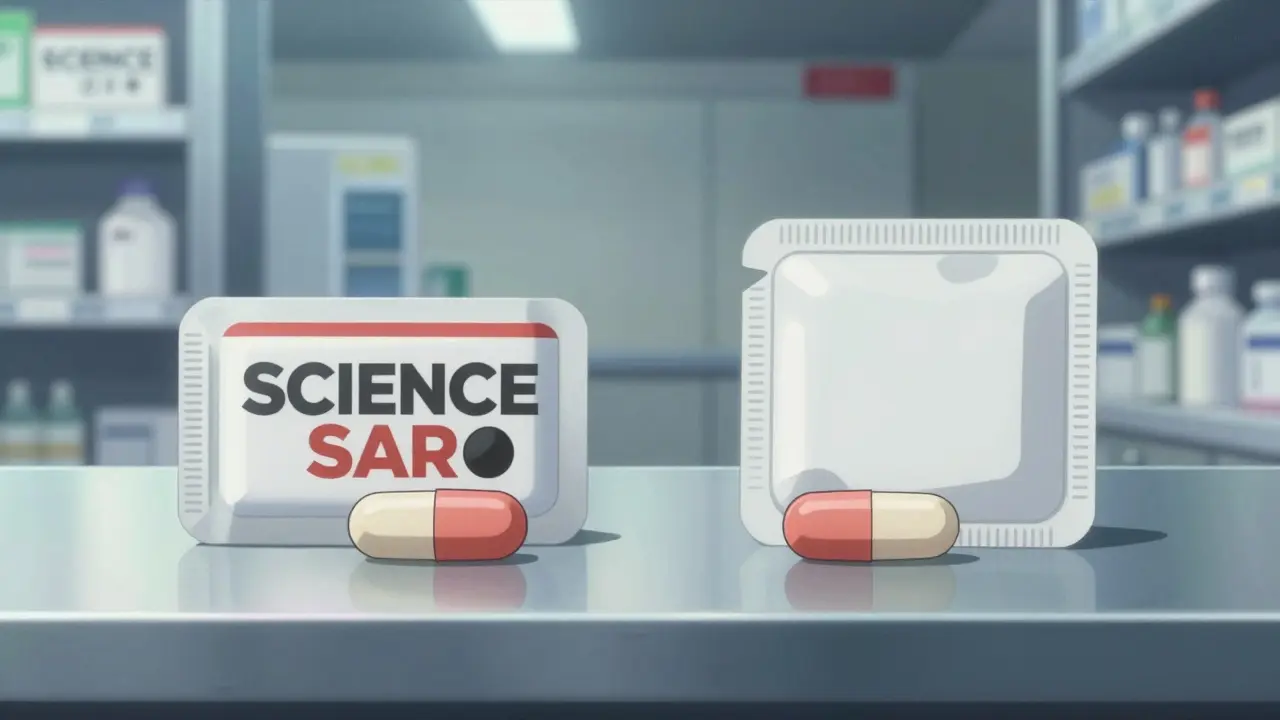
When you see a prescription for a brand-name drug like Lipitor or Eliquis, you might assume the only cheaper option is a generic version. But there’s another option that’s often hidden in plain sight: the authorized generic. It’s not a knockoff. It’s not a copy. It’s the exact same pill, made in the same factory, by the same company that makes the brand-name version - just sold under a different label and at a lower price.
What Exactly Is an Authorized Generic?
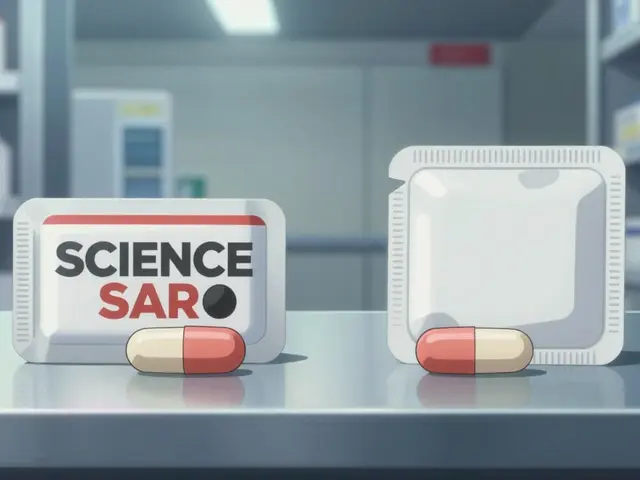
An authorized generic is a drug that’s identical to its brand-name counterpart in every way: active ingredient, dosage, shape, color, packaging, and even the inactive fillers. The only difference? It doesn’t carry the brand name. It’s produced under the original brand’s FDA-approved New Drug Application (NDA), not a separate generic application. That means it doesn’t need to go through the usual generic approval process. It’s the real thing, just stripped of the marketing.Brands launch these not to help you save money - though that’s the side effect - but to protect their own market share. When a patent expires, the first generic company to file gets 180 days of exclusive rights to sell the drug. That’s a huge window to set high prices with no competition. But if the brand company releases its own authorized generic at the same time, it breaks that monopoly. Suddenly, there are two versions of the same drug on the shelf. And prices drop.
Why Are Authorized Generics Cheaper?
The answer is simple: no marketing costs. No TV ads. No sales reps visiting doctors. No fancy packaging. No patent protection fees. The brand company doesn’t need to recoup billions spent on research and promotion because they’ve already made that money during the patent years.Authorized generics skip the expensive part of drug sales. They’re made on the same production lines, with the same quality checks, but sold directly to pharmacies or distributors at a discount. That discount gets passed on - usually 4% to 8% less than the brand-name price. In some cases, like the EpiPen, the authorized generic dropped to half the brand price overnight.
Compare that to traditional generics. Those are made by different companies after the patent expires. They have to prove they’re equivalent to the brand. That takes time, money, and paperwork. Even then, if only one generic enters the market, prices stay high. But with an authorized generic in the mix, competition kicks in from day one.
How Authorized Generics Change the Market
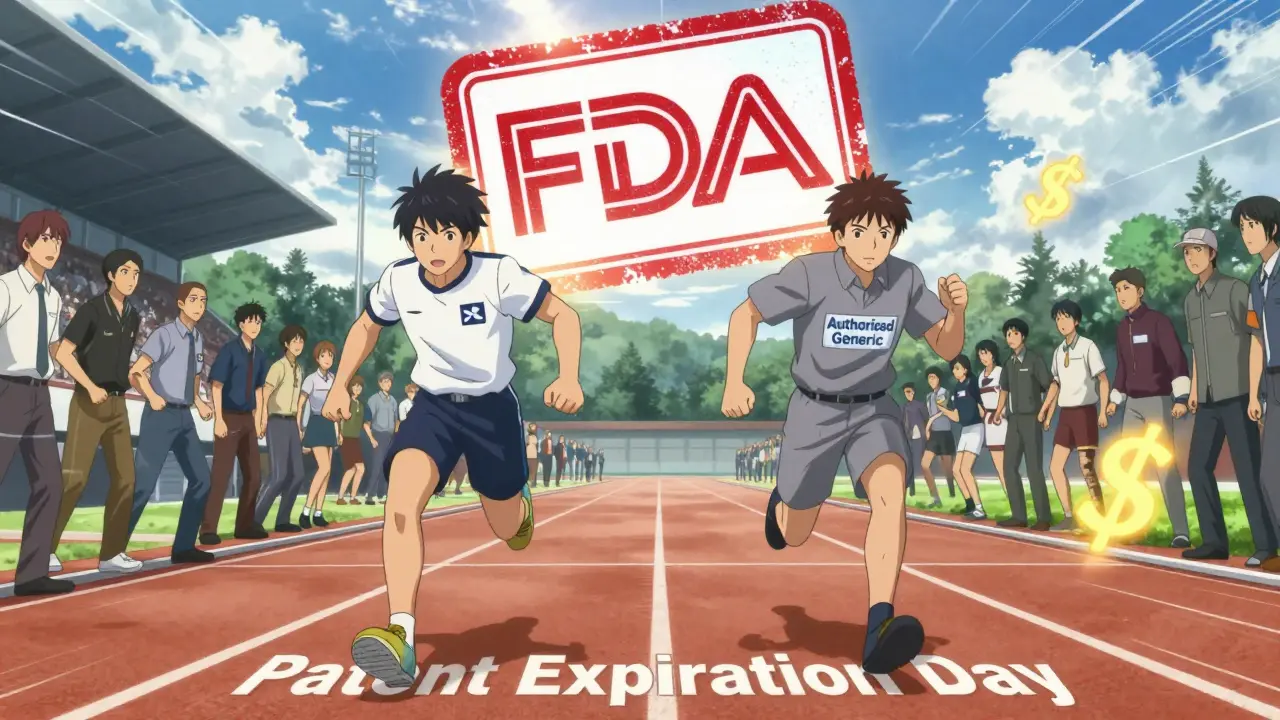
Think of it like a race. Normally, when a patent expires, one company gets a head start. They run alone for six months, setting the price. Then, others join. Prices slowly fall.With an authorized generic, the race starts with two runners. The first generic? They can’t charge premium prices anymore. The brand’s own version is sitting right next to them, cheaper. So they lower their price too. And then the other generics jump in. The result? Prices drop faster and deeper.
Studies show that when an authorized generic enters the market alongside a traditional generic, pharmacy invoice prices fall by 13% to 18%. Retail prices drop by 7% to 10%. That’s not a small difference - it’s life-changing for people paying out of pocket or with high deductibles.
The Federal Trade Commission found that the mere presence of an authorized generic during the 180-day exclusivity window leads to lower prices across the board - not just for the authorized version, but for all generics that follow. It forces everyone to compete from the start.
Who Makes Authorized Generics?
Sometimes, the brand company makes the authorized generic themselves. Other times, they license the rights to another company - often a generic manufacturer they already work with. For example, Pfizer might make an authorized version of its own drug, or they might let Teva or Mylan produce it under license.The FDA tracks all authorized generics in a public quarterly list. As of October 2023, there were 137 active authorized generics on the market. Common ones include versions of drugs like Crestor, Zoloft, and Pradaxa. You won’t always see them on the shelf unless you ask. Pharmacists often don’t automatically substitute them unless you specifically request a generic - and even then, they might not know if the generic they’re offering is an authorized one.
Why You Might Not See Them at the Pharmacy
Here’s the catch: it’s not just about price. It’s about how Pharmacy Benefit Managers (PBMs) structure their formularies. PBMs are the middlemen between insurers, pharmacies, and drug makers. They decide which drugs get covered, and at what cost to you.If a PBM puts the brand-name drug and the authorized generic on the same tier, you might pay the same copay for both. That means you don’t save anything by choosing the authorized generic - even though it’s cheaper for the pharmacy to buy. In some cases, PBMs even favor the brand-name version because they get bigger rebates from the manufacturer.
That’s why asking your pharmacist is key. Say: “Is there an authorized generic for this? And if so, what’s the cash price?” Cash prices are often the most transparent. Insurance formularies are a maze. Cash prices? You get the real number.
Real-World Examples
In 2016, Mylan faced huge backlash after raising the price of the EpiPen from $100 to $600. Their response? Launch an authorized generic for $300. It wasn’t charity - it was damage control. But it worked. People saved money. The brand kept market share. And Mylan avoided even worse scrutiny.Gilead did something similar with its hepatitis C drugs Harvoni and Epclusa. Even before patents expired, they released authorized generics. Why? The market was already flooded with cheaper alternatives. By launching their own version early, they kept customers from switching to competitors.
These aren’t rare cases. About 67% of major drugmakers have used authorized generics for at least one product since 2010. It’s a standard tactic now.
Are Authorized Generics Safe?
Absolutely. They’re held to the same FDA standards as the brand. Same factory. Same inspectors. Same batch testing. The FDA requires manufacturers to notify them when they launch an authorized generic - and they publish the list so you can check.There’s no difference in effectiveness. No hidden ingredients. No lower quality. The only difference is the label. If your doctor prescribed the brand, the authorized generic will work the same way. Your body can’t tell the difference.
How to Get the Best Deal
1. Ask your pharmacist - “Is there an authorized generic for this drug?” Don’t assume they’ll offer it. 2. Compare cash prices - Use apps like GoodRx or SingleCare. Sometimes the authorized generic is cheaper than your insurance copay. 3. Check the FDA’s list - Go to the FDA’s website and search for your drug. If an authorized generic is listed, you know it exists. 4. Don’t assume generics are the same - There are traditional generics and authorized generics. The latter is often the better deal. 5. Know your PBM - If your insurance plan has a high copay for generics, ask if switching to the authorized generic (even if it’s on the same tier) reduces your cost.What’s Next for Authorized Generics?
With the Inflation Reduction Act capping out-of-pocket drug costs at $2,000 a year for Medicare beneficiaries, the pressure to keep prices low is growing. Authorized generics are now more important than ever. They’re a tool for drugmakers to stay competitive - but also a hidden savings tool for patients.Regulators are watching. The FTC has raised concerns that some companies use authorized generics as part of patent settlement deals - delaying real competition. But so far, the data shows they still drive down prices. Even if they’re used strategically, patients still win.
As more drugs lose patent protection, you’ll see more authorized generics hit the market. And if you know how to find them, you can save hundreds - even thousands - a year.
Are authorized generics the same as regular generics?
No. Regular generics are made by different companies after the patent expires and must prove they’re equivalent to the brand. Authorized generics are made by the original brand company (or under its license) and are identical in every way - same factory, same ingredients, same packaging. They’re not just equivalent - they’re the exact same product.
Why don’t pharmacies automatically offer authorized generics?
Because PBMs (Pharmacy Benefit Managers) control which drugs get preferred status. Sometimes, the brand-name drug and the authorized generic are placed on the same insurance tier, so your copay is the same. Other times, the brand gets a bigger rebate from the manufacturer, so the PBM pushes it over the generic. You have to ask.
Can I switch from a brand-name drug to an authorized generic safely?
Yes. Authorized generics are identical to the brand-name drug in active ingredients, strength, dosage, and performance. The FDA requires them to meet the same strict standards. Millions of people switch without issue. If you’re concerned, talk to your doctor - but there’s no medical reason not to switch.
How much can I save with an authorized generic?
Typically 4% to 8% less than the brand-name version. In some cases, like the EpiPen, savings were as high as 50%. Cash prices often show the biggest difference. Always check GoodRx or ask your pharmacist for the out-of-pocket cost - insurance copays can hide the real savings.
Where can I find a list of authorized generics?
The FDA publishes a quarterly list of all authorized generics on their website. Search for “FDA Authorized Generics List” and look for the most recent update. You can search by brand name or active ingredient to see if an authorized version exists.

Just found out my blood pressure med has an authorized generic. Saved me $40 a month. Why don’t pharmacies ever mention this? I had to Google it myself.
So simple. So obvious. Why is this not common knowledge?
This is such a game-changer for people on fixed incomes. I work at a community clinic and we see patients skip doses because they can’t afford the brand. Once we started pointing them to authorized generics, adherence jumped. No magic pill-just transparency.
Pharmacists need training on this. Most don’t even know the difference between regular and authorized generics.
Also, GoodRx shows the cash price difference instantly. Tell people to use it.
My dad switched his cholesterol med to the authorized generic last year. Same pill, same results, $80 cheaper a month. He didn’t even notice a difference.
Doctors should be pushing this. It’s not about cutting corners-it’s about cutting waste.
Why are we still paying for branding on medicine? It’s not a luxury car.
As a healthcare policy analyst, I’ve spent years tracking pharmaceutical pricing mechanisms. The authorized generic is one of the few market-driven interventions that demonstrably reduces patient cost without compromising safety or efficacy.
Its introduction during the 180-day exclusivity window disrupts monopolistic pricing behavior and forces downstream competition. The FTC’s data confirms this.
Yet, the structural barriers-PBM formulary manipulation, lack of pharmacist education, and consumer unawareness-continue to suppress its utilization.
Policy solutions must address these systemic bottlenecks, not just rely on patient advocacy. This isn’t a loophole-it’s a feature of the system that’s been intentionally obscured.
Wow. So you’re telling me Big Pharma is *actually* helping people now? 😏
Next they’ll be giving out free vaccines and calling it ‘corporate social responsibility.’
Let’s not forget: they invented this trick to *avoid* real competition. It’s not altruism-it’s strategy.
Still, I’ll take the $300 EpiPen over $600 any day. Even if it’s a corporate PR stunt, I’m not turning down free money.
😉
Here’s the thing nobody talks about: if your insurance copay is the same for brand and authorized generic, ask your pharmacist to override it.
Many pharmacies can switch you to the cheaper option manually-even if the system doesn’t show it.
I’ve done this for my mom’s diabetes meds. Saved $120/month.
Don’t let the system trick you. Be the squeaky wheel. Pharmacists *want* to help-you just have to ask right.
AMERICA IS BEING ROBBED. Big Pharma is laughing all the way to the bank while we pay $500 for a pill that costs $2 to make.
And now they’re giving us a *slightly* cheaper version? Like we’re dumb? 🤬
They should be jailed. Not praised.
But hey, at least the EpiPen isn’t $600 anymore. So I guess I’m grateful? 🇺🇸😭
Let’s deconstruct the epistemological framework of pharmaceutical commodification.
The authorized generic is not merely a product-it is a semiotic rupture in the capitalistic signifier of ‘brand integrity.’
By replicating the ontological essence of the branded pharmaceutical-same molecular structure, same production lineage, same regulatory validation-it exposes the absurdity of patent-driven value construction.
The PBM, as a necropolitical intermediary, weaponizes formulary tiers to perpetuate epistemic violence against the patient-consumer.
Thus, the authorized generic becomes a Derridean trace: the ghost of the brand, haunting its own profitability.
And yet, the patient, caught in the hermeneutic circle of insurance bureaucracy, remains alienated from their own bodily sovereignty.
Only through radical pharmacological literacy-rooted in critical theory and GoodRx-can we reclaim the pharmakon from its corporate captors.
Are we not all just molecules in a market-driven body?
Just want to say thank you for writing this. I didn’t know authorized generics existed until today.
I’ve been paying $150/month for my antidepressant. Found out the authorized generic is $35 cash.
I’m switching tomorrow.
You just saved me a lot of stress. Seriously-thank you.