
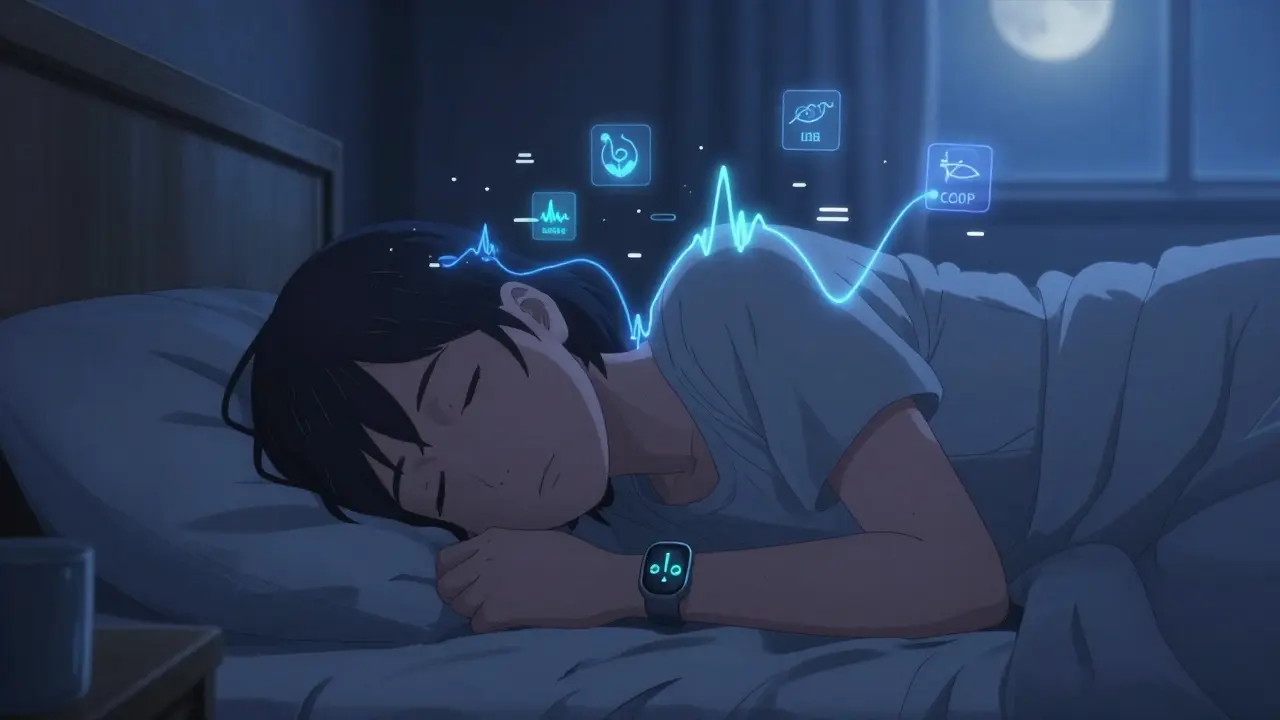
Most people think they know how much they sleep. You go to bed at 11 p.m., wake up at 7 a.m. - that’s eight hours, right? But if you’ve ever woken up feeling exhausted even after "eight hours," you’ve probably experienced the gap between perceived sleep and actual sleep. That’s where actigraphy and wearables come in. They don’t guess. They measure. And for people struggling with insomnia, jet lag, or irregular sleep schedules, that data can be life-changing.
What Is Actigraphy, Really?
Actigraphy isn’t new. It started in the 1980s in university sleep labs, using bulky wrist devices to track movement. Today, it’s in your smart ring, fitness band, or even your Apple Watch. The core idea is simple: your body moves when you’re awake and mostly stays still when you’re asleep. A tiny accelerometer in the device records every shift, twitch, or roll over. Then, software turns that motion data into sleep estimates - when you fell asleep, how long you stayed asleep, how many times you woke up, and how long you were actually resting. Unlike a sleep study in a lab (polysomnography), which wires you up to machines and monitors brain waves, actigraphy lets you sleep in your own bed. No electrodes. No nurses checking on you. Just wear it like a watch and go about your life. That’s the big win: real-world data, not lab data.What Can These Devices Actually Measure?
Modern wearables with actigraphy track four key sleep metrics:- Total Sleep Duration: How many hours you actually slept, not how long you were in bed.
- Sleep Onset Latency: How long it took you to fall asleep after turning off the lights.
- Sleep Efficiency: The percentage of time in bed that you were actually asleep. Below 85% is often a red flag.
- Wake After Sleep Onset (WASO): How many minutes you spent awake during the night after initially falling asleep.
Medical vs. Consumer Devices: What’s the Difference?
Not all sleep trackers are created equal. There’s a big gap between what hospitals use and what you buy online. Medical-grade actigraphs - like the Philips Actiwatch Spectrum Plus - are FDA-cleared. They’re used by sleep specialists to support diagnoses. These devices sample movement 100 times per second, record raw data without filtering, and come with clinical software for detailed analysis. They cost between $1,200 and $1,800. You won’t find these on Amazon. Consumer devices - Fitbit, Oura Ring, Garmin, Apple Watch - use similar motion sensors but with simpler algorithms. They’re cheaper ($99-$299), easier to use, and designed for general wellness. They’re good at spotting trends: “You slept worse this week,” or “Your sleep efficiency dropped after coffee after 4 p.m.” But here’s the catch: consumer devices aren’t designed to diagnose. A 2022 Stanford study found that while Oura Ring and Fitbit were 85-90% accurate at estimating total sleep time, they were far less reliable at detecting wakefulness. If you lie still but are awake - scrolling on your phone, worrying, or just resting - many wearables will call that “sleep.” That’s a problem for people with insomnia who need to know the truth.Why Actigraphy Beats Self-Reporting
Think about how often you’ve said, “I didn’t sleep at all last night.” Then you wake up and realize you were awake for 45 minutes, not four hours. That’s sleep misperception. It’s common in insomnia, depression, and anxiety. People who struggle with sleep often overestimate how long they’ve been awake and underestimate how much they actually slept. Actigraphy removes that bias. It doesn’t care if you feel tired. It only cares about movement. That’s why the American Academy of Sleep Medicine says actigraphy has “moderate evidence” for assessing sleep-wake patterns in adults with insomnia. It’s not perfect, but it’s more honest than your memory. In fact, a 2023 Sleep Foundation survey found that 78% of people who used actigraphy for just one month became more motivated to fix their sleep habits - not because they saw perfect numbers, but because they saw patterns they couldn’t ignore.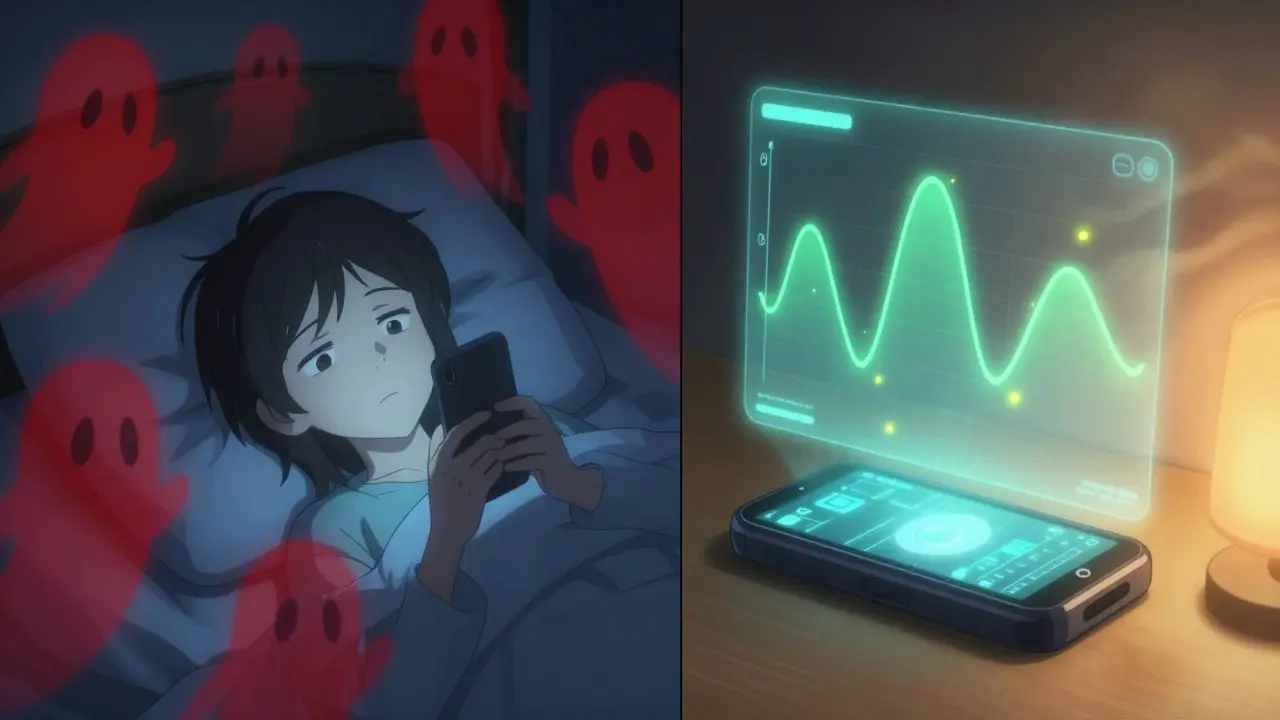
Limitations: What These Devices Can’t Do
Actigraphy is powerful, but it’s not magic. Here’s what it can’t tell you:- What stage of sleep you’re in - REM, deep sleep, light sleep. That requires brainwave monitoring (EEG), which consumer wearables don’t have.
- Whether you have sleep apnea - if you stop breathing, your body might not move much, so the device could think you’re sleeping deeply when you’re actually in distress.
- Why you’re awake - Was it stress? Pain? A full bladder? The device records motion, not causes.
How to Use It Right: A Practical Guide
If you’re thinking about trying actigraphy at home, here’s how to get useful results:- Wear it on your non-dominant wrist - left if you’re right-handed, right if you’re left-handed. This reduces movement from daily tasks like typing or cooking.
- Wear it 24/7 for 7-14 days - not just at night. This helps the algorithm understand your full activity pattern and distinguish between true sleep and quiet wakefulness.
- Don’t change your routine - if you normally sleep at 1 a.m., don’t try to sleep at 10 p.m. just because you’re being watched. Your natural rhythm is what matters.
- Focus on trends, not single nights - one bad night doesn’t mean you have a disorder. Look at the average over a week. A 30-45 minute variation day to day is normal.
- Pair it with a sleep diary - note when you drank coffee, stressed out, or exercised. This helps you connect the dots between behavior and sleep quality.
Who Benefits Most?
Actigraphy isn’t for everyone. But it’s incredibly helpful for:- People with insomnia - especially those who think they’re not sleeping at all.
- Shift workers - tracking how your body adjusts to changing schedules.
- Travelers with jet lag - Condor Instruments found 82% of frequent flyers improved their sleep timing after using actigraphy for four weeks.
- People with circadian rhythm disorders - delayed sleep phase, advanced sleep phase, non-24-hour disorder.
- Those on sleep medications - to see if the drug is actually helping you sleep longer or just making you drowsy.

It's wild how much our brains lie to us about sleep. I used to swear I was up all night, but my Fitbit showed I was actually getting six hours. Turns out my mind was just replaying every dumb thing I said in 2012 on loop.
Now I just look at the trend line. One bad night? Doesn't matter. Three in a row? Time to adjust.
It's not about perfection. It's about noticing the pattern before it becomes a problem.
I’ve been wearing my Oura Ring for eight months now. The biggest win? Realizing coffee after 2 p.m. doesn’t just keep me up-it fragments my deep sleep. No more afternoon lattes. My energy’s up, my mood’s better. Simple fix, huge difference.
I work nights and my sleep schedule shifts every week. Before I started using actigraphy, I thought I was just a bad sleeper. Turns out my body just needed time to adjust-and the data showed me exactly when. Now I plan my naps around the dips in my graph. It’s not magic, but it’s the closest thing I’ve found to a cheat code for shift work.
If you're thinking about trying this, start with what you already own-Apple Watch, Fitbit, whatever. Don’t buy a $1,500 device because you think it’ll fix everything. The real power isn’t in the gadget. It’s in the awareness. Pay attention to what the numbers are telling you about your habits, not just your sleep.
And please, for the love of all things restful, don’t check your sleep score at 3 a.m. That’s how orthosomnia starts.
It is profoundly concerning that so many individuals are placing unwavering trust in consumer-grade motion sensors to quantify a physiological process that requires neurophysiological validation. The American Academy of Sleep Medicine explicitly states that actigraphy is not diagnostic, yet these devices are marketed as if they are. This is a textbook case of technological overreach masquerading as wellness. The data is noisy, the algorithms proprietary, and the implications for mental health-especially among those with anxiety-are dire. One must question the ethics of commodifying sleep.
you know what they dont tell you? these devices are tracking your sleep so the gov can see when your brain is most vulnerable. they use the data to target ads when you're half-asleep. and now they're talking about insurance companies using it to raise your rates. this is how they control us. wear it if you want to be part of the experiment. i stopped using mine after the senate hearing. i dont trust tech giants or bureaucrats with my dreams.
why do people think wearing a watch is gonna fix their sleep problems? you dont need a gadget to know if you're tired. just ask yourself. if you're still exhausted after 8 hours then maybe you're not sleeping because you're stressed or eating junk or watching doomscrolling before bed. its not the device its your life. also i stopped wearing mine because it gave me anxiety. now i just go to bed when im tired. revolutionary concept i know
you americans are so obsessed with quantifying everything. in india we just sleep when tired and wake when body says so. no watch no ring no app. you think your Fitbit knows more than your own body? it's a sensor measuring wrist movement. it doesn't know if you're dreaming or just lying still because you're depressed. your culture has turned rest into a performance metric. i have slept 7 hours every night for 30 years without a single device. you don't need data. you need discipline. and maybe less caffeine.
OMG YES I JUST GOT MY OURA RING AND IT CHANGED MY LIFE 😭 I used to think I was a night owl but turns out I’m a 10:30 p.m. sleeper 🤯 and the fact that my sleep efficiency dropped after wine? YIKES. I’m cutting out the chardonnay after dinner. also i started sleeping with my phone in another room and now i’m actually rested?? 🤫✨