
Living with Parkinson’s disease isn’t just about shaking hands. It’s about struggling to button a shirt, losing your balance turning in bed, or realizing your voice has become so soft that family members have to lean in to hear you. It’s a condition that creeps in slowly, often starting with a slight tremor or a feeling that your movements are just… slower than they used to be. By the time most people get diagnosed, the disease has already changed how they move, think, and live. And while there’s no cure yet, understanding the motor symptoms, how medications work - and where they fall short - can make a huge difference in keeping life as normal as possible.
What You Really Feel: The Four Core Motor Symptoms
The diagnosis of Parkinson’s doesn’t come from a single test. It’s built on what your body does - or doesn’t do. Doctors look for four key signs, and you need at least two to be diagnosed. But here’s the thing: not everyone gets all of them, and they don’t show up at the same time.
Tremor is what most people picture - the hand shaking when you’re resting. It’s often called a "pill-rolling" tremor because it looks like you’re rolling a pill between your thumb and finger. It usually starts on one side, maybe just in your right hand or left foot. About 70% of people notice this first. But here’s the surprise: 20-30% of people with Parkinson’s never have tremor at all. So if you don’t shake, it doesn’t mean you don’t have it.
Rigidity is stiffness that doesn’t go away when you move. Imagine trying to bend your arm, but it feels like you’re pushing through thick putty. Some people feel a ratchet-like resistance - that’s "cogwheel" rigidity. Others feel constant, smooth stiffness - "lead-pipe" rigidity. About 85% of patients have the cogwheel kind. This stiffness isn’t just annoying; it makes turning in bed, standing up, or even walking feel like dragging weights.
Bradykinesia - slow movement - is the most important symptom. Not because it’s flashy, but because it’s always there. If you lose this, you don’t have Parkinson’s. It shows up as tiny movements: less blinking, a flat face with no expression, or your fingers fumbling with buttons. Studies show it takes someone with Parkinson’s over three times longer to button a shirt than someone their age without the disease. Walking becomes a chore. Steps get shorter. Arm swing disappears. Your gait isn’t just slow - it’s stiff, shuffling, and unsteady.
Postural instability is the one that scares people most. It’s not just being clumsy. It’s losing your balance when you turn, stand up, or get pushed gently. This usually shows up later - after 5 to 10 years - but once it does, falls become common. About 68% of people with Parkinson’s fall at least once a year. That’s not normal aging. That’s the disease taking control.
What Else Moves (or Doesn’t)
It’s not just the big four. Parkinson’s messes with your whole body. Your voice gets quieter - 89% of people develop hypophonia, and on average, their voice drops 5 to 10 decibels. That’s like going from speaking normally to whispering across the room. Speech gets slurred too. Over 70% deal with dysarthria.
Handwriting shrinks. It’s called micrographia. You start writing normally, then your letters get smaller and smaller until they’re barely legible. About half of all patients experience this. Swallowing becomes harder. Up to 80% of people in advanced stages have trouble swallowing, which leads to choking risks and pneumonia - the leading cause of death in Parkinson’s. Drooling? Yes. It’s not because you’re salivating more. It’s because you’re not swallowing enough. Around 50-80% of patients deal with it.
Stooped posture? Common. About two-thirds of people develop a slight forward bend. It’s not just bad posture - it’s your muscles pulling you into a bent shape. And then there’s dystonia - painful muscle spasms that twist limbs into strange positions. It’s more common in younger patients, often showing up early in the disease.

Medications: The Good, The Bad, and The Unavoidable
The goal of every Parkinson’s medication is simple: replace what the brain is losing - dopamine. But dopamine can’t cross the blood-brain barrier. So we give the body L-DOPA, the chemical your brain turns into dopamine. It’s been the gold standard since 1967. For most people, it works wonders - 70-80% of patients see major improvement in movement, stiffness, and tremor.
But here’s the catch: it doesn’t last forever. After five years, about half of people start having "on-off" fluctuations. One minute they’re moving fine - "on." The next, they’re frozen - "off." And then there’s dyskinesia - uncontrolled, twisting movements that look like dancing. It’s not the disease. It’s the medicine. And it’s frustrating. You’re not getting worse - you’re just getting too much of a good thing.
That’s why younger patients often start with dopamine agonists - drugs like pramipexole or ropinirole. These mimic dopamine directly. They’re not as strong as levodopa, but they delay those nasty side effects. About 50-60% of early-stage patients get good control with them. But they come with their own problems: nausea, dizziness, sleep attacks, and even impulse control issues - like gambling or shopping compulsions.
After 10 years, about 30% of people reach a point where pills just aren’t enough. That’s when deep brain stimulation (DBS) comes in. Surgeons implant electrodes into the brain to send electrical pulses that calm the overactive signals causing symptoms. It doesn’t stop the disease, but it can give back years of independence. People who get DBS often cut their medication dose in half and regain control over their movements.
Daily Living: When Simple Things Become Battles
Imagine waking up and not being able to roll over. That’s real. About 65% of people with Parkinson’s struggle with this within five years. Dressing? It’s not just slow - it’s exhausting. A shirt with buttons? Forget it. Many switch to Velcro or elastic waistbands. Shoes with slip-ons replace laces. Even using utensils gets harder as fine motor control fades.
Walking isn’t just about getting from room to room. It’s about staying upright. Your steps get shorter. Your speed drops by 30-40%. Your arms stop swinging. That’s not just awkward - it’s dangerous. One study found that 30% of people fall more than once a year. Physical therapy doesn’t cure this, but it helps. Twelve weeks of targeted balance and gait training can improve walking speed by 15-20% and cut fall risk by 30%.
Communication changes too. If your voice is quieter, people stop listening. You stop talking. That’s isolation. Speech therapy can help. Techniques like the Lee Silverman Voice Therapy (LSVT) have been shown to boost volume and clarity. And it’s not just talking - swallowing therapy helps reduce choking risks and keeps nutrition on track.
Sexual dysfunction affects 50-80% of men with Parkinson’s. It’s not talked about enough. Medications, nerve damage, depression, and fatigue all play a role. But it’s treatable. Talk to your doctor. It’s not something you have to live with.
What Doesn’t Work - And What Might Soon
Right now, no drug stops Parkinson’s from progressing. Levodopa, agonists, DBS - they all manage symptoms. They don’t fix the brain. That’s why researchers are racing to find treatments that target alpha-synuclein, the sticky protein that builds up in Parkinson’s brains. But so far, no large trial has shown it can slow the disease.
Exercise is the closest thing we have to a disease-modifying tool. Walking, cycling, dancing, tai chi - anything that gets you moving helps. Studies show people who stay active longer keep their mobility, balance, and mood better. It doesn’t reverse damage. But it builds resilience.
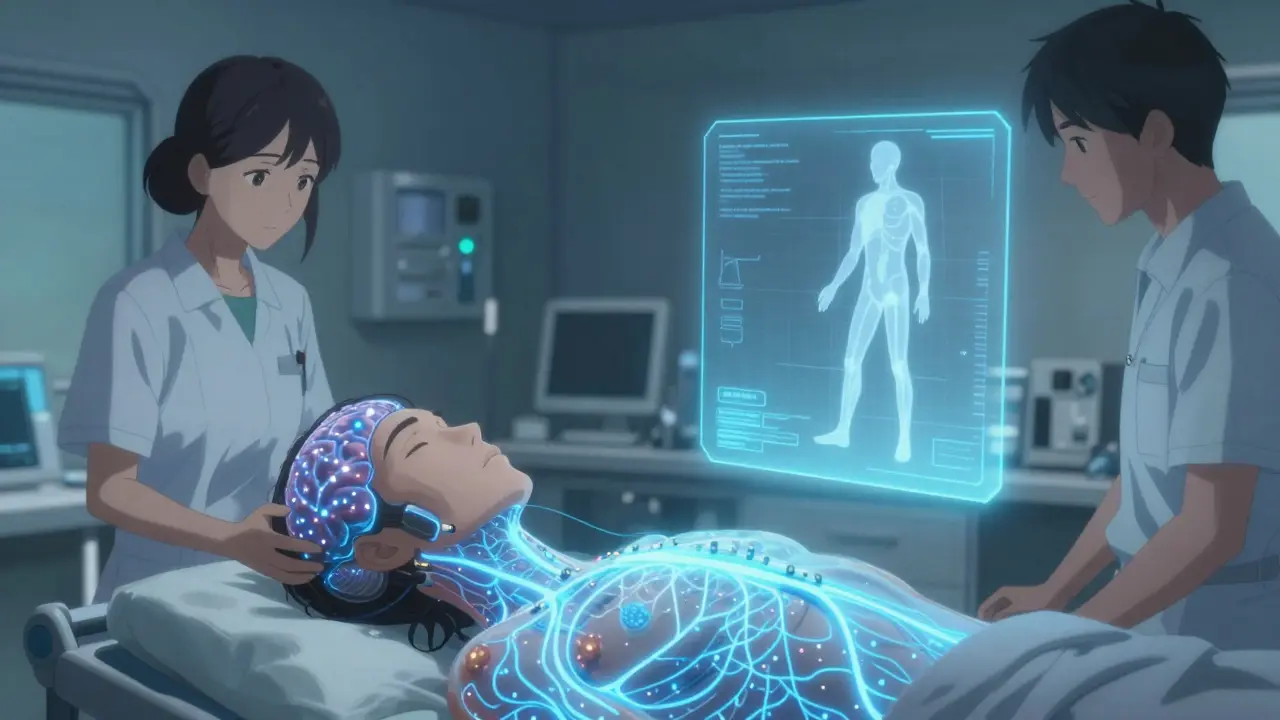
The future isn’t just drugs. It’s personalized care. Wearable sensors that track tremor and freezing episodes. Apps that remind you to swallow. Smart home systems that adjust lighting and grab bars automatically. These aren’t sci-fi. They’re already here - and they’re helping people stay independent longer.
What You Can Do Today
If you or someone you love has Parkinson’s, don’t wait for things to get worse. Start now.
- Get moving - daily, even if it’s just 20 minutes of walking.
- See a physical therapist who knows Parkinson’s. Ask about gait and balance training.
- Work with a speech therapist - even if you don’t think your voice is bad.
- Switch to easy clothing: slip-on shoes, buttonless shirts, elastic waistbands.
- Install grab bars, non-slip mats, and raise toilet seats. Small changes prevent big falls.
- Talk to your doctor about medication timing. Don’t ignore side effects - they’re fixable.
- Don’t isolate yourself. Join a support group. You’re not alone.
Parkinson’s changes your body. But it doesn’t have to change your life. With the right tools, support, and knowledge, you can keep doing the things that matter - even as the disease moves forward.
Can Parkinson’s be cured?
No, there is no cure for Parkinson’s disease yet. Current treatments focus on managing symptoms, not stopping the brain cell loss. Medications like levodopa and procedures like deep brain stimulation improve movement and quality of life, but they don’t reverse damage. Research into therapies targeting alpha-synuclein is ongoing, but none have proven to modify disease progression in large clinical trials as of 2026.
Is tremor always the first sign of Parkinson’s?
No. While tremor is the most common presenting symptom - seen in about 70% of cases - 20-30% of people with Parkinson’s never develop noticeable tremor. The most consistent early sign is bradykinesia, or slowness of movement. This includes reduced facial expression, smaller handwriting, or difficulty with fine tasks like buttoning clothes. If bradykinesia is present along with rigidity or tremor, Parkinson’s is likely.
Why does levodopa stop working after a few years?
Levodopa doesn’t stop working - your body’s response to it changes. Over time, dopamine-producing cells continue to die, so there’s less capacity to store and release dopamine smoothly. This leads to "on-off" fluctuations, where medication effects wear off faster, and dyskinesias, where excess dopamine causes uncontrolled movements. Adjusting dose timing, adding other medications, or switching to continuous delivery systems can help, but eventually, many people need deep brain stimulation to regain control.
Can exercise slow down Parkinson’s progression?
While no treatment has been proven to stop the underlying brain damage, regular exercise is the strongest evidence we have for delaying functional decline. Studies show that people who exercise at least 2.5 hours per week maintain better balance, walking speed, and independence longer than those who don’t. Activities like tai chi, dancing, and cycling improve motor control and reduce fall risk. It’s not a cure - but it’s the closest thing we have to a protective shield.
How do I know if my loved one is having swallowing problems?
Signs include coughing or choking during meals, wet or gurgly voice after eating, taking longer to finish meals, avoiding certain foods (like liquids or dry bread), unexplained weight loss, or frequent pneumonia. Up to 80% of people in advanced stages have swallowing issues. A speech-language pathologist can do a swallowing evaluation and recommend texture-modified diets or exercises to reduce aspiration risk. Don’t wait until it’s an emergency - early intervention saves lives.
Every person with Parkinson’s walks a different path. But no one has to walk it alone.