Anticoagulant Risk Assessment Tool
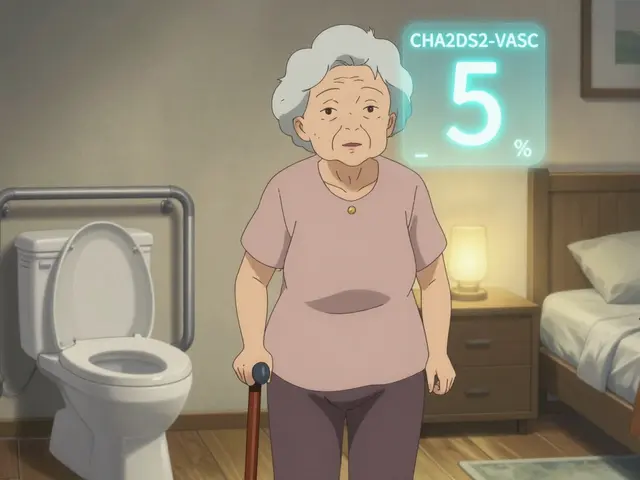
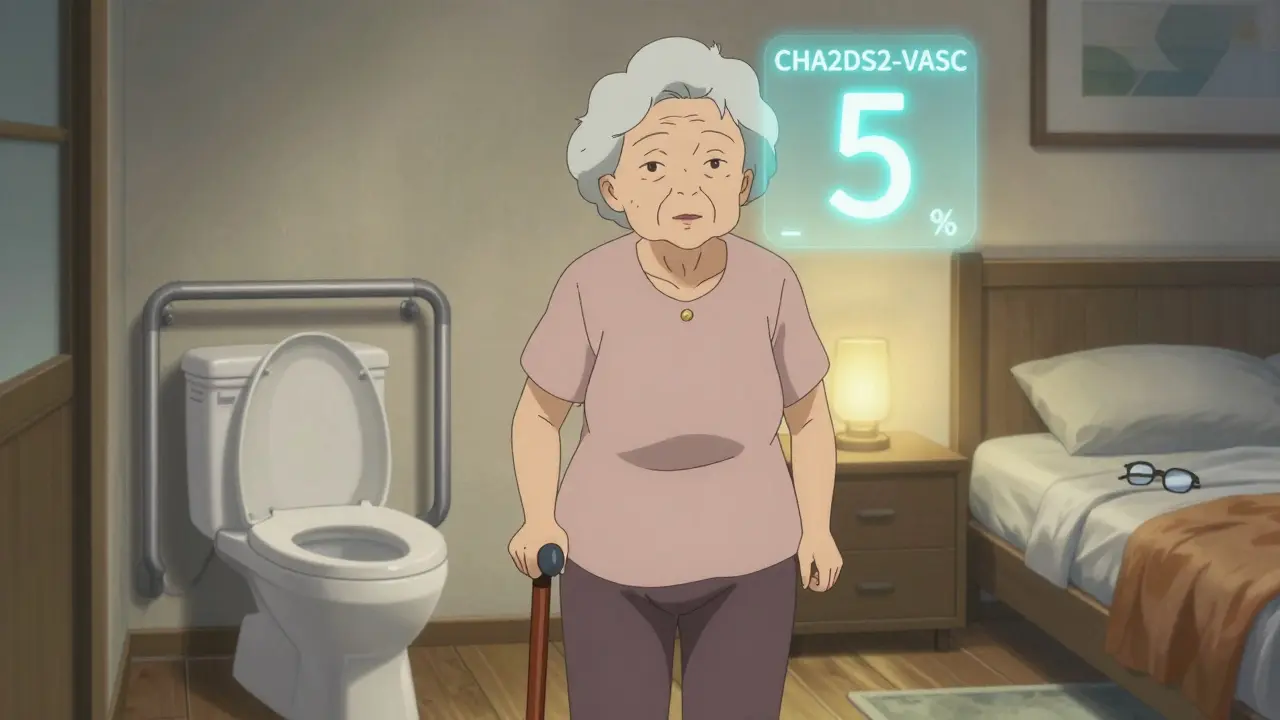
Stroke Risk Assessment (CHA2DS2-VASc)
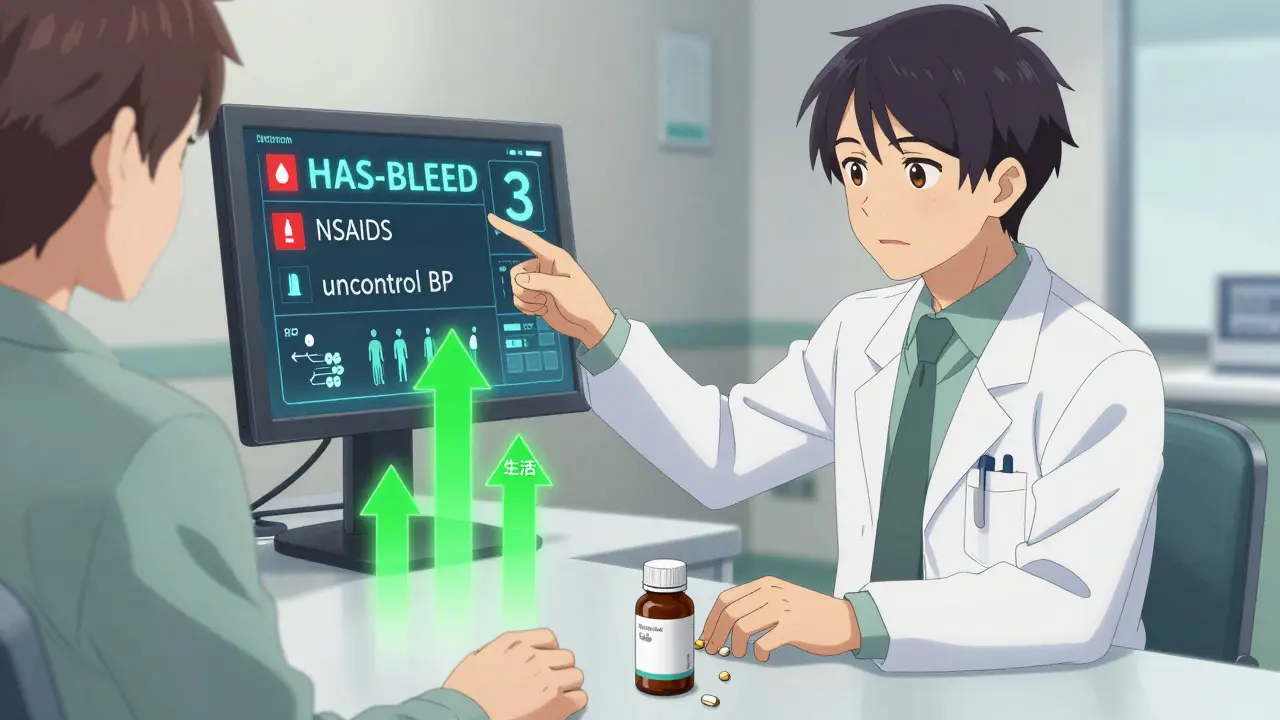
Bleeding Risk Assessment (HAS-BLED)
Stroke Risk Assessment
A score of 2 or higher for men, or 3 or higher for women indicates moderate to high stroke risk requiring anticoagulation.
Bleeding Risk Assessment
A score of 3 or higher indicates higher bleeding risk requiring careful management.
Every year, thousands of older adults are told they can't take blood thinners because they're at risk of falling. It sounds logical - if you're likely to tumble, why add a drug that could turn a bruise into a life-threatening bleed? But here's the truth: fall risk alone should never stop someone from taking anticoagulants if they need them. The real danger isn't falling - it's not taking the medicine when you should.
Why This Problem Exists
Anticoagulants, or blood thinners, are prescribed to prevent strokes in people with atrial fibrillation (AFib) and to treat blood clots in the legs or lungs. But as people age, their risk of falling goes up. About 30% to 40% of adults over 65 fall at least once a year. In nursing homes, that number jumps to over 50%. Meanwhile, stroke risk from AFib also climbs with age. So doctors face a tough call: protect against stroke or protect against falls? For years, many doctors chose to avoid anticoagulants in older patients who fell. They thought the bleeding risk was too high. But new evidence shows this approach is backwards. The real problem? Not taking the medicine. A person with a CHA2DS2-VASc score of 3 has a 3.2% chance of having a stroke each year. That’s 32 out of every 1,000 people. The risk of a serious brain bleed from a fall while on anticoagulants? Only 0.2% to 0.5% per year. You’d need to fall nearly 300 times in a year for the bleeding risk to outweigh the stroke prevention benefit.The Right Way to Decide: Risk Scores, Not Fear
Doctors don’t guess anymore. They use two tools - and they’re simple. The CHA2DS2-VASc score tells you stroke risk. It counts things like age, high blood pressure, diabetes, heart failure, and past stroke. Men with a score of 2 or higher, and women with 3 or higher, have moderate to high stroke risk. For them, anticoagulation is strongly recommended - even if they fall. The HAS-BLED score estimates bleeding risk. It looks at high blood pressure, kidney or liver problems, past bleeding, labile INR (if on warfarin), age over 65, and other drugs like aspirin or NSAIDs. A score of 3 or higher means higher bleeding risk. But here’s the key: a high HAS-BLED score doesn’t mean skip the medicine. It means manage the risk. For example, if someone is on a drug that causes dizziness, or has uncontrolled blood pressure, fixing those issues lowers bleeding risk - without stopping the anticoagulant.DOACs Are the Game Changer
Warfarin used to be the only option. It’s cheap, but tricky. It needs regular blood tests, interacts with food and other drugs, and can cause unpredictable bleeding. That’s why many doctors avoided it in fall-prone patients. Now, we have direct oral anticoagulants (DOACs): apixaban, rivaroxaban, dabigatran, and edoxaban. These are easier to use - no blood tests, fewer interactions, and most importantly, they cause 30% to 50% fewer brain bleeds than warfarin. That’s why DOACs now make up 80% of new prescriptions for AFib in the U.S. For someone who falls often, a DOAC is the safest choice. A 78-year-old man with AFib, a history of falls, and a CHA2DS2-VASc score of 4 should be on apixaban, not warfarin. His stroke risk is high. His bleeding risk from a fall is low. The math is clear.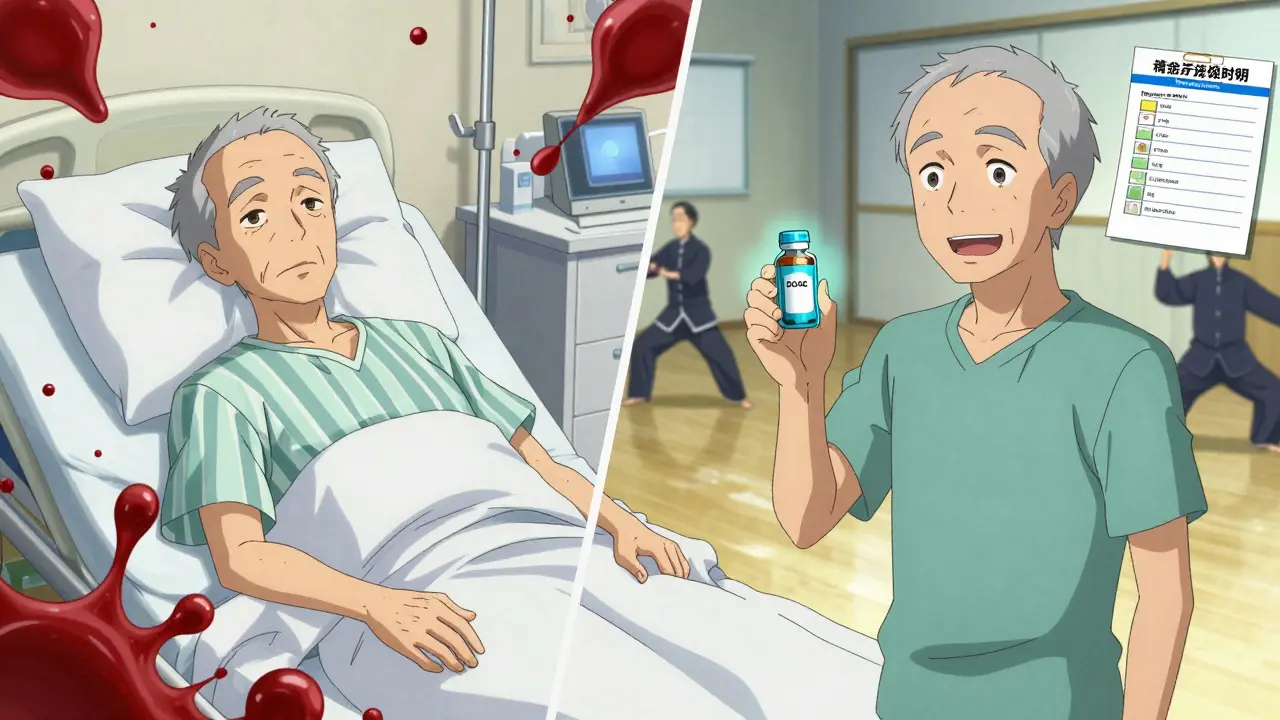
What Actually Increases Bleeding Risk
Not falling. Not age. Not even the anticoagulant itself. The real red flags are:- Uncontrolled high blood pressure (systolic over 180 mmHg)
- Active bleeding or a bleeding disorder
- Severe kidney failure (creatinine clearance under 15-30 mL/min, depending on the drug)
- Drugs that increase bleeding risk - like NSAIDs (ibuprofen, naproxen), aspirin, or SSRIs
Prevention Is the Best Protection
Instead of stopping anticoagulants, fix the falls. A comprehensive fall prevention plan takes 30 to 60 minutes - but it saves lives. Here’s what works:- Medication review: Cut or replace drugs that cause dizziness - sedatives, antihypertensives, antipsychotics.
- Balance and gait test: The Timed Up and Go test is simple. Time how long it takes someone to stand from a chair, walk 3 meters, turn, walk back, and sit down. If it takes over 12 seconds, they’re at high risk.
- Vision check: Outdated glasses or cataracts double fall risk. Update lenses.
- Home safety: Remove rugs, add grab bars, install nightlights. A 2020 study showed home modifications reduced falls by 40% in older adults.
- Exercise: Tai Chi, balance training, leg strengthening - even twice a week - cuts falls by 25%.
- Orthostatic hypotension: Check blood pressure lying and standing. If it drops more than 20 mmHg systolic, treat it. It’s often caused by dehydration or too much blood pressure medicine.
When Not to Use Anticoagulants
There are real reasons to avoid them:- Active bleeding (like a stomach ulcer or recent brain bleed)
- Severe kidney failure (not just aging kidneys - actual function below 15-30 mL/min)
- Uncontrolled high blood pressure (systolic >180 mmHg)
- Known bleeding disorder (like hemophilia)
What Clinicians Are Getting Wrong
Surveys show 40% to 50% of primary care doctors still believe fall risk alone is reason enough to skip anticoagulants. That’s outdated. It’s also dangerous. The American College of Physicians calls this "Things We Do for No Reason." It’s one of their top quality improvement targets. Hospitals are now being penalized by Medicare for under-prescribing anticoagulants in AFib patients who clearly need them. Insurance companies are catching on too. The fix? System change. Not just education. Electronic health records should auto-flag patients with AFib and a CHA2DS2-VASc score ≥2 and remind doctors: "Assess fall risk. Do not withhold anticoagulation." That’s how you change practice.What Patients Should Ask
If you’re over 65 and have AFib, ask:- "What’s my CHA2DS2-VASc score?"
- "Am I on a DOAC or warfarin? Why?"
- "What medications could be making me dizzy?"
- "Can we check my home for fall hazards?"
- "Should I see a physical therapist for balance training?"
Should I stop my blood thinner if I fall often?
No. Falling often is not a reason to stop anticoagulants if you have atrial fibrillation or a history of blood clots. The risk of stroke from not taking the medicine is much higher than the risk of a serious bleed from a fall. Instead of stopping, focus on preventing falls through medication review, balance exercises, and home safety changes.
Are DOACs safer than warfarin for people who fall?
Yes. DOACs like apixaban and rivaroxaban cause 30% to 50% fewer brain bleeds than warfarin. They also don’t require regular blood tests and have fewer food and drug interactions. For someone at risk of falling, DOACs are the preferred choice unless kidney function is severely reduced.
Can I lower my DOAC dose to make it safer?
No. Reducing the dose of a DOAC - for example, from 5 mg to 2.5 mg of apixaban - doesn’t lower bleeding risk. It only makes the drug less effective at preventing strokes. This practice is not recommended by guidelines and may increase your stroke risk without any safety benefit.
What should I do if I’m on a blood thinner and I fall?
If you fall and feel fine, you don’t need to rush to the ER. But if you have a headache, dizziness, vomiting, confusion, or weakness on one side, seek medical help immediately - even if you think it’s just a bump. Also, tell your doctor about the fall so they can reassess your fall risk and adjust your prevention plan.
What’s the best way to prevent falls while on anticoagulants?
Start with a four-step plan: 1) Review all your medications with your doctor or pharmacist - cut anything that causes dizziness. 2) Do balance exercises like Tai Chi twice a week. 3) Get your vision checked and update your glasses. 4) Make your home safer - remove rugs, install grab bars, add nightlights. These steps cut falls by up to 40% and are more effective than any drug adjustment.