GI Drug Delivery: How Medications Reach Your Gut and Why It Matters
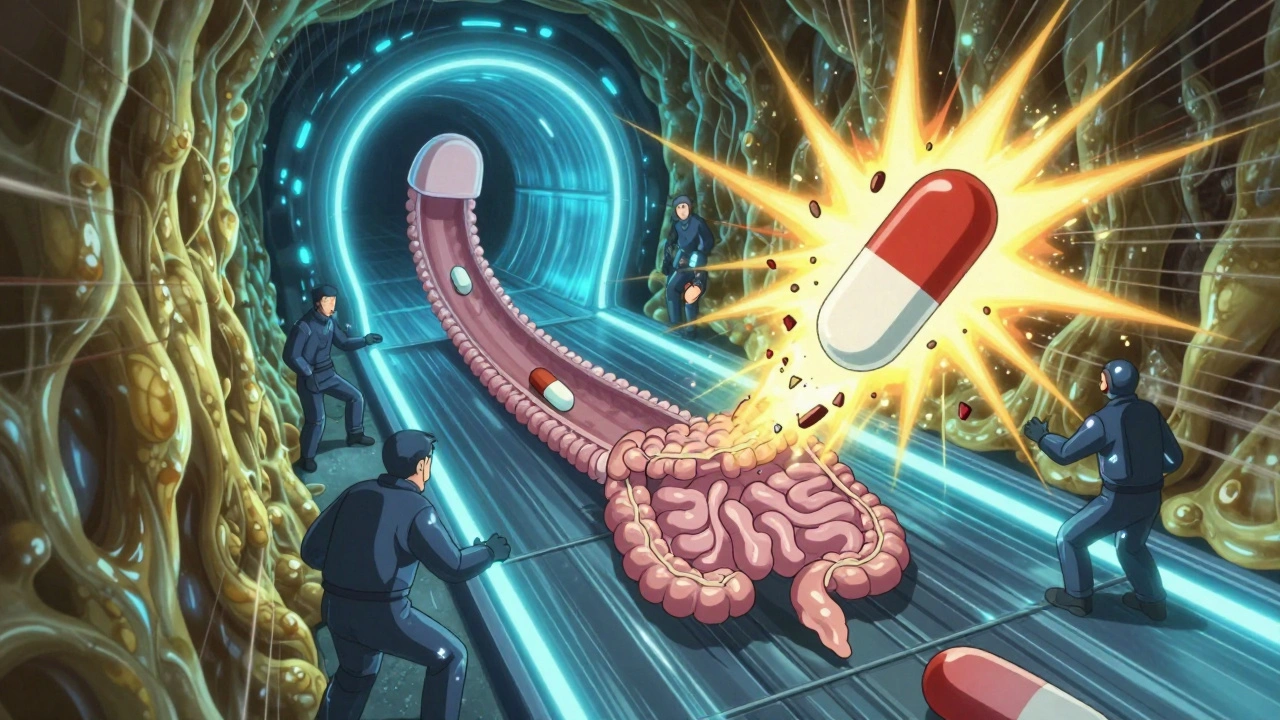
When you swallow a pill, it doesn’t just vanish and magically fix your stomach. GI drug delivery, the method by which medications are designed to survive the stomach and release in the intestines. Also known as gastrointestinal drug targeting, it’s what makes drugs like budesonide or mesalamine work for Crohn’s or ulcerative colitis instead of getting destroyed before they can help. Not all pills are made the same. Some are meant to dissolve right away. Others are built like tiny armored capsules—engineered to ignore stomach acid and only open up where they’re needed.
This isn’t just science fiction. It’s why enteric coating, a special shell that resists stomach acid and breaks down only in the higher pH of the small intestine exists. You’ve probably taken one without knowing. Aspirin? Often coated so it doesn’t irritate your stomach. Budez CR? That’s enteric-coated budesonide, designed to target your colon. Then there’s targeted drug delivery, systems that use pH sensors, time-release polymers, or even bacterial enzymes to trigger drug release exactly where inflammation is happening. These aren’t just fancy labels—they’re what make treatments for IBD, Crohn’s, or even H. pylori infections possible without wrecking your whole digestive system.
Why does this matter to you? Because if your medication doesn’t reach the right spot, it won’t work—and might even make things worse. A pill that dissolves too early can cause nausea, ulcers, or just sit there useless. A delayed-release capsule that doesn’t open? You’re paying for nothing. That’s why doctors don’t just prescribe drugs—they prescribe delivery systems. And that’s why some generic versions fail to work as well: not because the active ingredient is different, but because the coating, timing, or release mechanism isn’t the same.
What you’ll find in these articles isn’t just theory. It’s real-world stories about how drug delivery affects your daily life: why your levothyroxine needs to be taken on an empty stomach, how protein shakes can block absorption, why some pain meds cause stomach bleeding while others don’t, and how insurers and pharmacies quietly shape what delivery methods you get access to. You’ll see how a simple change in how a pill is built can mean the difference between relief and a hospital visit.
Gastrointestinal Medications: Why Absorption Problems Ruin Effectiveness
Many gastrointestinal medications fail to work because of absorption problems in the gut. Learn why food, disease, and formulation affect drug effectiveness-and what you can do about it.