Drug Absorption: How Your Body Takes in Medications and Why It Matters
When you swallow a pill, it doesn’t just magically start working. Drug absorption, the process by which a medication enters your bloodstream from its site of administration. Also known as medication absorption, it’s the make-or-break step that determines whether your drug will help, hurt, or do nothing at all. A pill might be perfectly formulated, but if your stomach is full, you’re taking it with coffee, or your gut lining is inflamed, that drug might never reach the right place in the right amount. This isn’t theory—it’s why some people feel no effect from their thyroid meds, or why their blood pressure stays high despite taking their pills daily.
Route of administration, how a drug enters the body—whether by mouth, injection, patch, or inhaler changes everything. Oral drugs like levothyroxine or antibiotics get slowed down by food, stomach acid, and gut bacteria. Injections bypass most of that, but they come with their own risks. Topical creams avoid systemic side effects but might not absorb well if your skin is dry or cracked. Even the time of day matters: some drugs absorb better on an empty stomach, others need fat to dissolve. That’s why timing your protein shake around levothyroxine or avoiding grapefruit with certain statins isn’t just advice—it’s science. And it’s why you can’t just swap a pill for a liquid without checking how the body handles each form.
Drug delivery methods, the engineered systems that control how and where a drug is released are designed to work with your body’s limits. Extended-release pills, patches that drip medicine through your skin, or inhalers that target your lungs directly—all of these exist because simple swallowing doesn’t always cut it. But even the best delivery system fails if you don’t follow the basics: store pills properly (not in the bathroom), take them at consistent times, and tell your doctor about every supplement or OTC drug you’re using. Those interactions can block absorption faster than a full meal. It’s not about being perfect—it’s about understanding what’s actually happening between the time you swallow a pill and when you feel its effect.
What you’ll find below isn’t a list of random drug facts. It’s a collection of real, practical stories about how absorption shapes outcomes. You’ll read about why generic drugs sometimes feel different, how protein shakes mess with thyroid meds, why some people get sick from MAOIs because of cheese, and how timing your dose can mean the difference between relief and side effects. These aren’t edge cases. They’re everyday situations where drug absorption made the call—and you need to know how to control it.
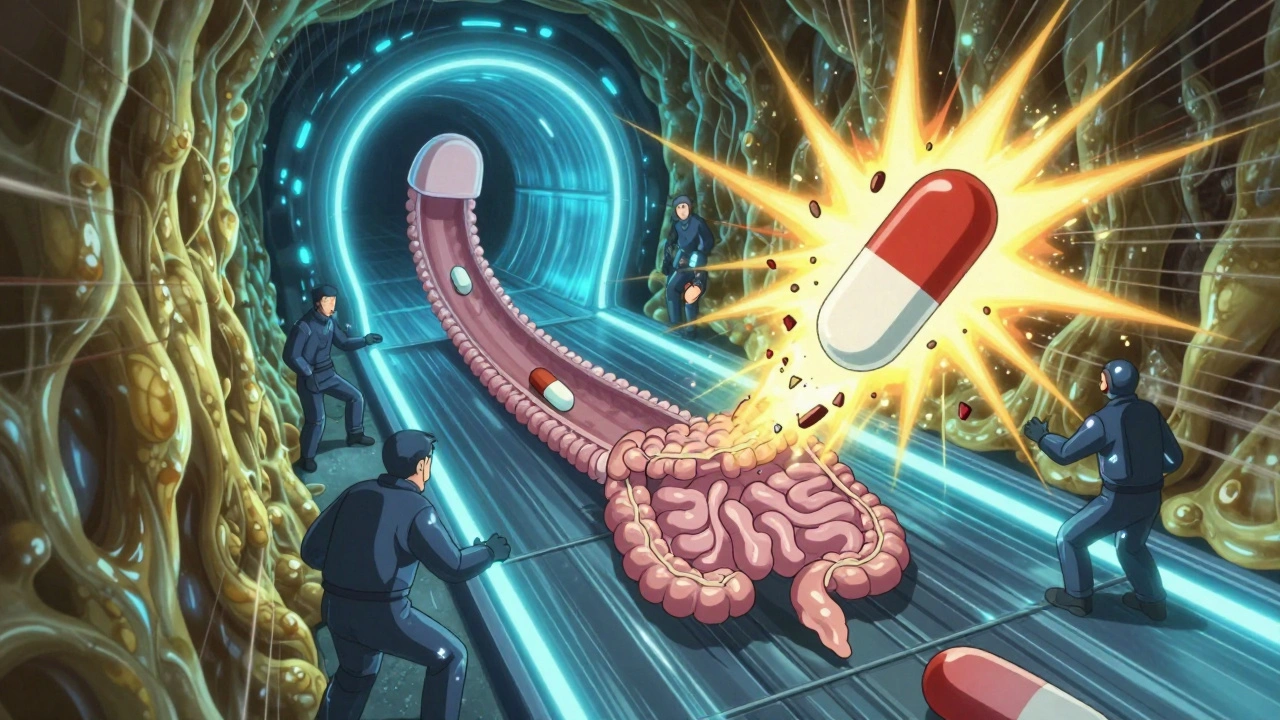
Gastrointestinal Medications: Why Absorption Problems Ruin Effectiveness
Many gastrointestinal medications fail to work because of absorption problems in the gut. Learn why food, disease, and formulation affect drug effectiveness-and what you can do about it.