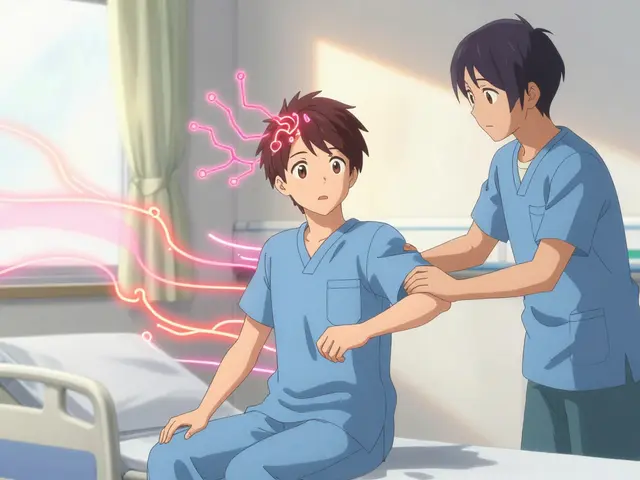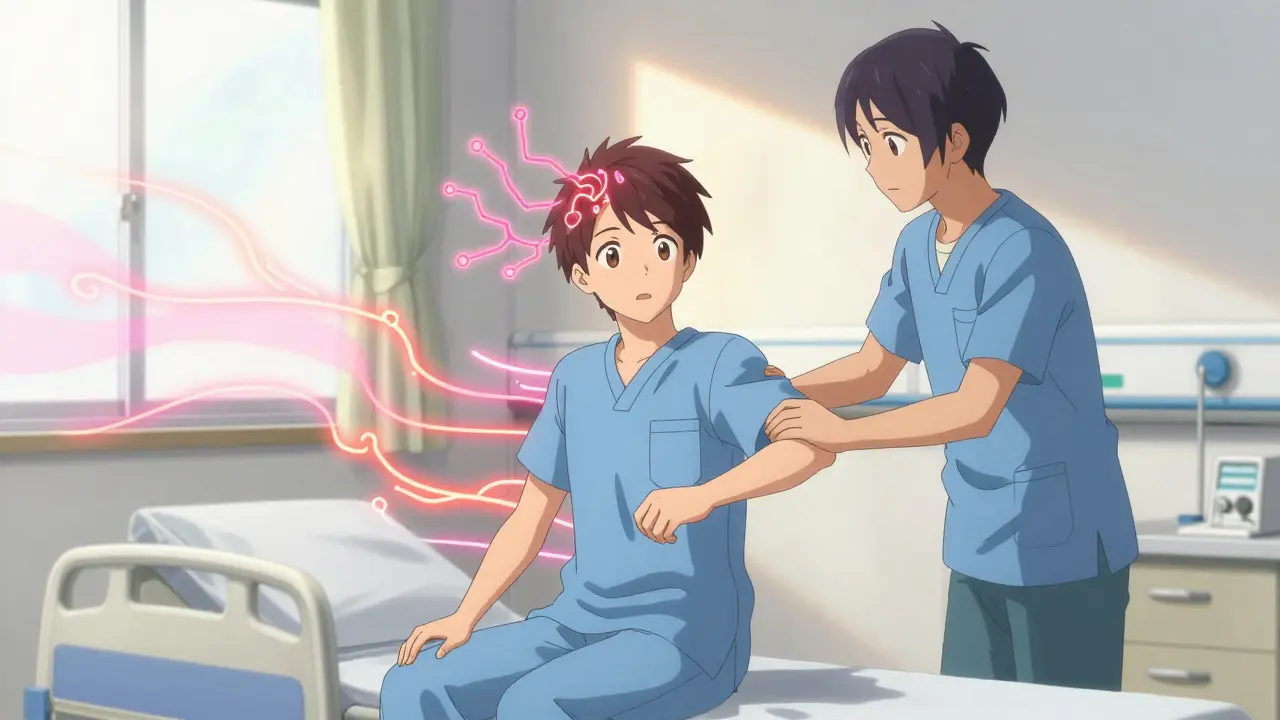
Most people think recovery from a brain injury stops after the initial hospital treatment ends, but the real work begins there. When the brain sustains damage, whether from a stroke or trauma, the nervous system enters a unique window of healing known as neuroplasticity. This biological process allows your brain to rewire itself, creating new pathways around damaged areas. While this sounds like a miracle, it requires intense, structured guidance.
Understanding how stroke rehabilitation works is the difference between simply surviving and truly living again. Current medical consensus suggests that significant functional improvement can occur six months to several years post-injury, provided the right interventions are applied early. We are moving away from old models where patients were told to just 'rest' and wait, towards aggressive, targeted training that forces the brain to adapt. This shift relies heavily on recent data showing that starting specific exercises within 24 hours of stabilisation can improve functional outcomes by 35% compared to delaying care.
The Science Behind Brain Rewiring
At the core of recovery is the concept of neuroplasticity, the brain's ability to change its structure and function in response to experience. Think of your brain not as a static hard drive, but as a dense jungle trail network. If a main road (neural pathway) gets blocked, your brain can cut through the bushes to open new trails. Research published in 2023 demonstrates that task-specific training triggers measurable changes in motor and cognitive brain regions.
| Timeframe | Brain Activity | Functional Impact |
|---|---|---|
| 2-4 Weeks | Cortical Reorganisation | New neural connections form rapidly |
| 3-6 Months | Peak Plasticity Window | Maximum potential for regaining function |
| 6+ Months | Maintenance Phase | Fine-tuning skills and adapting strategies |
This biological reality means that every session counts. Functional magnetic resonance imaging (fMRI) studies show visible shifts in brain activity patterns within weeks of initiating targeted therapy. You aren't just exercising muscles; you are essentially building a new circuit board inside your head to bypass the broken parts.
Navigating the Three Stages of Healing
Recovery isn't a straight line; it's more like climbing a mountain with distinct terrains. The UNC Medical Center outlines three distinct phases, and knowing which one you are in helps manage expectations.
The Early Stage: Natural Healing (Days to Weeks)
Immediately after a stroke, the body focuses on reducing brain swelling. During this time, movement may return spontaneously as pressure lifts. Therapists focus here on preventing complications rather than intensive training. Proper positioning is crucial to stop joints from stiffening, and passive range-of-motion exercises are performed multiple times a day to keep flexibility intact.
The Middle Stage: Retraining (Weeks to Months)
This is the heavy lifting phase. Once swelling subsides, the brain needs cues to remember how to move. This stage involves learning activities through repetition and therapist guidance. It's not enough to just do movements; you need to engage cognitively. For instance, when practicing sitting balance, the goal is to create automaticity so you don't have to think about every muscle contraction.
The Late Stage: Adaptation (Months to Years)
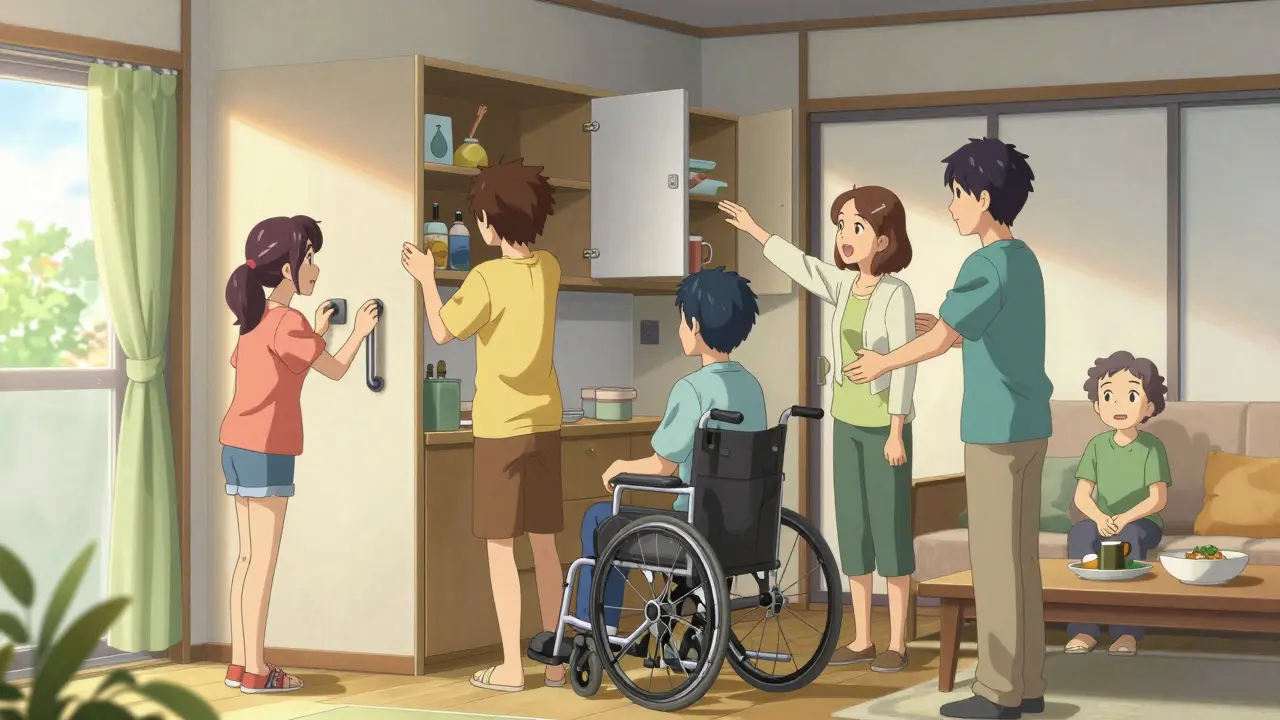
Eventually, recovery plateaus. This doesn't mean progress has stopped, but the nature of the work changes. You move into adaptation, focusing on coping with permanent effects and returning to leisure activities. This involves environmental modifications-like installing grab bars-and psychological support to adjust to life changes. Family involvement is particularly critical here, increasing adherence rates by up to 37%.
The Power of Specialised Therapies
A multidisciplinary approach is non-negotiable for serious outcomes. Different therapists target different aspects of your life.
Physical Therapy (PT) focuses on the big movements. The goal is improving gait speed and strength. Studies indicate a 40-60% improvement in walking speed after 12 weeks of intensive PT. Techniques are evolving beyond basic exercises:
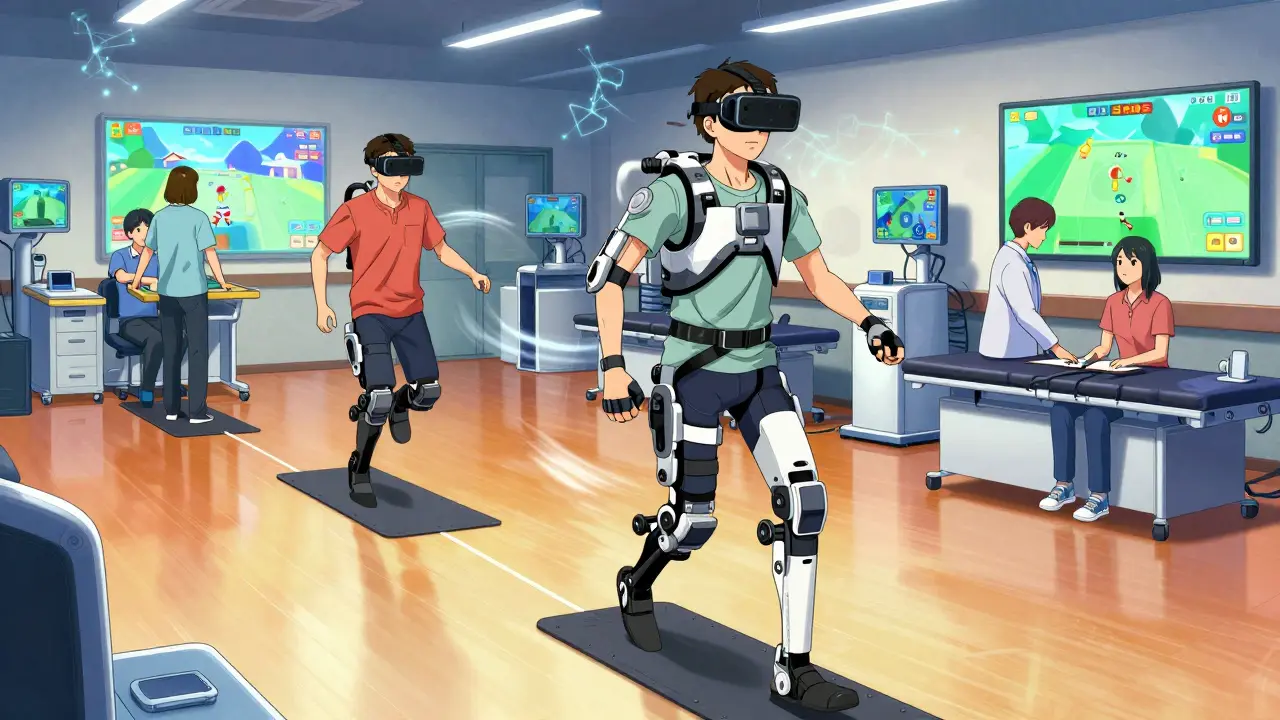
- Constraint-Induced Movement Therapy (CIMT): This involves restraining the unaffected limb for 90% of waking hours. By forcing you to use the affected limb, motor function improves by 30% more than conventional therapy alone.
- Robotic Gait Training: Devices like the Lokomat assist impaired limbs with repetitive motion, showing 50% greater walking speed improvements compared to standard treadmill therapy.
- Functional Electrical Stimulation: Applying electrical currents to weakened muscles produces 25-45% strength gains in wrist and hand function.
Occupational Therapy (OT) handles daily survival. Can you feed yourself? Can you get dressed? Therapists break these complex actions into tiny, achievable steps. They also set up your home environment to match your new capabilities, ensuring safety without unnecessary clutter.
Speech-Language Pathology addresses communication and swallowing. Many survivors face dysphagia (swallowing difficulties) which poses choking risks, or aphasia affecting speech comprehension. Early assessment prevents pneumonia and nutritional decline.
The Role of Technology in Modern Recovery
We are in a golden age of rehabilitation technology. In Sydney, clinics are increasingly adopting tools that were science fiction a decade ago. Virtual reality systems, for example, engage patients in simulated environments that improve upper extremity function by 28% compared to standard care. Why does this work? Because games make repetition fun, and boredom is the enemy of therapy.
Beyond VR, wireless activity monitors are changing how we track progress. Data shows these devices increase daily step counts by 32%, simply by providing feedback. Artificial Intelligence is now being used to personalise protocols based on individual brain imaging data, tailoring the intensity to exactly what your brain can handle without causing fatigue.
Building Your Rehabilitation Team
You cannot recover in a silo. The American Stroke Association guidelines emphasise a coordinated team. Communication between professionals ensures that the goals set by a physiotherapist align with those of the psychologist. Here is who you will likely meet:
- Physiatrists: Medical doctors specialising in physical medicine who oversee the whole plan.
- Nurses: Managing daily medications and monitoring vitals during intense sessions.
- Nutritionists: Ensuring diet supports brain repair and manages energy levels.
- Psychologists: Depression affects 30-35% of survivors. Mental health support is integral to physical gains.
Success depends heavily on the team talking to each other. Facilities with structured interdisciplinary meetings see 22% better functional outcomes. If your providers aren't communicating, ask them to hold a case conference. Your care shouldn't be fragmented.
Intensity, Timing, and Motivation
There is a sweet spot for exercise intensity. Too little does nothing; too much causes fatigue that stalls progress. Guidelines recommend three hours of therapy five days per week for stable patients. This is substantial-it is a job in itself. But motivation accounts for up to 40% of variance in outcomes. If you lose steam, your recovery slows.
To maintain momentum, balance your day carefully. Spend roughly 30-40% of your time resting, 40-50% on therapeutic exercise, and 20-30% on social interaction. Fatigue is common, but pushing through mental fatigue is often safe while respecting physical limits. Emerging research even suggests combining therapy with transcranial magnetic stimulation (TMS) can boost motor recovery by another 15-20%.
Remember, community-based programs remain vital for the 70% of survivors needing therapy after discharge. Telehealth now offers 85% equivalence to in-person care for many interventions, making continuity easier for families managing schedules.
When does stroke rehabilitation begin?
Rehabilitation should begin as soon as the patient is medically stable, ideally within 24 hours of admission. Early initiation significantly reduces the risk of secondary complications like joint contractures and muscle weakness.
How long does brain recovery take?
The most rapid recovery typically occurs within the first 3 to 6 months. However, thanks to neuroplasticity, meaningful improvements can continue for several years with consistent practice and therapy.
What therapies help the most?
High-intensity physical therapy, occupational therapy, and speech-language pathology are the cornerstones. Advanced techniques like robotic gait training and constraint-induced therapy have shown superior results for specific deficits.
Is recovery possible after a year?
Yes. While the peak plasticity window closes after six months, the brain remains adaptable. Focusing on compensation strategies and maintaining current abilities is the key during later stages.
How does technology assist recovery?
Technologies like virtual reality and robotics make repetition engaging and precise. TMS and AI-driven analysis allow for targeted brain stimulation and personalised plans based on real-time physiological data.