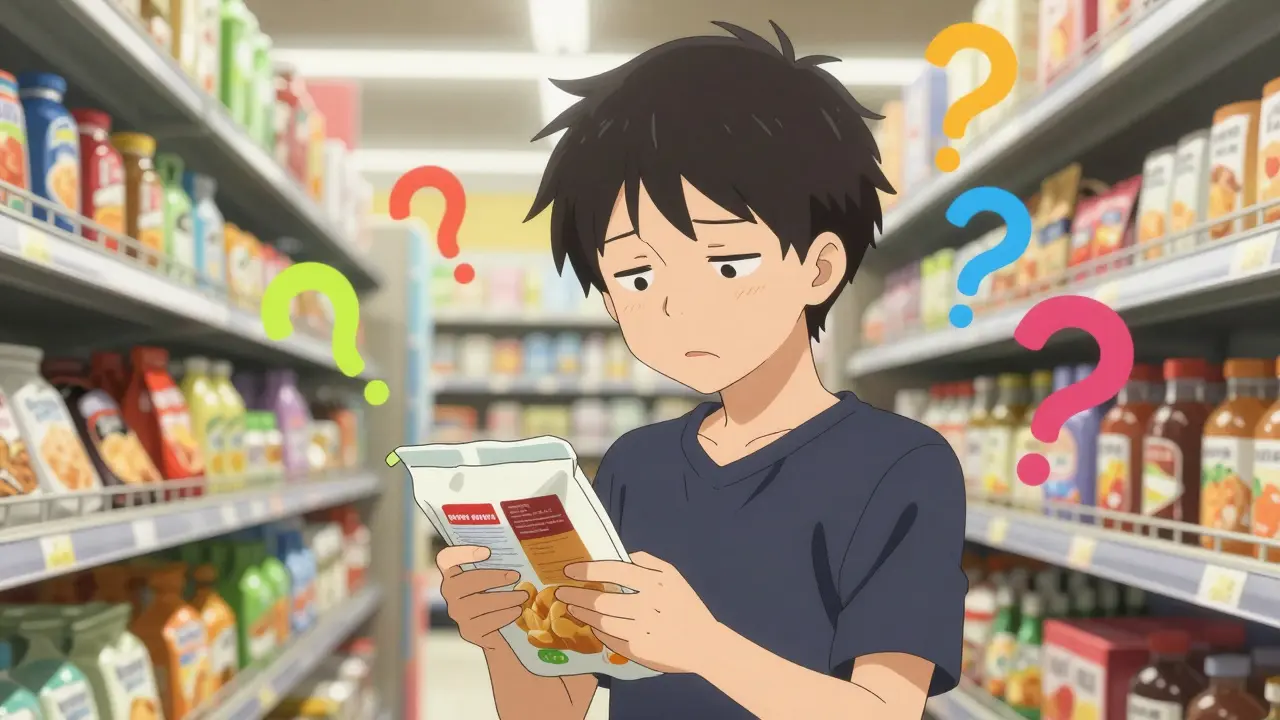
Walking down the grocery aisle can feel like a minefield if you or someone you love lives with a food allergy. You pick up a package, turn it around, and squint at the ingredient list. Is that wheat flour or just wheat starch? Does "natural flavor" hide a trace of milk? For over a decade, the rules around what goes on those labels have evolved, but confusion often remains. In early 2025, the landscape shifted significantly with new guidance designed to make these labels clearer and safer for millions of people.
This isn't just about reading smaller print; it's about understanding the specific changes that affect your safety today. The U.S. Food and Drug Administration released updated guidance in January 2025 that clarifies how manufacturers must declare major allergens. These changes directly impact how you identify risks, from specific milk sources to the status of coconut. Understanding these updates is crucial for anyone managing **food allergen labeling** concerns in their daily diet.
Quick Summary: What You Need to Know
- The FDA's 2025 Guidance clarifies labeling for the nine major food allergens, including sesame.
- Manufacturers must now specify the animal source for milk and eggs (e.g., "goat milk" instead of just "milk").
- Coconut is no longer classified as a major tree nut allergen under federal law.
- Products cannot claim to be "free-from" an allergen if they also carry a "may contain" warning.
- Cross-contact warnings remain voluntary but must be truthful and not misleading.
The 2025 FDA Guidance Update
When the Food and Drug Administration updated its guidance in January 2025, it marked a major step forward in consumer protection. This document, titled Questions and Answers Regarding Food Allergens, serves as the current standard for industry compliance. It builds on the Food Allergen Labeling and Consumer Protection Act of 2004, often called FALCPA. The goal was simple: reduce confusion and prevent allergic reactions.
Before this update, many consumers had to guess whether a product was safe. The new guidance emphasizes transparency. It applies to FDA-regulated products like packaged foods, infant formula, and dietary supplements. However, it does not cover meat, poultry, or processed egg products regulated by the USDA. This distinction matters because a hot dog might fall under different rules than the bread you put it on. The guidance is non-binding, meaning it represents the FDA's thinking, but manufacturers are expected to follow it to ensure safety and avoid liability.
Why does this matter now? Because food allergies are on the rise. Approximately 32 million Americans live with food allergies, including 5.6 million children. The updated rules aim to protect this growing population by ensuring that labels provide precise information. If you rely on packaged foods, these changes mean you should see more specific ingredient declarations on the shelves.
The Nine Major Allergens Breakdown
Under the federal law, there are nine major food allergens that require clear labeling. These are milk, egg, fish, crustacean shellfish, tree nuts, wheat, peanuts, soybeans, and sesame. Sesame was added to this list relatively recently, following the passage of the FASTER Act in 2021. The 2025 guidance reinforces how these must appear on packaging.
One of the most significant changes involves specificity. For milk and eggs, the label must now state the animal source. You cannot just see "milk" or "egg." Instead, you will see "cow milk," "goat milk," "chicken egg," or "duck egg." This is vital for people who can tolerate one type but not another. For example, someone allergic to cow's milk might safely consume goat's milk, but previous labels didn't always make that clear.
Fish labeling also requires more detail. Manufacturers must specify the species category, such as bony fish (like trout) or cartilaginous fish (like shark). Shellfish classification has been narrowed to crustacean shellfish only. This means crab, lobster, and shrimp must be declared, but mollusks like oysters and clams are excluded from this specific major allergen list. While this might seem like good news for some, it creates a risk for those allergic to mollusks who might not expect them to be listed under the major allergen section.
| Allergen Category | Previous Requirement | 2025 Guidance Requirement |
|---|---|---|
| Milk | "Contains Milk" | "Contains Cow Milk" or "Goat Milk" |
| Eggs | "Contains Eggs" | "Contains Chicken Eggs" or "Duck Eggs" |
| Shellfish | "Contains Shellfish" | Crustaceans only (Mollusks excluded) |
| Tree Nuts | Includes Coconut | Coconut removed from list |
| Sesame | Optional Declaration | Mandatory Major Allergen |
The removal of coconut from the tree nut list is another major shift. Scientifically, coconut is a fruit, not a nut, and the FDA agreed it does not belong in the major allergen category. This change benefits the estimated 0.04% of the population with coconut allergies, but more importantly, it reduces unnecessary avoidance for people with tree nut allergies who can safely eat coconut. However, manufacturers must still list coconut in the ingredient list, just not in the bolded allergen statement.

Hidden Allergens and Cross-Contact
Even with clear labels, hidden dangers exist in the form of cross-contact. This happens when an allergen is accidentally incorporated into a food that isn't supposed to contain it. Imagine a cookie made in a factory that also makes peanut butter cookies. If the equipment isn't cleaned properly, trace amounts of peanut could end up in the chocolate chip cookie.
The 2025 guidance clarifies that advisory labeling for cross-contact is voluntary. You might see phrases like "May contain milk" or "Processed in a facility that handles peanuts." While companies aren't forced to print these warnings, if they do, the statement must be truthful. The FDA prohibits using both "free-from" claims and advisory statements for the same allergen. So, a product cannot say "Milk-Free" and "May contain milk" on the same package. This rule stops manufacturers from sending mixed signals that could confuse consumers.
For shoppers, this means you need to look closely at the fine print. A "free-from" claim is stronger than a lack of an advisory statement. If a product claims to be free of an allergen, the manufacturer is asserting that there are no unintended residues. However, because cross-contact warnings are voluntary, the absence of a warning doesn't guarantee safety. Always check the ingredient list first, then look for advisory statements, and finally verify any "free-from" claims.
Understanding Free-From Claims
Marketing terms like "gluten-free" or "peanut-free" are common, but they carry weight under the new guidance. If a manufacturer makes a claim that a product is free of a specific allergen, they must ensure the product genuinely lacks that allergen. This includes preventing unintended residues from cross-contact during production.
Food Allergy Research & Education (FARE) endorsed this clarification, noting that voluntary "free-from" claims cannot be used when the package also lists a precautionary allergen labeling statement. This creates a binary choice for manufacturers: either the product is clean enough to claim it's free of the allergen, or it must carry a warning. For consumers, this makes decision-making easier. You don't have to guess if a "may contain" warning overrides a "free-from" claim because the rules now say they can't coexist.
However, be cautious with terms that aren't regulated. Words like "natural" or "artisanal" don't guarantee allergen safety. Stick to the specific allergen statements required by law. If you have a severe allergy, rely on products that explicitly state they are free of your trigger allergen and have no advisory warnings.
Alcohol and Supplements
Food allergies don't just affect meals; they impact drinks and vitamins too. The guidance affects alcohol beverage labeling under TTB regulations, though the Alcohol and Tobacco Tax and Trade Bureau maintains its own interim rule. This means alcohol labels might not always follow the exact same format as food packages. You might find that major food allergen declarations are permitted but not always required on wine or spirits.
Dietary supplements fall under FDA regulation, so they must follow the 2025 guidance. If you take vitamins or protein powders, check the label for the nine major allergens. Supplements often contain hidden fillers or flavorings derived from milk, soy, or wheat. With the new specificity requirements, you should see clearer declarations for these ingredients. For example, if a protein powder uses whey, it must declare milk. If it uses egg whites, it must specify the egg source.

Shopping Checklist for Safety
Navigating the store requires a systematic approach. Here is a practical checklist to help you stay safe with the new labeling standards.
- Check the Ingredient List First: Read every word. Look for specific animal sources for milk and eggs.
- Verify the Allergen Statement: Look for the bolded "Contains" statement below the ingredients.
- Look for Cross-Contact Warnings: Check for "May contain" or "Processed in a facility" statements.
- Validate Free-From Claims: Ensure no conflicting "may contain" warnings exist if a product claims to be free of an allergen.
- Be Aware of Exclusions: Remember that mollusks (clams, oysters) are not major allergens under this rule, so check the ingredient list for them separately.
- Question Unfamiliar Terms: If you see a term you don't recognize, contact the manufacturer or choose a different product.
Small manufacturers face challenges updating their labels, which might lead to inconsistencies. The National Grocers Association estimates that label changes cost small producers between $5,000 and $15,000 per product line. This means you might still encounter older packaging in some stores. If you are unsure, do not hesitate to call the customer service number on the package.
Frequently Asked Questions
What are the nine major food allergens?
The nine major food allergens are milk, egg, fish, crustacean shellfish, tree nuts, wheat, peanuts, soybeans, and sesame. These must be clearly declared on FDA-regulated food packages.
Is coconut considered a tree nut allergen?
No, under the 2025 FDA guidance, coconut is no longer classified as a major tree nut allergen. However, it must still be listed in the ingredient list if used.
Do I need to worry about cross-contact warnings?
Yes, cross-contact warnings indicate potential allergen exposure during manufacturing. While voluntary, they are critical for safety. If a product has a warning, it means there is a risk of accidental contamination.
Can a product say "Milk-Free" and "May Contain Milk"?
No, the 2025 guidance prohibits using both claims on the same package. A product claiming to be free of an allergen cannot also carry a precautionary statement for that same allergen.
Does this apply to meat and poultry?
No, the FDA guidance applies to FDA-regulated products. Meat, poultry, and processed egg products are regulated by the USDA and follow different labeling rules.
Next Steps for Allergy Management
Staying safe with food allergies requires vigilance, but the new labeling rules are a powerful tool. Use them to your advantage. If you are managing allergies for a child, teach them to look for the specific animal sources on labels as they get older. If you travel, remember that these rules apply to U.S. products. International products might not follow the same standards, so check labels carefully when abroad.
Keep your epinephrine auto-injector accessible at all times. Labels are a safety net, but they are not a guarantee. If you have questions about a specific product, contact the manufacturer directly. The 2025 guidance encourages transparency, so companies should be able to answer your questions about their allergen control procedures. By understanding these changes and reading labels carefully, you can reduce the risk of accidental exposure and enjoy food with more confidence.