Steroid-Induced Osteoporosis Risk Calculator
Assess Your Risk
Calculate your risk of steroid-induced osteoporosis based on your steroid dose, duration of use, and lifestyle factors. This tool helps you understand what steps you should take to protect your bones.
Your Bone Health Assessment
Key Recommendations for You
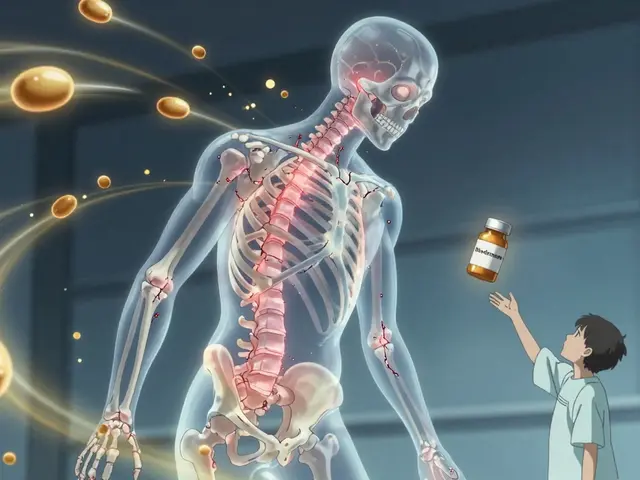
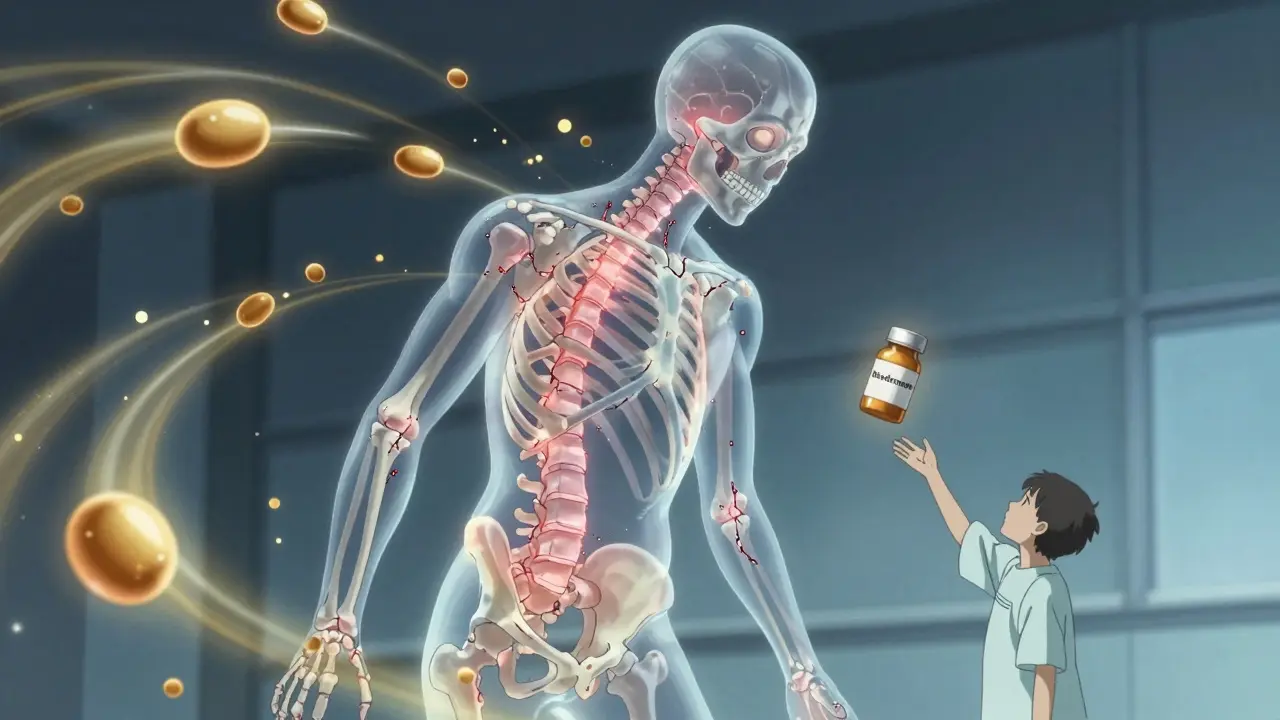
When you’re on long-term corticosteroids-whether for asthma, rheumatoid arthritis, or an autoimmune condition-you’re fighting one battle, but silently, another is brewing inside your bones. Corticosteroid-induced osteoporosis isn’t just a side effect; it’s a silent thief. It steals bone density without pain, without warning, and often before you even realize it’s happening. By the time a fracture occurs, the damage is done. But here’s the truth: this isn’t inevitable. With the right steps, you can stop it in its tracks.
How Corticosteroids Attack Your Bones
It starts fast. Within just 3 to 6 months of taking prednisone or another glucocorticoid at doses of 2.5 mg or more per day, your bones begin to weaken. The American College of Rheumatology says about half of people on long-term steroids develop this condition. It’s not just aging-it’s acceleration. Your body’s natural bone-building system gets shut down. Osteoblasts, the cells that make new bone, die off or stop working. At the same time, osteoclasts-the cells that break down bone-stay active longer, chewing away at your skeleton. The result? A rapid drop in bone mineral density, especially in the spine and hips.It’s not just about hormone changes. Corticosteroids also reduce how much calcium your gut absorbs, increase how much your kidneys flush out, and weaken your bones’ ability to respond to movement. Even walking or lifting weights becomes less effective at strengthening bone if you’re on steroids. Studies show that weight-bearing exercise loses about 25% of its protective power in steroid users.
Who’s at Risk-and How Fast?
You don’t need to be on high doses to be in danger. The threshold is low: 2.5 mg of prednisone daily for 3 months or longer puts you in the high-risk group. At 7.5 mg or more, your fracture risk doubles. Each extra milligram per day lowers your spine bone density by 1.4% annually. That’s not slow decay-it’s a steady erosion.Fractures happen early. Half of all steroid-related fractures occur within the first year of treatment. The spine is most vulnerable, followed by the hip and wrist. A broken vertebra might not feel like a big deal at first, but it can lead to chronic pain, height loss, and even difficulty breathing. And here’s the scary part: men are far less likely than women to get screened or treated, even though their risk is just as high. Only 44% of men on long-term steroids receive any prevention advice, compared to 76% of women.
The Foundation: Calcium and Vitamin D
This isn’t optional. It’s the bare minimum. Every single person on long-term corticosteroids needs daily calcium and vitamin D-no exceptions. The Cleveland Clinic recommends 1,000 to 1,200 mg of calcium per day. Try to get it from food first: yogurt, cheese, fortified plant milks, canned sardines, and leafy greens. If you can’t reach the target through diet alone, supplement the rest.Vitamin D is just as critical. Aim for 600 to 800 IU daily, but many people need up to 1,000 IU to keep blood levels above 20 ng/mL. Low vitamin D means your body can’t absorb calcium properly, making your bones even more fragile. One study showed that taking 1,000 mg calcium and 500 IU vitamin D daily cut spine bone loss from 2% per year to just 0.72%. That’s a 64% reduction in bone loss-just from two simple supplements.
Movement Matters-But It’s Harder
Exercise isn’t just good for your heart or mood-it’s your bone’s best defense. Weight-bearing activities like walking, stair climbing, dancing, or resistance training with bands or weights stimulate bone growth. But steroids make your bones less responsive. That doesn’t mean skip it. It means you need to be more consistent.Try for at least 30 minutes of weight-bearing activity on most days. If you’re already weak or unsteady, start with seated leg lifts or wall push-ups. Even small movements add up. Don’t wait until you feel strong. Start now. And don’t forget balance training. Falls are the main cause of fractures. Tai Chi or simple balance exercises (standing on one foot, heel-to-toe walks) can cut your fall risk by 30%.
Quit Smoking, Cut Alcohol
Smoking isn’t just bad for your lungs-it’s poison for your bones. It cuts blood flow to bone tissue, slows healing, and lowers estrogen levels (even in men). Quitting smoking can reduce your fracture risk by 25 to 30%. If you’re trying to quit, talk to your doctor about support programs. It’s one of the most effective things you can do.Alcohol is another silent enemy. Limit yourself to no more than 3 standard drinks per day. More than that interferes with calcium balance, damages bone-forming cells, and increases fall risk. A glass of wine with dinner? Fine. Two bottles of beer every night? That’s a problem.
Medications That Actually Work
If you’ve been on steroids for more than 3 months, especially at doses above 7.5 mg/day, you likely need more than supplements and exercise. The first-line drug is a bisphosphonate. Risedronate (5 mg daily or 35 mg weekly) cuts vertebral fractures by 70% and other fractures by 41%. Alendronate works too, but risedronate has the strongest data in steroid users.If bisphosphonates don’t suit you-maybe because of stomach issues-there are other options. Zoledronic acid, given as a yearly IV infusion, boosts spine bone density by 4.5% in a year. Denosumab, a twice-yearly injection, increases it by 7%. And for those with severe bone loss (T-score below -2.5) or prior fractures, teriparatide is the most powerful option. It’s a daily injection that builds new bone. In head-to-head trials, it increased spine density by 9.1% in a year-more than double what alendronate achieves.
Why So Many People Get Left Behind
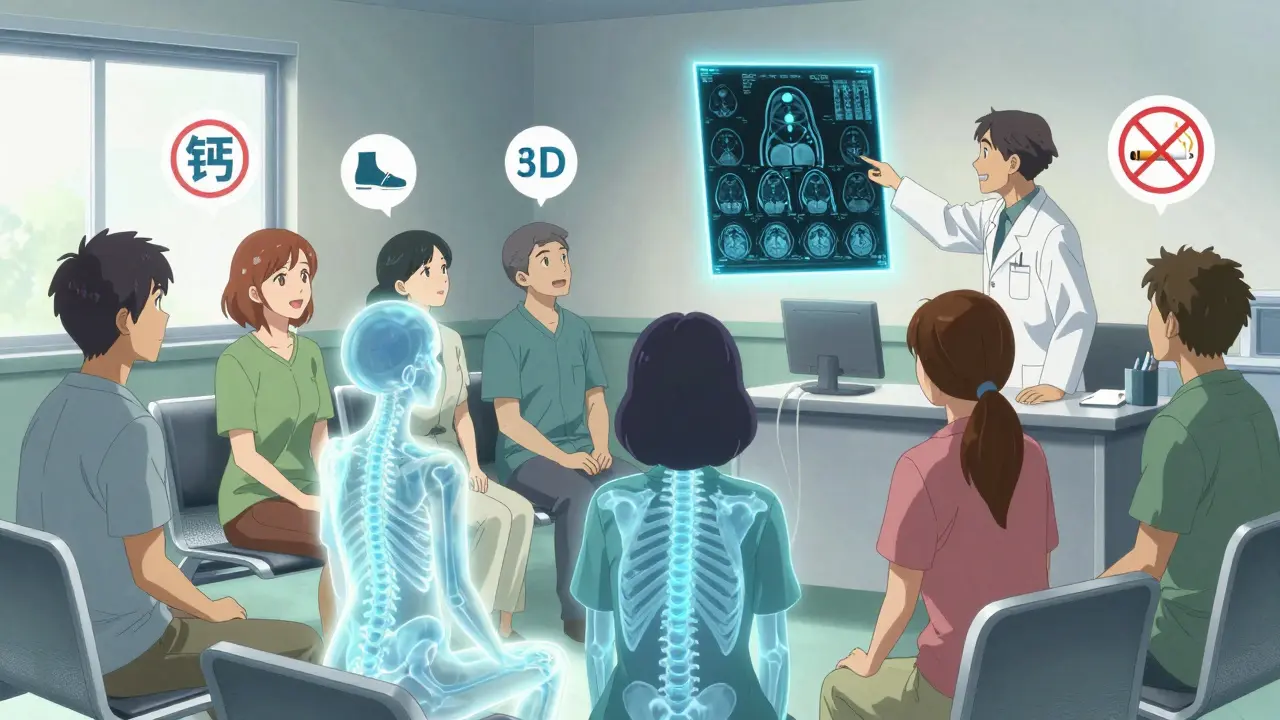
Here’s the ugly truth: even though we’ve known how to prevent this for decades, most people aren’t getting the care they need. A major study found that only 15% of long-term steroid users receive optimal prevention-meaning they got bone testing, calcium/vitamin D, and appropriate medication if needed.Why? Three big reasons:
- Doctors don’t always connect the dots. A rheumatologist might manage your arthritis but never mention your bones.
- Patients think bone loss is just “what happens” with steroids. It’s not. It’s preventable.
- Fragmented care. You see a specialist, then your GP, then a pharmacist-no one talks to each other.
And screening? Only 31% of patients on long-term steroids have ever had a bone density scan. That’s not enough. The American College of Rheumatology says you should get tested when you start steroids, then every 1 to 2 years if you’re still on them. If your bone density improves after starting treatment, that’s proof your plan is working.
What You Can Do Today
You don’t need to wait for your next appointment. Start here:- Check your steroid dose. If it’s 2.5 mg prednisone or more daily for 3+ months, you’re at risk.
- Ask your doctor for a bone density scan (DXA). Don’t wait for symptoms.
- Take 1,000-1,200 mg calcium and 600-1,000 IU vitamin D daily. No excuses.
- Move every day. Walk, lift, balance. Even 10 minutes counts.
- Quit smoking. Cut alcohol. Talk to someone if you need help.
- Ask if you need a prescription. Risedronate, zoledronic acid, or denosumab may be right for you.
And if your doctor doesn’t bring this up? Speak up. Say: “I’m on steroids long-term. Have you checked my bone health?” You’re not being pushy-you’re being smart.
The Bottom Line
Osteoporosis from steroids isn’t a given. It’s a preventable consequence. The tools are simple, proven, and available. Calcium. Vitamin D. Movement. Quitting smoking. Medications when needed. The hardest part? Starting. But the cost of waiting? A broken hip. A collapsed vertebra. A life of pain and limitation. Don’t wait until you’re in crisis. Act now. Your bones will thank you.How soon after starting steroids does bone loss begin?
Bone loss can begin within the first 3 to 6 months of starting long-term corticosteroid therapy, especially at doses of 2.5 mg prednisone or higher per day. The most rapid decline happens in the first year, with bone mineral density dropping by 5% to 15% during that time, particularly in the spine.
Can I stop steroids to protect my bones?
No-you should never stop steroids without your doctor’s guidance. Steroids are often essential for managing serious conditions like autoimmune diseases or severe asthma. Instead of stopping, focus on reducing the dose to the lowest effective level and using prevention strategies like calcium, vitamin D, exercise, and medication if needed.
Do I need a bone density scan if I feel fine?
Yes. Osteoporosis from steroids is silent. You won’t feel bone loss until a fracture happens. The American College of Rheumatology recommends a bone density scan (DXA) at the start of long-term steroid therapy and every 1 to 2 years after that. Early detection is key to preventing fractures.
Are bisphosphonates safe for long-term use with steroids?
Yes. Bisphosphonates like risedronate and alendronate are well-studied and safe for long-term use in people on corticosteroids. They’ve been shown to reduce vertebral fractures by up to 70%. Side effects like upset stomach are common but usually manageable. If you can’t tolerate oral versions, IV zoledronic acid is a good alternative with less frequent dosing.
Why are men less likely to get treatment for steroid-induced osteoporosis?
Men are often overlooked because osteoporosis is seen as a “women’s issue.” But men on long-term steroids lose bone just as fast-and are more likely to suffer serious fractures. Studies show only 44% of men receive any prevention advice, compared to 76% of women. This gap exists due to outdated assumptions and lack of provider awareness. Men need the same screening and treatment as women.
Can I get enough calcium from food alone?
It’s possible, but difficult. You’d need about 3 servings of high-calcium foods daily-like 1 cup yogurt, 1 cup fortified milk, 3 oz canned sardines, and 1 cup cooked kale. Most people don’t hit that target. That’s why supplements are recommended to fill the gap. Aim for 1,000-1,200 mg total per day from food + supplements combined.
Is walking enough exercise to protect my bones?
Walking helps, but it’s not enough on its own. Weight-bearing and resistance exercises are more effective. Combine walking with strength training-like lifting light weights, using resistance bands, or doing bodyweight squats and lunges. Aim for 2-3 sessions per week of muscle-strengthening activity, plus daily walking or other weight-bearing movement.
What if I can’t afford the medications?
Many bisphosphonates like alendronate are available as low-cost generics. Ask your doctor or pharmacist about generic options. Some pharmacies offer $4/month programs for common osteoporosis drugs. Also, vitamin D and calcium supplements are inexpensive and critical-even if you can’t afford other meds, these two are non-negotiable.