

Psychiatric Medication Interaction Checker
Check Your Medication Combinations
This tool helps identify potential dangerous interactions between psychiatric medications based on current medical knowledge. Always consult with your healthcare provider before making any medication changes.
Interaction Results
Select two medications to check for interactions.
Combining psychiatric medications can save lives - or end them. It’s not hyperbole. Every year, thousands of people end up in emergency rooms because two seemingly harmless drugs, taken together, created a dangerous storm inside their bodies. This isn’t about mistakes or negligence. It’s about how powerful these drugs are, and how little most people - even some doctors - understand what happens when they mix.
Why Psychiatric Drugs Are So Risky When Mixed
Psychiatric medications don’t just change how you feel. They change how your brain chemistry works at a molecular level. SSRIs, SNRIs, MAO inhibitors, antipsychotics, and even some older antidepressants like TCAs all target the same three neurotransmitters: serotonin, norepinephrine, and dopamine. When you take two or more drugs that push the same system too hard, your body can’t keep up. The result? Overstimulation, shutdown, or worse.The most feared outcome is serotonin syndrome. It happens when too much serotonin builds up in your system. Symptoms start mild - shivering, diarrhea, restlessness - but can spiral into high fever, seizures, irregular heartbeat, and death. Mortality rates for severe cases range from 2% to 12%. And the most dangerous combo? SSRIs with MAO inhibitors. That’s not a gray area. That’s a red flag that should never be ignored.
The Top 5 Dangerous Combinations You Need to Know
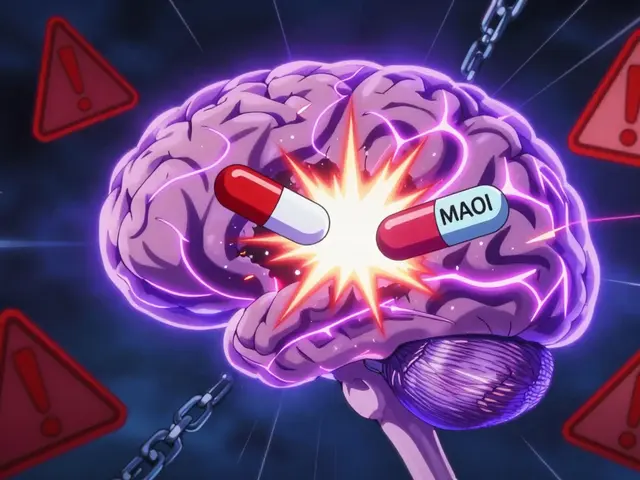
- SSRIs + MAO inhibitors (like phenelzine or tranylcypromine): This is the classic killer combo. Even a two-week gap between stopping one and starting the other isn’t always enough. Some experts recommend waiting up to five weeks after stopping an MAOI before starting an SSRI. The risk isn’t theoretical - it’s documented in every major pharmacology guide.
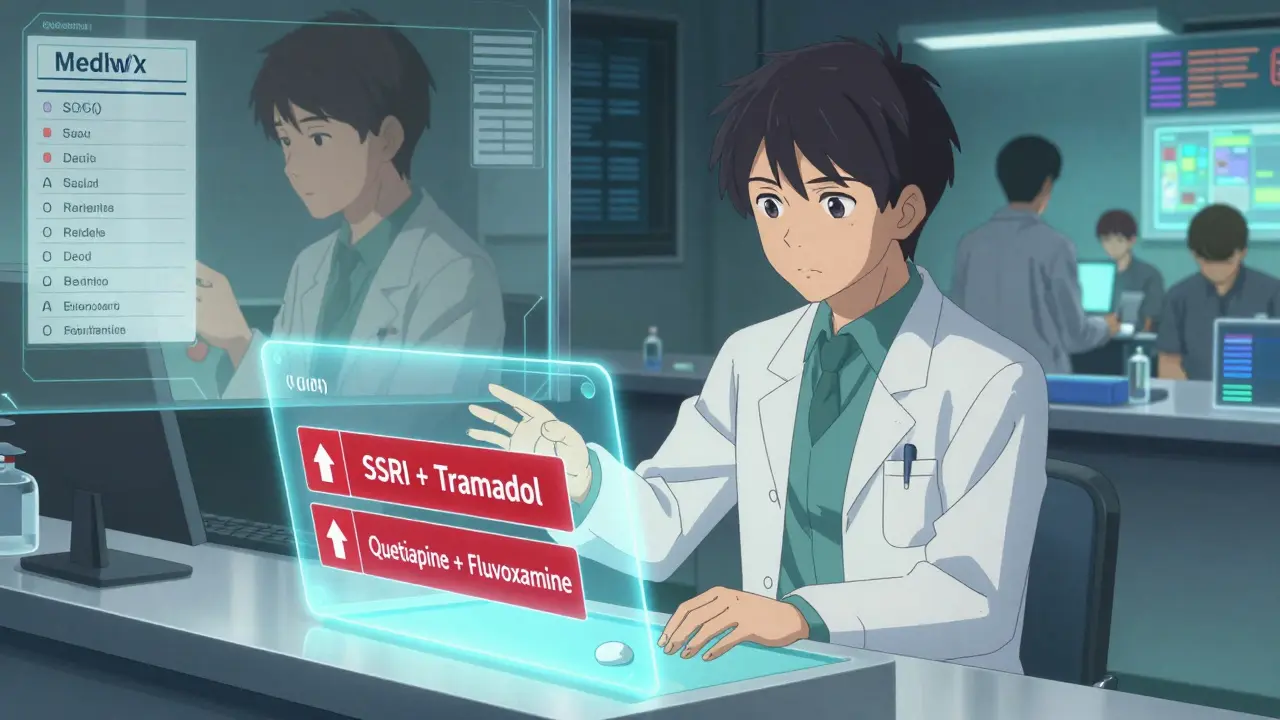
- SSRIs + Tramadol or Meperidine: These opioids aren’t just painkillers. They also boost serotonin. When paired with an SSRI like fluoxetine or sertraline, the risk of serotonin syndrome spikes. Tramadol is especially sneaky because many patients think it’s "safe" since it’s not a strong opioid.
- TCAs + Alcohol or Benzodiazepines: Tricyclic antidepressants like amitriptyline already cause drowsiness and slow breathing. Add alcohol or Xanax, and you’re asking for respiratory depression. This combo has killed people during sleep.
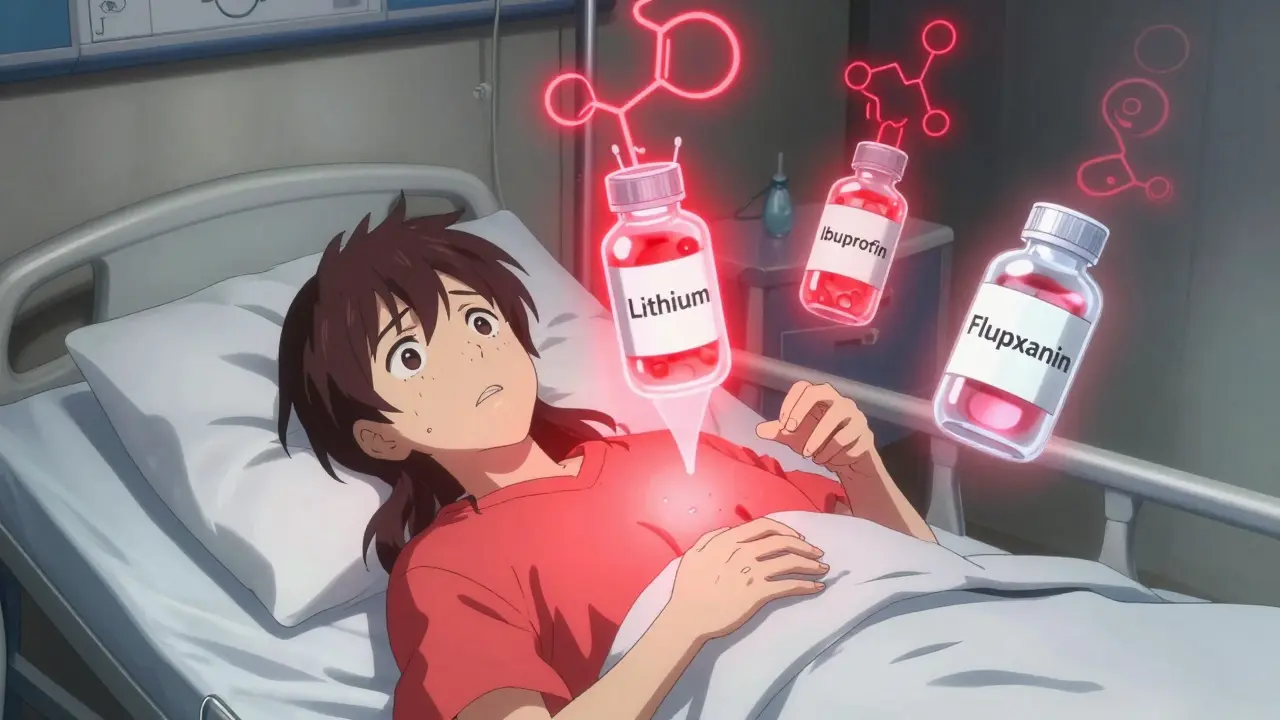
- Lithium + NSAIDs (like ibuprofen or naproxen): Lithium has a tiny therapeutic window - between 0.6 and 1.0 mmol/L. Too much, and you get tremors, confusion, kidney damage. NSAIDs reduce how fast your kidneys clear lithium. That can push levels up by 25% to 50%. One extra dose of Advil, and you’re in danger.
- Quetiapine or Risperidone + Fluvoxamine: Fluvoxamine is one of the strongest inhibitors of the CYP1A2 enzyme. Many antipsychotics are broken down by that same enzyme. When fluvoxamine blocks it, levels of quetiapine can skyrocket. That leads to extreme drowsiness, low blood pressure, and heart rhythm problems.
Why Some Drugs Are Safer Than Others
Not all psychiatric meds are created equal when it comes to interactions. Fluvoxamine? High risk. It blocks four different liver enzymes (CYP1A2, 2C9, 2C19, 3A4). That means it messes with a ton of other drugs - from blood thinners to cholesterol meds.On the flip side, sertraline and citalopram? Much lower risk. They don’t interfere as much with liver enzymes. That’s why many psychiatrists pick them when someone’s already on multiple medications. Same goes for vilazodone - it hits serotonin hard but leaves other systems alone. Less interference = fewer surprises.
Antipsychotics vary too. Quetiapine has a relatively clean interaction profile. But olanzapine? It can raise blood sugar and cholesterol, and when paired with mood stabilizers like valproate, it increases sedation and weight gain risk. Clozapine? One of the most effective antipsychotics - but it can wipe out white blood cells. You need weekly blood tests for the first six months. Add another drug that affects bone marrow, and you’re playing Russian roulette.
What Doctors Should Be Doing - But Often Aren’t
The American Association of Psychiatric Pharmacists says 30% to 50% of adverse drug events in psychiatric care come from interactions. That’s not a small number. That’s a system failure.Here’s what should happen every time a new drug is added:
- Check the neurotransmitter profile. Does this drug boost serotonin? Norepinephrine? Dopamine? Use a reference like the QUICK REFERENCE TO PSYCHOTROPIC MEDICATIONS® to see how each drug stacks up.
- Look at liver enzymes. Is the new drug metabolized by CYP2D6? CYP3A4? Is the patient already on something that blocks or speeds up that enzyme? Fluvoxamine, paroxetine, and ketoconazole are big inhibitors. Rifampin and St. John’s wort are inducers - they make drugs break down too fast.
- Watch narrow-therapeutic-index drugs. Lithium, carbamazepine, clozapine, and valproate all need blood tests. One wrong combo, and levels go off the charts.
- Monitor after the first dose. Don’t just send the patient home. Observe them for 2 to 4 hours after starting a new combo. Call them back in 3 days. Check in again at day 7. Serotonin syndrome doesn’t wait.
Too many doctors rely on memory or outdated apps. They don’t consult interaction checkers. They skip baseline labs. They don’t document why they chose a risky combo. That’s not just negligence - it’s negligence with lethal consequences.
What You Can Do to Protect Yourself
If you’re on more than one psychiatric medication, here’s your action plan:- Keep a written list. Include every pill, patch, supplement, and herbal product. Don’t forget over-the-counter stuff like NyQuil or cold meds - many contain dextromethorphan, which can trigger serotonin syndrome.
- Ask your pharmacist. Not your doctor. Your pharmacist. They’re trained to spot interactions. Show them your full list. Ask: "Is this combo safe?" Don’t settle for "I’ve never seen a problem."
- Know your warning signs. If you suddenly feel agitated, sweaty, shaky, or confused after starting a new med - stop and call your doctor. Don’t wait. Don’t assume it’s "just anxiety."
- Get genetic testing if you can. CYP2D6 and CYP2C19 tests tell you how fast your body breaks down antidepressants. If you’re a slow metabolizer, even a normal dose of an SSRI could be too much. These tests aren’t perfect, but they’re better than guessing.
- Use digital tools. Apps like Medscape Drug Interaction Checker or Epocrates are free and reliable. Enter your meds. Let the tech do the math.
The Future: Safer Prescribing Through Technology
The good news? Things are changing. Digital tools that flag dangerous combos in real time are already cutting serious interaction events by 37% in clinics that use them. The National Institute of Mental Health is testing AI models that predict your personal risk based on your genetics, age, kidney function, and current meds. In a few years, your doctor might get an alert like: "Patient has CYP2D6 poor metabolizer status. Adding fluoxetine increases risk of QT prolongation. Consider sertraline instead."Meanwhile, pharmacogenomic guidelines from the Clinical Pharmacogenetics Implementation Consortium (CPIC) are now standard in many hospitals. They’re not magic. But they turn guesswork into science.
Final Reality Check
Psychiatric meds are powerful. They can pull someone back from the edge. But they’re not harmless. Mixing them without understanding how they work together is like driving with your eyes closed. You might get lucky. But you might not.If you’re on multiple psychiatric drugs, you owe it to yourself to know the risks. Ask questions. Demand monitoring. Push for safer options. Your life depends on it - not on your doctor’s memory, not on a drug label, but on your willingness to be informed.
Can I take an SSRI with St. John’s Wort?
No. St. John’s Wort is a natural antidepressant that boosts serotonin. When combined with SSRIs like fluoxetine or sertraline, it can trigger serotonin syndrome. Even if you think it’s "natural," it’s pharmacologically active and just as dangerous as prescription drugs in this context.
How long should I wait between stopping an MAOI and starting an SSRI?
At least two weeks, but five weeks is safer. MAOIs linger in your system longer than most people realize. Some experts recommend waiting 14 days after stopping phenelzine or tranylcypromine before starting an SSRI. For fluoxetine (Prozac), which stays in your body for weeks, wait five weeks after stopping it before starting an MAOI. Never guess - check with your pharmacist.
Is it safe to take ibuprofen with lithium?
Not without monitoring. Ibuprofen and other NSAIDs reduce how fast your kidneys clear lithium. This can cause lithium levels to rise by 25% to 50%, pushing you into toxic range. If you need pain relief, acetaminophen (Tylenol) is safer. If you must use ibuprofen, get your lithium level checked within 3-5 days.
What are the signs of serotonin syndrome?
Early signs include shivering, diarrhea, restlessness, and rapid heart rate. As it worsens, you may develop high fever, muscle rigidity, confusion, seizures, or loss of consciousness. If you notice these symptoms after starting a new med or changing a dose, seek emergency help immediately. Serotonin syndrome can kill within hours.
Why do some doctors still prescribe risky combos?
Some do it out of desperation - when patients haven’t responded to single drugs. Others don’t know the risks or rely on outdated info. Many don’t have time to check interactions thoroughly. But that’s not an excuse. The data is clear: these combos kill. Doctors who ignore guidelines are putting lives at risk - and patients deserve better.
Can genetic testing prevent bad interactions?
It can help, but it’s not a guarantee. Tests for CYP2D6 and CYP2C19 show how your body processes certain antidepressants. If you’re a slow metabolizer, you’re more likely to have side effects from standard doses. That info can guide safer choices - like picking sertraline over fluoxetine. But genetics don’t tell you everything. Diet, other meds, liver health, and kidney function still matter.
So let me get this straight - you’re telling me I can’t take my daily ibuprofen for my period cramps if I’m on lithium? That’s insane. My doctor never mentioned this. I’ve been taking both for years. Now I’m paranoid every time I swallow a pill.
Who even writes this stuff? Pharmacologists on acid? I just want to feel normal, not play Russian roulette with my meds.
It is deeply troubling, and frankly, a systemic failure of medical education, that such life-altering pharmacological interactions remain under-discussed in primary care settings. The notion that a patient might be prescribed multiple psychotropics without a thorough review of hepatic metabolism pathways - particularly CYP450 enzyme dynamics - is not merely negligent, it is ethically indefensible.
When clinicians rely on memory rather than evidence-based interaction checkers, they are not practicing medicine - they are gambling with human neurochemistry. The burden of vigilance should not fall solely on the patient, yet here we are.
USA needs to stop letting foreign meds and hippie herbs mess with real medicine. St Johns Wort? Its a weed. Lithium? Real science. Stop mixing nature with pills. People die because they think natural means safe. It dont. Fix the system or shut up.
i get what ur saying but like... some of us just need to survive. i took tramadol for years with sertraline and never had an issue. maybe im lucky. maybe my liver is a tank. i dont know. but telling everyone its a death sentence feels like fearmongering. people are scared enough already. why make it worse?
also why does everyone act like pharmacists are wizards? they just read the label. sometimes the label says "dont mix" but the doc says "do it anyway". who you gonna believe?
THIS IS WHY AMERICA IS FALLING APART. YOU LET PEOPLE TAKE HERBS AND OVER THE COUNTER SHIT LIKE THEY’RE MEDICINE. I’VE SEEN PEOPLE ON 7 DIFFERENT PSYCH DRUGS AND STILL COMPLAIN THEY’RE NOT BETTER. THEY’RE NOT SICK - THEY’RE ADDICTED TO DRUGS AND THINK THEY’RE SPECIAL.
NO ONE WANTS TO BE RESPONSIBLE. DOCTORS ARE LAZY. PHARMACISTS ARE TOO BUSY. PATIENTS THINK THEY’RE DOCTORS NOW BECAUSE THEY’VE BEEN ON INSTAGRAM FOR 5 YEARS.
STOP THE MADNESS. JUST TAKE ONE DRUG AND DEAL WITH IT. IF YOU CAN’T HANDLE THAT, THEN YOU’RE NOT READY FOR LIFE.
Oh sweetie. You really think your pharmacist cares? They’re paid by the hour, not by the number of lives saved. They’ll nod and say "probably fine" while scanning your meds like you’re a grocery list.
And don’t get me started on "digital tools." I used Medscape. It flagged 17 interactions. My doctor said "I’ve seen this a hundred times."
So I Googled serotonin syndrome. Found a Reddit thread from 2017 where someone died after taking fluoxetine and NyQuil. I cried. Then I stopped everything. And now I’m on one med. And I’m alive.
Don’t trust the system. It doesn’t trust you.
wait so you’re saying ibuprofen is dangerous with lithium but tylenol isnt? why? because the science says so or because someone got paid to say so?
also why is fluvoxamine the villain but fluoxetine is fine? theyre basically the same drug. why is one the devil and the other the saint?
and who the hell decided that 5 weeks is the magic number between MAOIs and SSRIs? did they test this on actual humans or just run a simulation on a computer?
im not saying this is wrong. im just saying its all so arbitrary. like why is my body a math problem?
you know what’s wild? the fact that we treat mental health like it’s a puzzle you solve with drugs, not a damn human being trying to survive.
they give you 5 meds because you’re "not responding" - like your soul is a broken wifi signal.
no one asks if you’re sleeping. if you’re eating. if you’re lonely. if you’re grieving. they just throw more chemicals at the void.
and then they act shocked when you end up in the ER with serotonin syndrome.
we’re not fixing the problem. we’re just making it more complicated. and more expensive. and more deadly.
I’ve worked in mental health for 18 years. I’ve seen people come back from the edge with the right meds. I’ve also seen people nearly die because no one checked a single interaction.
But here’s the thing - the system isn’t broken because doctors are evil. It’s broken because we’ve underfunded care for decades. Doctors have 8 minutes per patient. Pharmacists are stretched thin. No one has time to dig into CYP enzymes.
So we need better tools - yes. But we also need better support. More time. More training. More respect for the people trying to do the right thing.
And patients? You’re not being paranoid. You’re being smart. Keep asking. Keep checking. Keep pushing. You’re not a burden. You’re the only one who’s really watching out for you.
When I first started on lithium, my doctor told me to avoid salt. I thought he meant no chips. Turns out he meant no sudden changes in hydration, sodium, or kidney function. I didn’t know. No one explained it. I just got a script.
Now I carry a little card in my wallet: "On Lithium. Avoid NSAIDs. Check levels monthly." I printed it. Laminated it. Carry it like a holy relic.
If you’re on anything with a narrow therapeutic window - do this. Write it down. Show it to every provider. Even if they roll their eyes. Even if they’re busy.
Because the only person who will always be there for you… is you.
How quaint. You think this is about pharmacology. It’s not. It’s about power. Who gets to define sanity? Who gets to say which neurotransmitters are "too much"? Who decides what a "normal" brain looks like?
These drugs are not cures. They are social control mechanisms dressed in white coats. The fact that we’ve normalized polypharmacy in psychiatry is proof we’ve abandoned empathy for efficiency.
And now we blame patients for not reading the fine print. But who wrote the fine print? Corporations. Academics with conflicts. Regulators asleep at the wheel.
It’s not a medical issue. It’s a moral crisis.
Let me be blunt: the entire psychiatric pharmaceutical industrial complex is a Ponzi scheme built on placebo effects and corporate greed. You think your CYP2D6 test means something? It’s a marketing gimmick. The real danger isn’t the drugs - it’s the cult of compliance.
Doctors are incentivized to prescribe. Pharma reps hand out free samples like candy. Patients become addicted to the illusion of control.
And now you’re lecturing people about serotonin syndrome like it’s a cautionary tale instead of the inevitable consequence of a broken system?
Wake up. The system isn’t flawed. It’s designed this way.
you know what they’re not telling you? the FDA knows about these combos. they’ve known for 20 years. but they don’t ban them because Big Pharma pays them. and your doctor? they get kickbacks from the pill companies. that’s why they push fluoxetine over sertraline - because the company owns the rights to the ad campaign.
your genetic test? it’s a trap. they want you to think you’re safe so you keep taking the meds.
and st john’s wort? they hate it because it’s free. you don’t need a prescription. you don’t need a pharmacy. you don’t need to pay $400 a month.
they’re scared of natural solutions. because then the whole house of cards falls down.
While the preceding commentary elucidates a spectrum of valid concerns regarding pharmacological interactions, it is imperative to underscore the necessity of standardized, evidence-based clinical protocols in psychiatric care. The American Psychiatric Association, in conjunction with the Clinical Pharmacogenetics Implementation Consortium, has published clear guidelines for the management of polypharmacy, including specific recommendations regarding washout periods, enzyme inhibition profiles, and therapeutic drug monitoring.
It is not sufficient to rely on anecdotal experience or consumer-driven digital tools. Clinicians must be held accountable to established standards, and patients must be empowered with accurate, accessible information - not fear-based narratives.
Education, not alarmism, is the path forward.