

Medication Photosensitivity Checker
Check if your medication makes you sun-sensitive and get personalized protection recommendations based on the latest medical research.
Have you ever walked outside for just 10 minutes after starting a new medication and ended up with a bad sunburn - even on a cloudy day? You’re not alone. More than 1,000 common medications can make your skin dangerously sensitive to sunlight. This isn’t just a minor annoyance. It can lead to blistering, long-lasting dark spots, and even raise your risk of skin cancer. If you’re taking antibiotics, blood pressure pills, or even over-the-counter pain relievers, your skin might be at risk without you even knowing it.
What Exactly Is Medication-Induced Photosensitivity?
Photosensitivity from medications happens when a drug in your body reacts with sunlight - specifically UVA rays (320-400 nm) - and triggers a skin reaction. It’s not sunburn. It’s not an allergy in the usual sense. It’s a chemical reaction between the drug and UV light that damages your skin cells. There are two main types: phototoxic and photoallergic.
Phototoxic reactions make up 95% of cases. They happen fast - usually within 30 minutes to two hours after sun exposure. Think of it like a severe sunburn, but worse. Your skin turns red, swells, stings, and may even blister. It only affects areas directly exposed to sunlight - face, neck, arms, hands. Common culprits? Doxycycline (an antibiotic), ciprofloxacin (another antibiotic), ibuprofen, naproxen, and amiodarone (a heart medication). Amiodarone is especially tricky: up to 75% of people on long-term use develop photosensitivity, and the effect can last for years after stopping the drug.
Photoallergic reactions are rarer - only about 5% of cases - but more confusing. They don’t show up right away. It takes 24 to 72 hours. And instead of staying where the sun hit, the rash can spread to areas that were covered. It looks like eczema: itchy, flaky, red patches. This type happens because your immune system starts recognizing the drug + UV combo as a foreign invader. Common triggers? Sulfonamide antibiotics, certain diuretics, and even some ingredients in sunscreen, like oxybenzone.
Why Most People Don’t Realize They’re at Risk
Doctors rarely mention sun safety when prescribing these meds. A survey of 1,200 people with photosensitivity found that 68% received zero warning from their prescriber. That’s shocking. You might get a leaflet about nausea or dizziness, but nothing about sunlight. Yet, the consequences can be serious.
One Reddit user, a pharmacist named "SunburnedPharmD," shared how they got blistered skin after just 15 minutes walking to their car while on doxycycline. They wore long sleeves. It didn’t help. The drug was still active in their skin. Another patient on MyHealthTeams said they used SPF 50 sunscreen daily - and still got burns. Why? Because most sunscreens don’t block enough UVA. SPF only measures UVB protection. UVA is the real troublemaker here.
Even worse, many people mistake the reaction for something else. Dermatologists say up to 70% of photosensitivity cases are misdiagnosed as "polymorphic light eruption" or "idiopathic sun rash." That means people get treated for the wrong thing - and keep taking their meds without protection.
What Medications Are Most Likely to Cause This?
Not all drugs carry the same risk. Here’s what’s most commonly linked to photosensitivity, based on clinical data:
- Antibiotics: Doxycycline (10-20% of users), ciprofloxacin (1-2%), tetracycline, sulfamethoxazole
- NSAIDs: Ibuprofen, naproxen, ketoprofen (especially topical gels - they’re a major trigger)
- Heart Medications: Amiodarone (25-75% of users), thiazide diuretics (like hydrochlorothiazide), some beta-blockers
- Psychiatric Drugs: Chlorpromazine, fluphenazine
- Diabetes Meds: Sulfonylureas (like glyburide)
- Retinoids: Isotretinoin (Accutane), tretinoin
- Topical Products: Oxybenzone (in sunscreen), fragrances, some acne creams
Women are twice as likely to get photoallergic reactions - not because of biology alone, but because they’re more likely to use topical products and cosmetics that contain photoallergens.
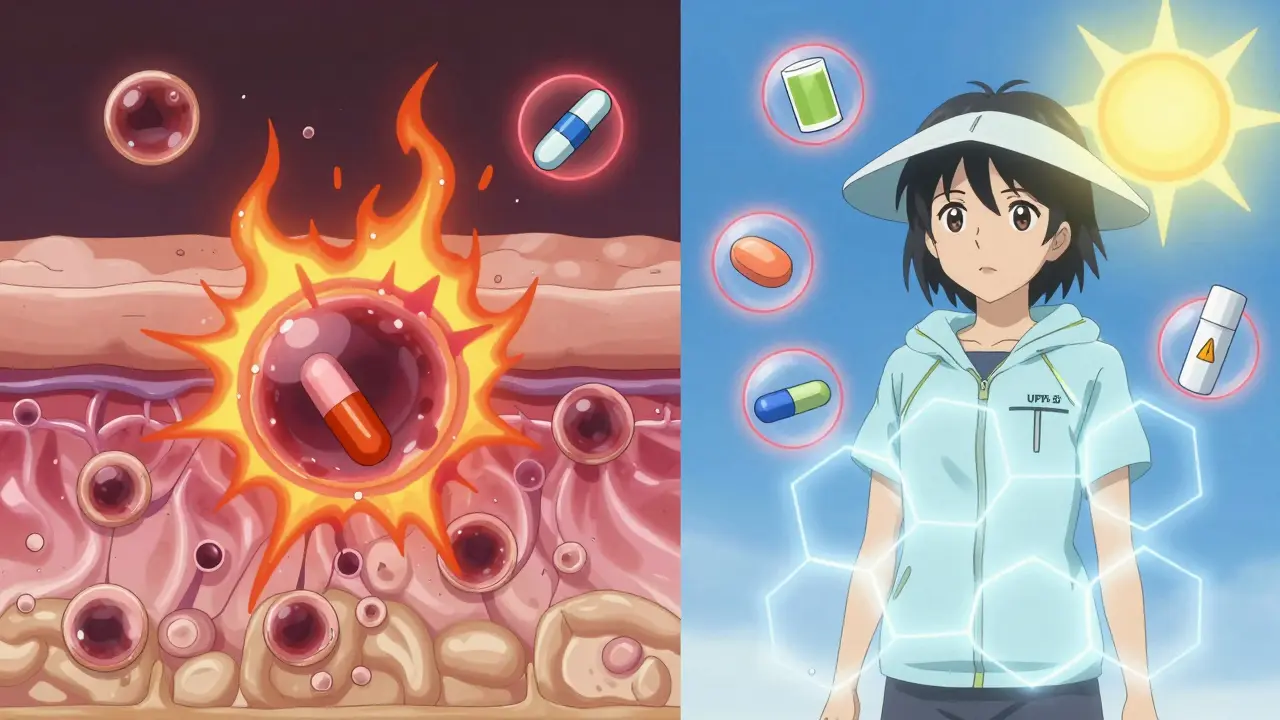
How to Protect Yourself: The Real Rules
Standard sunscreen advice doesn’t cut it. You need a full strategy.
1. Use the Right Sunscreen
Forget SPF 30. You need SPF 50+ - and it must be broad-spectrum with zinc oxide or titanium dioxide as the main active ingredients. These minerals sit on top of your skin and physically block UVA and UVB. Chemical sunscreens (like oxybenzone) can actually make things worse if you’re photosensitive.
Apply 2 mg per square centimeter of skin. That’s about one ounce (a shot glass full) for your whole body. Most people apply only 25-50% of that. Mayo Clinic studies show it takes 3-5 training sessions for people to learn how much to use. Don’t guess. Measure it.
2. Wear UPF 50+ Clothing
Regular cotton T-shirts only block 3-20% of UV rays. UPF 50+ clothing blocks 98%. Brands like Solbari, Coolibar, and Columbia have been tested independently and consistently deliver protection. A user on MyHealthTeams said switching to UPF 50+ shirts and hats cut their flare-ups by 90%. That’s not hype. That’s science.
Look for dark colors, tightly woven fabrics, and long sleeves. Even a regular long-sleeve shirt helps - if it’s not see-through when held up to light.
3. Avoid Sun Between 10 a.m. and 4 p.m.
UVA is strongest during these hours. Use apps like UVLens (used by over 10 million people) to check your local UV index. If it’s 3 or higher, limit time outside. That’s not extreme - that’s smart. Cleveland Clinic found that patients who followed this rule had 40% fewer reactions.
4. Check Your Meds - Even OTC
Don’t just look at prescriptions. Ask your pharmacist: "Is this medication linked to sun sensitivity?" Even common painkillers like ibuprofen can trigger reactions. The FDA updated its guidelines in 2022 to require photosensitivity warnings on over 200 high-risk drugs. But many older prescriptions still don’t carry them.
5. Monitor Your Skin
Keep a photo journal. Take pictures of any unusual redness, dark spots, or rashes after sun exposure. Show them to your dermatologist. Early detection stops permanent damage.
What to Do If You Already Got Burned
If you develop a severe reaction - blisters, intense pain, fever - see a doctor. Don’t wait. For mild cases:
- Get out of the sun immediately
- Cool the skin with damp cloths or a cool bath
- Use aloe vera or hydrocortisone cream (1%) for itching
- Take ibuprofen (if not contraindicated) to reduce inflammation
- Stay hydrated
Do not pop blisters. Do not apply butter, oils, or home remedies. They trap heat and increase infection risk.
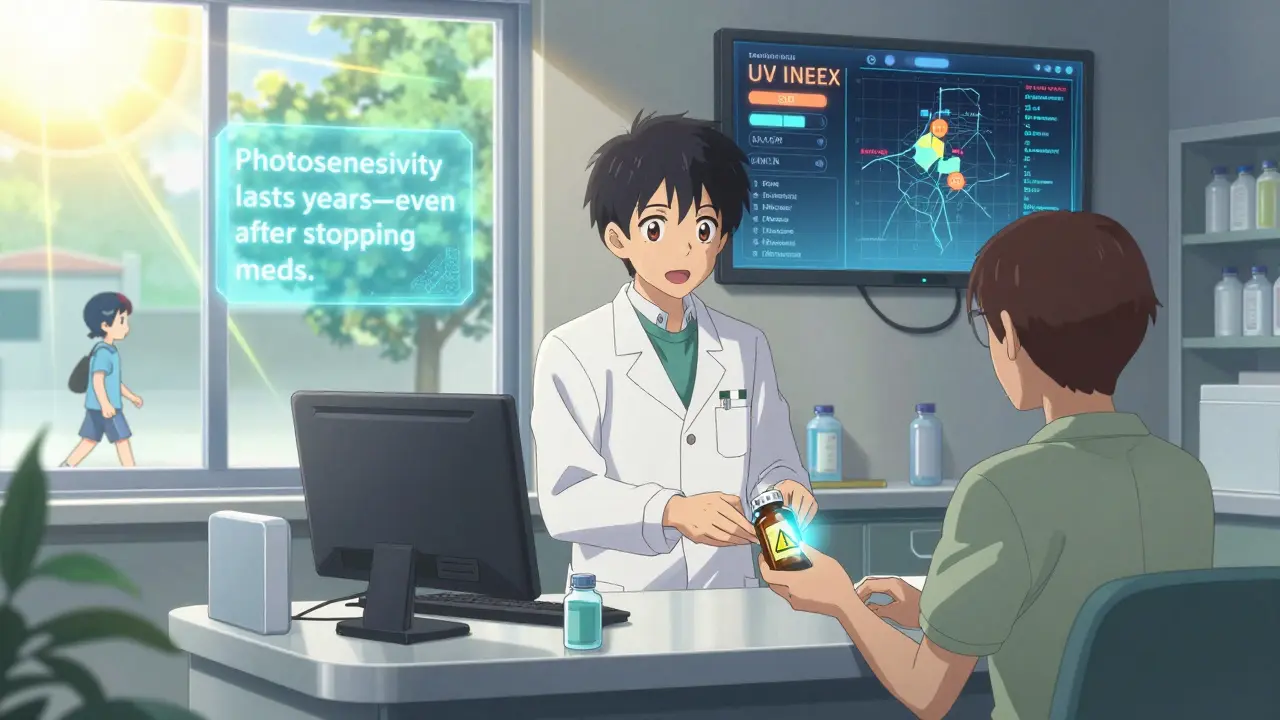
The Future of Sun Safety
There’s real progress. In 2023, the FDA approved the first targeted photoprotective drug, Lumitrex (photoprotectin), which reduces UV-induced skin damage by 70% in trials. It’s not yet widely available, but it’s a sign things are changing.
Genetic testing is also stepping in. 23andMe launched a photosensitivity risk panel in 2023 that checks for gene variants linked to higher risk - like MC1R (common in redheads). The test has 82% sensitivity. If you’ve had repeated sunburns without clear cause, it might be worth considering.
Meanwhile, "smart" sunscreens that change color when UV exposure gets dangerous are in prototype testing. And more pharmacies are now using automated alerts in their systems - Kaiser Permanente cut reactions by 28% in just one year by flagging high-risk meds at the prescription stage.
Final Reality Check
Photosensitivity isn’t rare. It’s common. And it’s preventable. If you’re on any of these medications, you’re not being paranoid if you wear a hat and sunscreen every day - even in winter. UVA penetrates clouds and glass. Your skin doesn’t know the difference.
The biggest mistake? Waiting until you get burned. Prevention isn’t optional. It’s essential. Talk to your pharmacist. Ask your doctor. Don’t assume they’ll tell you. They probably won’t. But now you know what to ask for.
Can you get photosensitivity from sunscreen itself?
Yes. Some chemical sunscreens - especially those with oxybenzone, octinoxate, or avobenzone - can trigger photoallergic reactions. That’s why mineral sunscreens with zinc oxide or titanium dioxide are recommended for people on photosensitizing meds. They’re less likely to cause a reaction because they sit on the skin instead of being absorbed.
Do I need to stop my medication if I get sunburned?
No - not unless your doctor advises it. Most photosensitivity reactions are manageable with better sun protection. Stopping a necessary medication like amiodarone or doxycycline can be dangerous. Instead, focus on shielding your skin. If reactions keep happening despite precautions, talk to your prescriber about switching to a non-photosensitizing alternative.
Is this only a problem in summer?
No. UVA rays are present year-round and penetrate clouds and windows. You can get a reaction in winter, on cloudy days, or even while driving. That’s why daily protection - not seasonal - is key. If you’re on a photosensitizing drug, treat every day like summer.
Can children get photosensitivity from medications?
Yes. Children on antibiotics like doxycycline (for acne or Lyme disease) or isotretinoin (for severe acne) are at risk. Parents often don’t realize the connection. Always ask your pediatrician or pharmacist about sun safety when a new medication is prescribed. Use UPF clothing and mineral sunscreen for kids - they’re more sensitive than adults.
How long does photosensitivity last after stopping the drug?
It varies. For most drugs, it fades within days to weeks. But for amiodarone, it can last up to 20 years. Other long-lasting offenders include tetracycline, fluoroquinolones, and some NSAIDs. If you’ve taken one of these in the past and still react to sun, you’re not imagining it. The drug’s metabolites linger in your skin. Continue protecting yourself.
Are there any tests to confirm photosensitivity?
Yes - photopatch testing. A dermatologist applies small amounts of common photosensitizers to your skin, then exposes them to UVA light. If you react, it confirms the cause. But this test only works for photoallergy and catches about 30-40% of cases. The best diagnostic tool is still your medication history and symptom timeline.

OMG I had no idea ibuprofen could do this! I got a crazy rash last summer and thought it was heat rash-turns out I was on it for a week straight and walked my dog at 5 p.m. 🤦♀️ Now I wear a hat indoors on cloudy days. If you’re on meds, assume your skin is glass. This post saved me.
Phototoxic vs photoallergic is a critical distinction. Phototoxic is dose-dependent, non-immunologic, and mediated by reactive oxygen species. Photoallergic is Type IV hypersensitivity requiring prior sensitization. Most clinicians conflate them. The FDA’s 2022 update was long overdue but still incomplete-only 200 of the 1,200+ photosensitizing agents are flagged. You need to consult the FDA’s Drug Safety Communications database directly. Stop trusting package inserts.
Why do Americans act like sunscreen is a magic shield? You think SPF 50 makes you invincible? You’re still outside. You’re still exposed. Stop being lazy. Wear clothes. Stay inside. Don’t blame the drug-blame your lifestyle. We’re not kids anymore. If you can’t handle 10 minutes of shade, maybe you shouldn’t be walking around in the first place.
This is an exceptionally well-researched and vital piece of public health information. The fact that 68% of patients receive no warning from prescribers is a systemic failure. I’ve shared this with my entire medical team, and we’re now implementing a checklist at point-of-prescription. Thank you for elevating awareness. We need more content like this-evidence-based, clear, and actionable.
It is important to note that zinc oxide and titanium dioxide are physical blockers and do not penetrate the stratum corneum, making them ideal for photosensitive individuals. Chemical filters such as oxybenzone are absorbed into the dermis and may act as photosensitizers themselves. Moreover, the recommended application quantity of 2 mg/cm² is supported by ISO 24443:2022. Most commercial sunscreens are tested using this standard, yet consumers routinely underapply by a factor of 2 to 4. This significantly reduces efficacy.
I’ve been on doxycycline for acne for 6 months. I used to think I was just "sensitive" to the sun. Then I read this. I started wearing UPF 50+ shirts and a wide-brimmed hat every day-even in November. No more burns. No more panic. I didn’t know it was the medication. I thought I was just unlucky. You’re not alone. This stuff works. Just listen.
UVA penetrates glass? That’s a myth. Glass blocks over 90% of UVA. You’re not getting exposed driving. The real issue is people who live in sun-drenched apartments with large windows and then blame their meds. Also, amiodarone lasts 20 years? That’s not scientifically accurate. Half-life is 58 days. Accumulation occurs in adipose tissue, but elimination is measurable and finite. You’re exaggerating. This post is dangerously misleading.
So let me get this straight-take a perfectly good antibiotic, go outside, and now your skin turns into a tomato? And the government doesn’t even warn you? That’s insane. I’m calling my senator. This is a national disgrace. Why are we letting Big Pharma get away with this? People are getting burned and no one’s accountable. Wake up, America.
Did you know the FDA doesn’t test sunscreen ingredients for long-term effects? They’re all approved under GRAS-Generally Recognized As Safe-which was written in 1938. Oxybenzone is linked to endocrine disruption. The whole system is rigged. I’ve seen people with rashes after using "mineral" sunscreens-turns out they were contaminated with nano-particles from Chinese factories. The real solution? Stay inside. Avoid all chemicals. Live off-grid. This isn’t medicine-it’s control.
I’ve been on hydrochlorothiazide for 8 years and never had an issue until last winter. I was gardening on a gray day, and my arms turned red and hot-like I’d been in a sauna. I thought I’d gotten some weird bug. Took me three dermatologists to figure it out. Now I wear long sleeves, UPF 50 gloves, and a hat even when it’s 40 degrees. It’s not about being dramatic. It’s about survival. I used to think people who wore hats indoors were weird. Now I’m one of them. And I don’t care. I’d rather be weird than scarred.
The data on photoprotective agents like Lumitrex is promising but preliminary. Phase II trials showed significant reduction in UV-induced erythema, but long-term safety profiles are not yet established. Furthermore, genetic testing via MC1R variants has limited predictive value in non-Caucasian populations. While the recommendations here are largely sound, it’s important to contextualize them within individual risk profiles, including skin phototype, cumulative UV exposure, and concomitant medications. One-size-fits-all advice may not be optimal.
Wait-so you’re telling me my sunscreen was making it worse? 😱 I’ve been using Neutrogena Ultra Sheer for years. I just switched to Thinkbaby SPF 50 with zinc. First day out? Zero redness. I’m crying. This changed my life. Thank you for the nudge.