
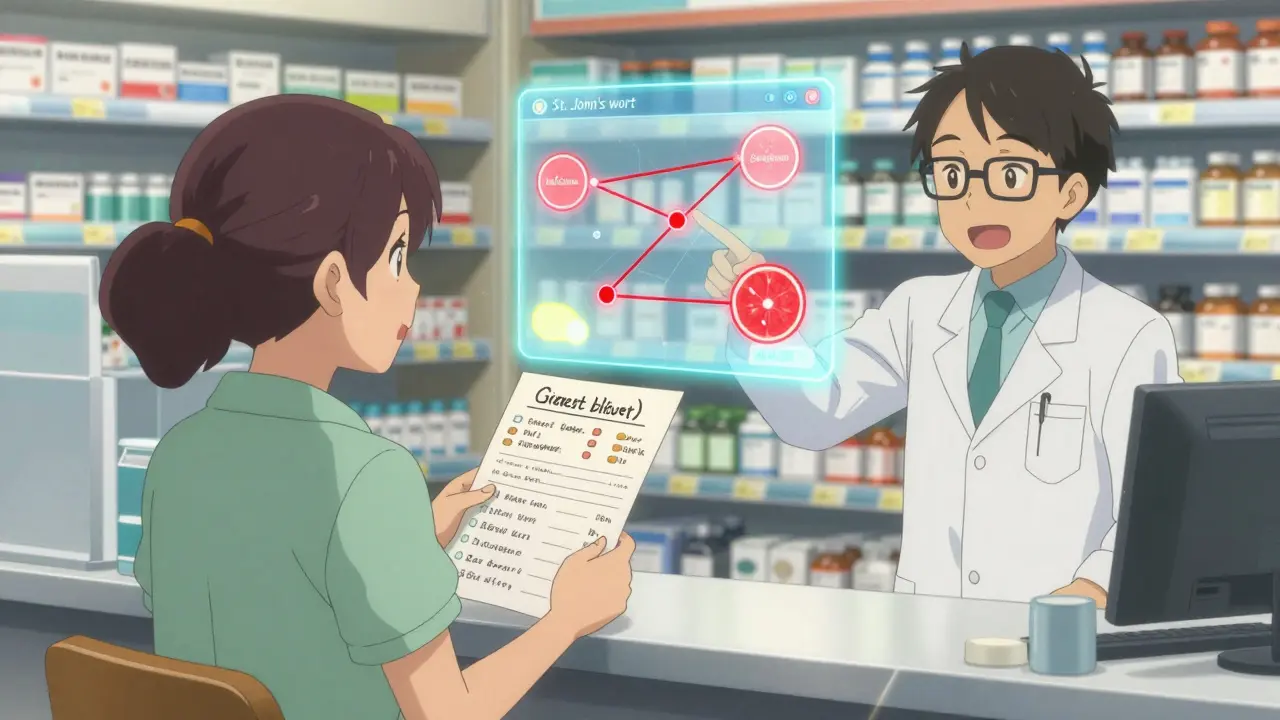
It’s easy to think that because supplements are sold over the counter, they’re harmless. But if you’re taking prescription meds, even something as simple as a daily vitamin or a turmeric capsule could be quietly messing with your treatment. The truth? Supplement interactions are one of the most overlooked dangers in modern healthcare. And your pharmacist is the person best equipped to catch them.
Why Your Pharmacist Is Your Secret Weapon
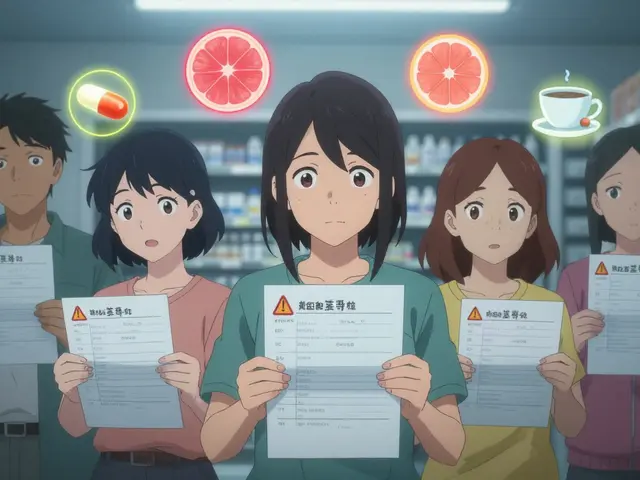
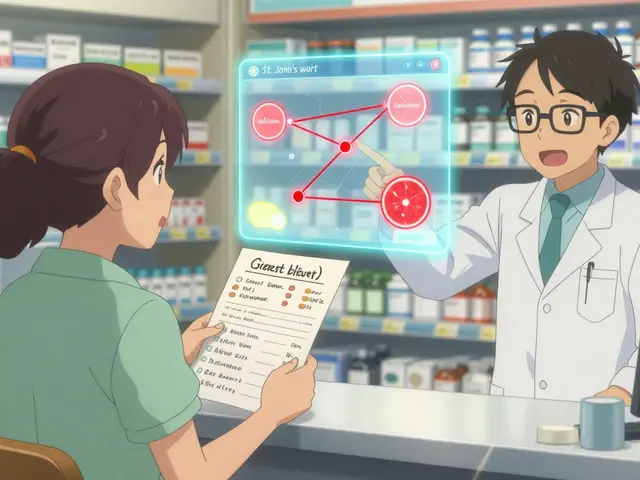
You might see your doctor once a year. Your pharmacist? They see you every time you pick up a script. They know your full medication list - not just the big ones, but the little ones too. And they’re trained to spot how those pills, patches, and inhalers react with what you’re popping in pill form or eating at breakfast. In Australia, nearly half of adults over 50 take at least one supplement. That’s not unusual. But only about 1 in 5 of them tell their pharmacist. That’s a problem. Why? Because supplements aren’t regulated like prescription drugs. There’s no guarantee what’s in the bottle, how much is actually there, or whether it’s safe with your meds. Take St. John’s wort, for example. It’s sold as a natural mood booster. But it can make birth control fail. It can knock out antidepressants. It can even interfere with blood thinners like warfarin. And people don’t even realize they’re taking it - it’s in so many multi-ingredient formulas.What You Need to Bring to the Pharmacy
Don’t walk in saying, “I take some vitamins.” That’s like showing up to a car repair shop and saying, “My car’s broken.” You need specifics. Bring a written list of everything:- All prescription medications (including doses and times)
- All supplements - name, brand, dose, how often you take them
- Any herbal teas, tinctures, or powders (yes, even matcha or ashwagandha)
- Your typical daily diet - especially if you eat grapefruit, dairy, leafy greens, or garlic regularly
High-Risk Supplements to Name Right Away
Some supplements are red flags. If you’re taking any of these, say it loud:- St. John’s wort - interacts with antidepressants, blood thinners, birth control, HIV meds, and transplant drugs. Can cause serotonin syndrome - a life-threatening condition.
- Goldenseal - affects liver enzymes that break down over 50% of common drugs. Can make your meds too strong or too weak.
- Ginkgo biloba - increases bleeding risk. Dangerous if you’re on warfarin, aspirin, or NSAIDs like ibuprofen.
- Garlic supplements - can thin blood. Especially risky before surgery or if you’re on anticoagulants.
- Calcium and iron supplements - block absorption of thyroid meds, antibiotics like ciprofloxacin, and osteoporosis drugs like alendronate.
Food That Can Sabotage Your Meds
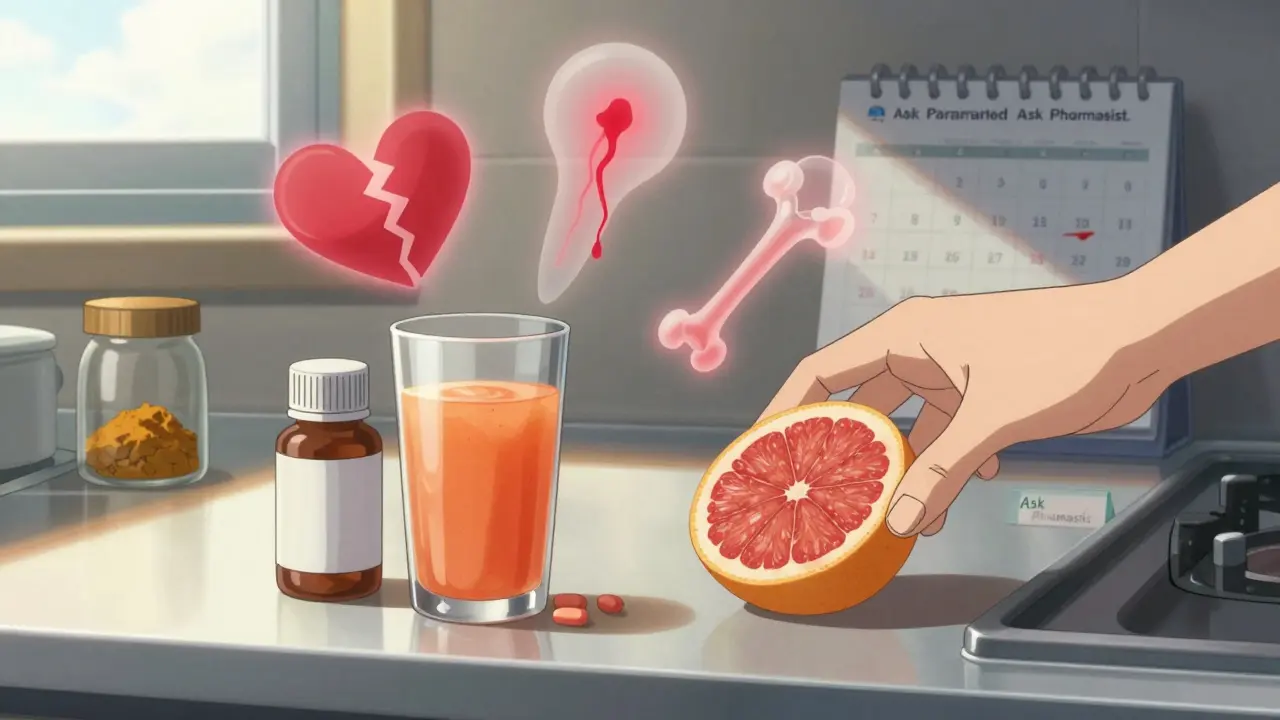
Food isn’t just fuel - it’s a chemical player in your body’s drug game.- Grapefruit - stops your body from breaking down statins, blood pressure meds, and some anxiety drugs. One grapefruit can make your dose dangerously high. And it’s not just juice - the fruit itself does it too.
- Dairy - calcium in milk, yogurt, and cheese can bind to antibiotics like tetracycline or ciprofloxacin. Take them 2-4 hours apart.
- Leafy greens - spinach, kale, broccoli are packed with vitamin K. If you’re on warfarin, your intake needs to be consistent. A sudden salad binge can make your blood clot faster.
- Alcohol - amps up sedatives, painkillers, and some antidepressants. Can cause liver damage with long-term use of paracetamol.
- High-sodium foods - counteract blood pressure meds. If you’re eating a lot of processed snacks or takeaway, your med might not work as well.
What Your Meds Might Be Stealing From You
Some medications don’t just interact with supplements - they drain your body of essential nutrients. And you might not even know it.- Proton pump inhibitors (PPIs) - like omeprazole - deplete vitamin B12, magnesium, and calcium. Long-term use can lead to nerve damage or brittle bones.
- Metformin - for diabetes - lowers B12 and folate. That’s linked to brain fog, fatigue, and nerve pain.
- Statins - for cholesterol - reduce coenzyme Q10. That’s why some people get muscle aches and exhaustion.
- Diuretics - water pills - flush out potassium and magnesium. Can cause cramps, irregular heartbeat.
- Birth control pills - lower B vitamins and magnesium. Can affect mood, energy, and hormone balance.
How to Ask the Right Questions
Most people don’t know how to talk to pharmacists. They wait to be asked. But pharmacists are busy. Don’t wait. Here’s what to say:- “I’m taking [supplement name]. Is it safe with my [medication]?”
- “I eat grapefruit every morning. Does that interfere with anything?”
- “I’ve been feeling more tired lately. Could this supplement or my diet be making it worse?”
- “Should I take this vitamin at a different time than my pills?”
- “Is there a better brand of this supplement you’d recommend? I want to make sure it’s quality.”
What to Look for on Supplement Labels
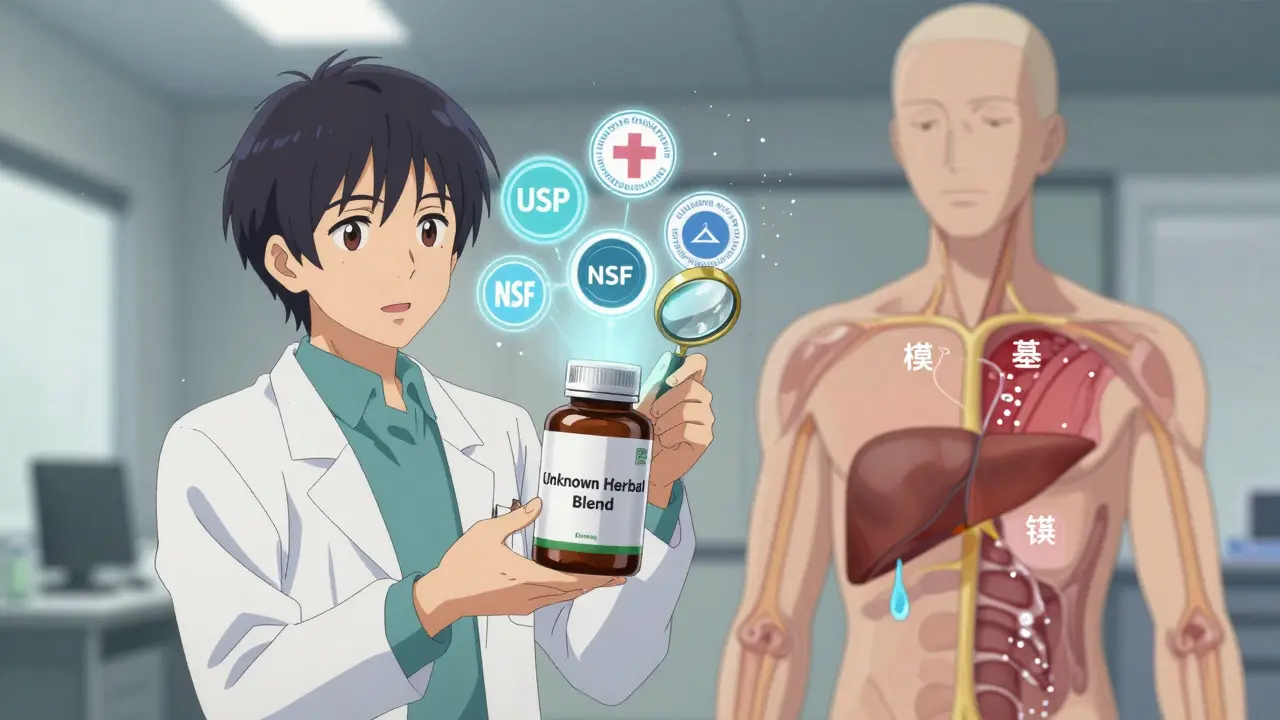
The supplement industry is wild west. Labels lie. Ingredients are vague. Dosages are guesswork. Look for third-party verification seals:- USP Verified - means the product has been tested for purity, strength, and consistency.
- NSF Certified - checks for banned substances and accurate labeling.
- ConsumerLab Tested - independent lab testing for what’s actually in the bottle.
Don’t Stop or Start Anything on Your Own
I’ve seen people quit their statin because they started taking red yeast rice - thinking it’s “natural cholesterol control.” Big mistake. Red yeast rice contains the same active ingredient as lovastatin. Taking both can cause severe muscle damage. Same with stopping vitamin D because you read it “might cause kidney stones.” If you’re on a PPI, you might already be deficient. Stopping it could make things worse. Always talk to your pharmacist before adding or dropping anything - even if it’s “just a vitamin.”What’s Changing in 2026
Pharmacies in Australia and the U.S. are starting to use digital tools to flag interactions automatically. CVS and Walgreens have already integrated supplement databases into their systems. In Australia, major chains are rolling out similar tools by mid-2026. Pharmacist training is also improving. Pharmacy schools now require courses on supplement interactions. The goal? By 2027, 85% of community pharmacies will offer structured supplement reviews - not just as an add-on, but as part of your regular care plan. You’re not being annoying for asking. You’re being smart.Next Steps: Your Action Plan
1. Write it down - List every supplement, herb, and food habit you have. 2. Book a free med check - Most pharmacies offer it. Ask for a “medication review” or “supplement check.” 3. Ask the 3 questions - Is this safe? Should I take it at a different time? Do I need to replace anything? 4. Get a trusted brand - Only use supplements with USP, NSF, or ConsumerLab seals. 5. Update your list every 3 months - Your meds and habits change. So should your list. Your health isn’t just about the pills you take. It’s about how they work with everything else in your life. Your pharmacist is the only person who sees the whole picture. Don’t leave them guessing.Can I just ask my doctor instead of my pharmacist?
Your doctor is important, but pharmacists are the experts on how drugs and supplements interact. Doctors often don’t have time to memorize hundreds of supplement interactions. Pharmacists review every script you pick up and are trained to catch these issues. For supplement safety, your pharmacist is your first and best stop.
Are all supplements dangerous with medications?
No. Many common supplements like basic multivitamins or vitamin D are low-risk if taken correctly. But the problem is you can’t assume safety. Even safe supplements can become risky when mixed with certain drugs or taken in high doses. Always check - even if you think it’s harmless.
How long should I wait between taking supplements and my meds?
It depends. For calcium, iron, or dairy products, wait at least 2-4 hours before or after antibiotics, thyroid meds, or osteoporosis drugs. For others, like St. John’s wort or grapefruit, avoid them entirely. Your pharmacist will give you exact timing based on your specific meds.
What if I forget to tell my pharmacist about a supplement?
Don’t panic. Bring it up the next time you visit. Pharmacists expect people to forget. They won’t judge you. What matters is you’re now aware and willing to fix it. Keep a running list on your phone or in your wallet so you never forget again.
Can I trust supplements sold at health food stores or online?
Not without proof. Many online brands make false claims or contain contaminants. Look for USP, NSF, or ConsumerLab seals on the label. If it’s not there, ask your pharmacist for a trusted brand. They often have a shortlist of reliable products they recommend to patients.
Is it okay to take supplements on an empty stomach?
Some are, some aren’t. Fat-soluble vitamins (A, D, E, K) need food to absorb properly. Iron can cause nausea on an empty stomach. But some antibiotics must be taken on an empty stomach. Always check the label or ask your pharmacist - timing matters just as much as what you take.
Man I used to think turmeric was just for curry until my knee pain vanished. Then I found out it was messing with my blood thinner. Never even crossed my mind to tell the pharmacist. Lesson learned the hard way.
Now I bring my whole pill organizer every time I pick up a script. They look at me like I'm weird but I don't care. My heart appreciates it.
The article mentions St. John's wort interfering with birth control but doesn't cite the mechanism. CYP3A4 induction leading to increased metabolism of ethinyl estradiol is well documented in pharmacokinetic studies. Also the 1 in 5 statistic is from the 2021 Australian Pharmaceutical Survey but the sample size was only 1,200. Not statistically significant for national generalization.
My grandma takes 12 different things and never tells anyone. I printed this out and gave it to her with a highlighter. She cried. Said she felt like a burden. We're going to the pharmacy together next week. Thank you for writing this.
❤️
Why are Americans so lazy they need a whole guide to tell a pharmacist what they take? In India we've been mixing ayurveda with allopathy for centuries. We know our bodies. We don't need Western corporate pharmacies to babysit us. This is overmedicalization disguised as care.
Also grapefruit? We drink it with our chai every morning. My uncle is 87 and still runs marathons. You people are too scared to live.
This is the most important post I've read all year. I work in a clinic and I see patients every day who are terrified to ask about supplements because they think they'll be judged. But pharmacists are the unsung heroes of safe medication use.
Bring your list. Write it on your phone. Tape it to your mirror. Do whatever it takes. Your life might depend on it. And if your pharmacist seems rushed? Say, 'I know you're busy but this matters.' They'll stop. They really will.
So let me get this straight. I'm supposed to tell my pharmacist about my matcha latte but I'm not allowed to tell my doctor I'm doing intermittent fasting? The system is rigged.
Also I took fish oil with my blood pressure med for three years and never had a problem. Now I'm supposed to panic because some guy wrote a blog? I'll take my chances.
One thing the article doesn't address is the issue of supplement bioavailability. Many brands use forms of magnesium like magnesium oxide that are poorly absorbed - meaning you're paying for chalk. Magnesium glycinate or citrate are far superior. Same with vitamin D3 vs D2. And CoQ10 - ubiquinol is the active form, not ubiquinone. These distinctions matter more than most people realize.
Ask your pharmacist which form they recommend. Don't just grab the cheapest bottle.
I used to think supplements were harmless until I started taking ashwagandha for stress and my thyroid levels went haywire. Turns out it can mimic T3. My endocrinologist didn't know until I mentioned it. Now I bring a photo of my supplement bottle to every appointment.
Also - if you're on metformin, get your B12 checked yearly. It's cheap, easy, and prevents nerve damage. Seriously, do it.
Just booked my free med review 😍 I’ve been taking calcium with my levothyroxine for 5 years. I thought it was fine. Now I know to wait 4 hours. Thank you for this 🙏
Bro this whole thing is a scam. Big Pharma hates natural stuff because they can't patent it. Your pharmacist is just a sales rep for big drug companies. Don't fall for it. I take only herbs and my blood work is perfect. Trust your body not some white coat with a clipboard.
USP seal? That's just a marketing gimmick. I checked the FDA database - 40% of USP-certified supplements still contain heavy metals. The whole system is corrupted. They're testing for purity but not for what's *really* in there - like undisclosed pharmaceuticals. I've seen pills labeled 'turmeric' that contain actual antidepressants. They're dosing people without consent. This isn't healthcare. It's chemical manipulation.
Let’s deconstruct the underlying epistemology here. The assumption that pharmacists are 'experts' on supplement interactions is a construct of institutional authority, not empirical superiority. The pharmacists themselves are trained within a biomedical paradigm that pathologizes natural substances. Meanwhile, traditional systems like Ayurveda, TCM, and indigenous herbalism have managed complex polypharmacy for millennia without a single FDA seal. The real danger isn’t the supplement - it’s the reductionist framework that demands we ask permission to heal ourselves.
They say 'don't stop meds on your own' but what if your meds are the problem? My doctor put me on statins because my cholesterol was 210. I stopped. Took red yeast rice. Cholesterol dropped to 165. Muscle pain went away. Now they want me to tell the pharmacist about it? Like he's gonna say 'good job' instead of 'you're gonna die'? This whole system is designed to keep you dependent. Wake up.