
Statins & Grapefruit Safety Checker
Check Your Statin Safety
Enter your statin medication and grapefruit consumption to see if they're safe together.
When you're on a statin to lower your cholesterol, you might think grapefruit is just a healthy breakfast addition. But for some statins, even a small glass of grapefruit juice can turn into a hidden risk. It’s not about being paranoid-it’s about knowing which statins play nice with grapefruit and which ones don’t.
Why Grapefruit and Statins Don’t Always Mix
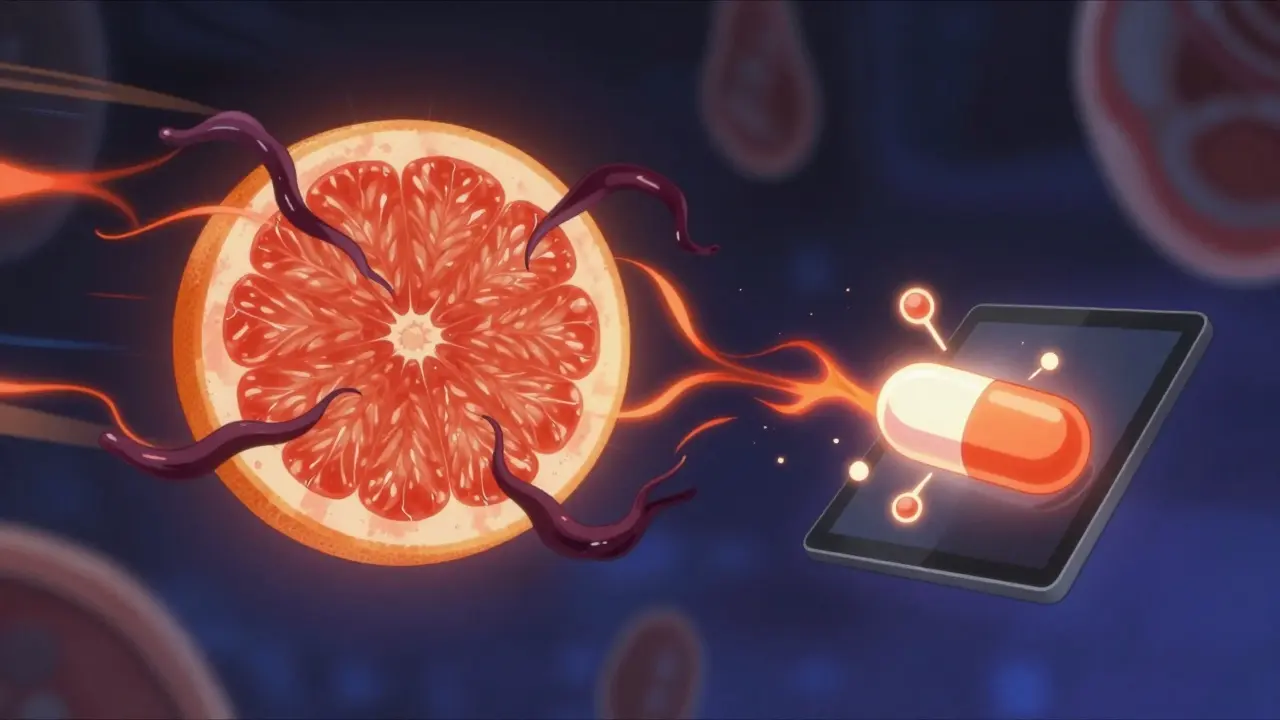
Grapefruit doesn’t just taste tangy-it contains chemicals called furanocoumarins, mainly bergamottin and 6',7'-dihydroxybergamottin. These compounds shut down an enzyme in your gut called CYP3A4. That enzyme is responsible for breaking down certain statins before they enter your bloodstream. When it’s blocked, your body absorbs way more of the drug than intended. That’s when things get dangerous.Think of it like this: if your statin is a car, CYP3A4 is the brake pedal. Grapefruit slams that pedal down. The result? Too much drug in your system. That raises the risk of muscle damage, including a rare but serious condition called rhabdomyolysis, where muscle tissue breaks down and can damage your kidneys.
Which Statins Are Safe? Which Are Not?
Not all statins react the same way. The interaction depends entirely on how your body processes the drug.High-risk statins (avoid grapefruit):
- Simvastatin (Zocor, FloLipid)
- Atorvastatin (Lipitor)
- Lovastatin (Mevacor)
These three are metabolized almost entirely by CYP3A4. Even small amounts of grapefruit can spike their levels. Simvastatin is the worst offender. One study showed that 200 ml of grapefruit juice (about 8 oz) tripled the amount of simvastatin in the blood. At higher doses-like 80 mg-this combo can be life-threatening.
Safe statins (grapefruit won’t interfere):
- Pravastatin (Pravachol)
- Rosuvastatin (Crestor)
- Fluvastatin (Lescol)
- Pitavastatin (Livalo, Zypitamag)
These are processed by different enzymes or excreted directly. No CYP3A4 involvement means no grapefruit risk. If you love grapefruit and are on a statin, switching to one of these might be the easiest fix.
What’s the Threshold? How Much Is Too Much?
There’s no universal number that works for everyone, but science gives us a solid guideline.The FDA says 200-250 ml (8 oz) of grapefruit juice is the amount that can trigger a clinically significant interaction with high-risk statins. That’s one standard glass. And it doesn’t matter if you drink it in the morning and take your pill at night-the enzyme inhibition lasts for over 24 hours.
But here’s the twist: not everyone reacts the same. Some people have more CYP3A4 in their gut than others. One study found that after drinking 250 ml of grapefruit juice, some people had zero change in statin levels, while others saw an 8-fold increase. Genetics, age, liver health, and other medications all play a role.
For most people on a standard dose (like 20 mg simvastatin), one glass of juice might not cause immediate harm-but it’s still increasing your risk. The European Medicines Agency warns that even moderate daily consumption can pile up over time. And if you’re on a high dose-say, 80 mg simvastatin-there’s no safe amount. Avoid it completely.
What About Whole Grapefruit?
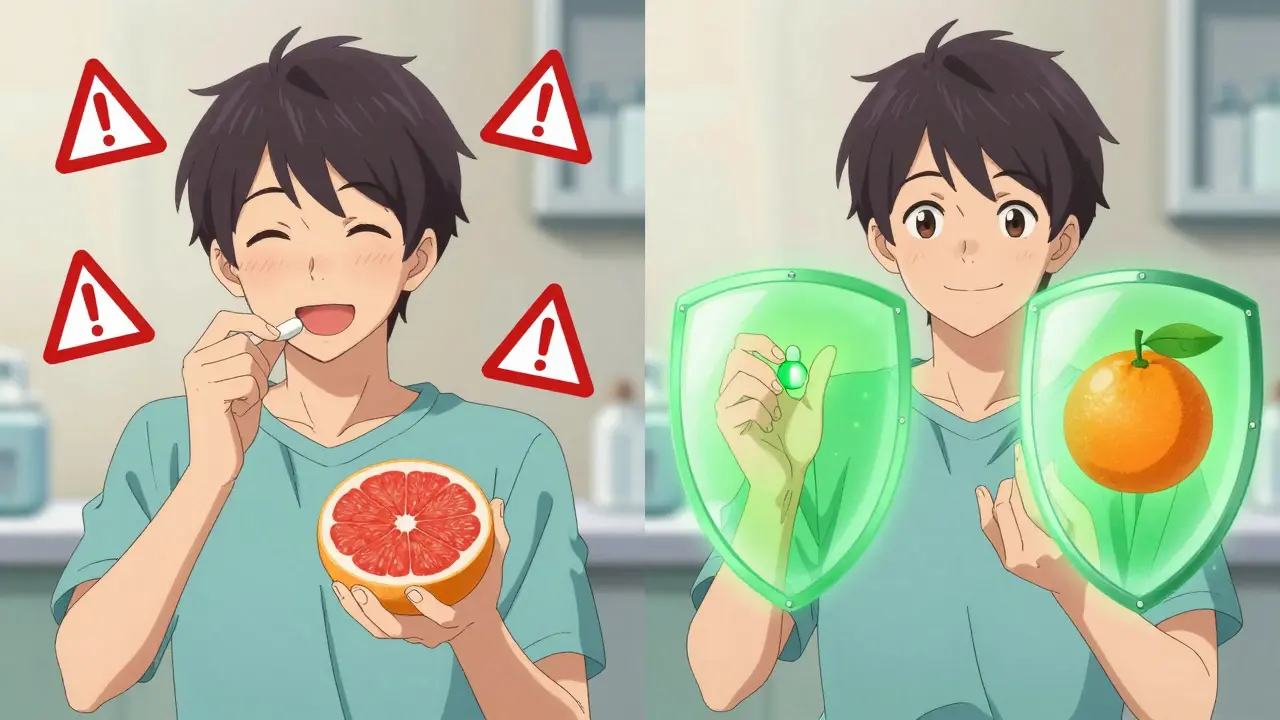
You might think eating the fruit is safer than drinking the juice. It’s not. One whole grapefruit contains roughly the same amount of furanocoumarins as 200-250 ml of juice. Half a grapefruit? That’s still enough to inhibit the enzyme. If you’re on simvastatin or atorvastatin, even half a fruit daily isn’t worth the gamble.Some doctors say occasional, small amounts might be okay if you’re on a low dose and have no history of muscle problems. But that’s a gamble with your health. The American College of Cardiology doesn’t recommend testing the limits. They suggest switching statins instead.
What If You’ve Been Drinking Grapefruit Juice for Years?
If you’ve been sipping grapefruit juice every morning with your statin and feel fine, that doesn’t mean you’re safe. Rhabdomyolysis doesn’t always come with warning signs. Muscle pain? Weakness? Dark urine? Those are red flags. But many people don’t notice anything until it’s too late.Between 1990 and 2021, only 17 confirmed cases of rhabdomyolysis were linked to grapefruit-statin interactions in U.S. FDA reports. That sounds rare. But these cases are underreported. Many people don’t connect their muscle pain to their juice habit. And if you’re over 65, taking other meds, or have kidney issues, your risk goes up.
Doctors at Cleveland Clinic say: if you love grapefruit, don’t quit your statin-switch your statin. It’s simpler and safer than trying to time your juice intake or hoping your body handles it.

What Should You Do?
Here’s a practical checklist:- Check your statin name. Is it simvastatin, atorvastatin, or lovastatin? If yes, avoid grapefruit entirely.
- Look at your dose. Even if you’re on a low dose of a high-risk statin, don’t risk it. The interaction is unpredictable.
- Ask your pharmacist or doctor. They can tell you if your statin is affected and suggest alternatives.
- Consider switching. Rosuvastatin or pravastatin work just as well for most people-and no grapefruit restrictions.
- Monitor your body. If you’ve been consuming grapefruit and suddenly feel unexplained muscle soreness, weakness, or notice dark urine, stop the juice and call your doctor immediately.
Some people say, “I’ve had grapefruit for years and I’m fine.” Fine isn’t the goal. Safe is. You’re on a statin because you care about your heart. Don’t let a glass of juice undo that.
What About Other Citrus Fruits?
Not all citrus is dangerous. Seville oranges (used in marmalade), pomelos, and tangelos also contain furanocoumarins and should be avoided if you’re on a high-risk statin. Regular oranges, tangerines, lemons, and limes? They’re safe. You can squeeze those freely.And don’t forget: grapefruit isn’t just in juice. It’s in some supplements, flavored waters, and even candies. Always check labels if you’re on simvastatin or atorvastatin.
Bottom Line
Grapefruit isn’t evil. Statins aren’t dangerous. But together, they can be risky-especially for some people. The science is clear: if you’re on simvastatin, atorvastatin, or lovastatin, avoid grapefruit. No exceptions. No “just a little.” The interaction isn’t dose-dependent in a way you can safely control. Your body’s response is too unpredictable.If you love grapefruit, switch to a safe statin. It’s a simple fix with huge benefits. No more guessing. No more fear. Just peace of mind-and still your morning fruit.
14 Comments
Write a comment