

Imagine stepping out into a chilly morning, grabbing a cold drink, or jumping into a pool-and within minutes, your skin breaks out in angry, itchy welts. It’s not an allergic reaction to pollen or peanuts. It’s your body responding to the cold itself. This is cold-induced urticaria, a rare but real condition where cold temperatures trigger hives, swelling, and sometimes life-threatening reactions.
What Exactly Is Cold-Induced Urticaria?
Cold-induced urticaria (CU) is a type of physical urticaria-meaning it’s not caused by an allergen like food or dust, but by a physical trigger: cold. When your skin gets exposed to cold air, water, or objects, mast cells in your skin release histamine and other chemicals. That’s what causes the red, itchy welts, swelling, and burning sensation. Symptoms usually show up within 5 to 30 minutes after cold exposure and fade within an hour after warming up.
It’s not common-only about 0.05% of people have it. But it can strike at any age, though most people first notice symptoms between 18 and 25. In 95% of cases, there’s no clear cause. These are called idiopathic cases. In the other 5%, it’s linked to infections, certain blood cancers, or even rare genetic conditions like familial cold autoinflammatory syndrome (FCAS).
What Does It Feel Like?
The symptoms vary from mild to severe. Most people get raised, red, itchy welts on skin that was exposed to cold-like arms after holding an ice cube, or cheeks after stepping outside in winter. But it’s not just about the skin. Many report:
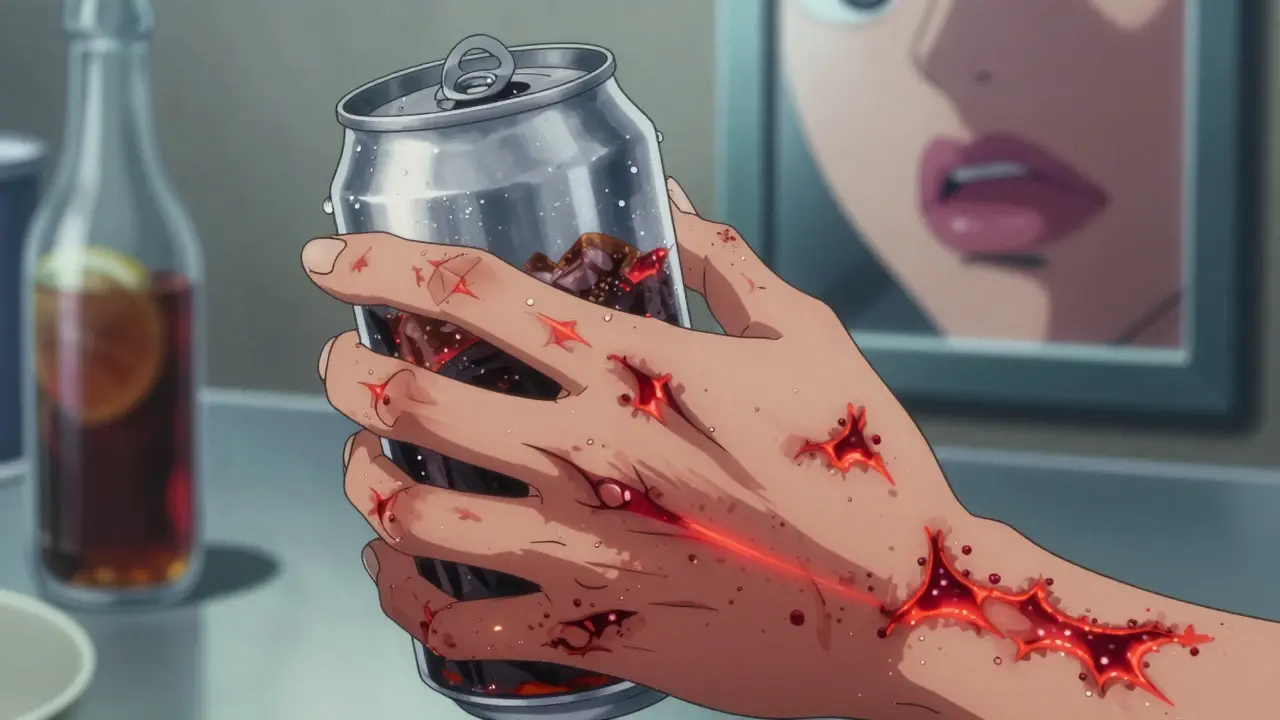
- Swollen hands after picking up a cold soda can (78% of cases)
- Lip swelling after eating ice cream or drinking a cold beverage (65% of cases)
- Headaches, dizziness, or palpitations
- Wheezing or trouble breathing
- Fainting or feeling like they’re going to pass out
The worst part? Symptoms often get worse as your skin warms back up-not while you’re still cold. So you might think you’re fine after walking outside, only to break out in hives five minutes later when you get inside.
How Do Doctors Diagnose It?
The ice cube test is the gold standard. A doctor places an ice cube on your forearm for 1 to 5 minutes. If you develop a raised, red welt in that area within 10 minutes, you have cold-induced urticaria. This test is over 98% accurate for acquired cases.
But diagnosis isn’t always simple. Some people react to temperatures as warm as 20°C (68°F)-which is just a cool day in Sydney. Others can handle colder temps without issue. That’s why doctors often ask you to keep a symptom diary: note when hives appear, what you were doing, and the temperature. Blood tests may also be done to rule out underlying conditions like cryoglobulinemia or infections.
And here’s a key point: many primary care doctors miss it. One study found that 30% of CU cases are misdiagnosed as regular hives or eczema. If you keep getting hives after cold exposure and no one can explain why, ask about the ice cube test.
Can Cold-Induced Urticaria Be Dangerous?
Yes. The biggest danger? Swimming in cold water.
When your whole body gets exposed-like jumping into a lake, ocean, or even a chilly pool-it can trigger a full-body reaction. That means widespread hives, a sudden drop in blood pressure, swelling in the throat, and even loss of consciousness. There are documented cases of drowning because someone passed out underwater.
Other risky situations:
- Drinking ice-cold beverages (can cause throat swelling)
- Walking outside in winter without gloves or a scarf
- Getting an MRI (cold metal surfaces)
- Undergoing surgery (cold IV fluids or operating rooms)
If you’ve ever felt dizzy or had trouble breathing after cold exposure, you’re at higher risk. That’s why many patients are prescribed an epinephrine autoinjector (EpiPen). It’s not something you hope to use-but if you feel your throat closing or your chest tightening, you need it immediately.
How Is It Treated?
There’s no cure-but there are effective ways to manage it.
First-line treatment: Antihistamines
Second-generation, non-sedating antihistamines like cetirizine (Zyrtec), loratadine (Claritin), and desloratadine (Clarinex) are the go-to. Most people take one daily. But if symptoms persist, doctors may increase the dose-up to four times the normal amount. For example, 40mg of cetirizine daily (instead of the usual 10mg) is a common and safe adjustment.
Second-line: Omalizumab (Xolair)
If antihistamines don’t work after 4-6 weeks, omalizumab is the next step. It’s an injection given every 4 weeks and has helped 60-70% of people with severe CU who didn’t respond to other treatments. It’s approved for chronic urticaria and works by blocking the allergic response at the source.
Other options
- Rupatadine (20-40mg daily): Shown to reduce symptoms by 75% in European studies.
- Leukotriene blockers like montelukast: Used in combination with antihistamines for 25% of patients who need extra help.
- For genetic FCAS: Interleukin-1 inhibitors like anakinra (Kineret) can reduce attacks by 80%.
Emerging treatments
New drugs are showing promise. Berotralstat (Orladeyo), originally for hereditary angioedema, reduced CU symptoms by 58% in a 2023 trial. Low-dose naltrexone is being tested too-with early results showing 45% symptom reduction after six months.
Practical Tips to Avoid Flare-Ups
Medication helps-but lifestyle changes are just as important.
- Avoid ice-cold drinks and foods. Even yogurt or ice cream below 10°C can trigger lip or throat swelling.
- Wear layers. Moisture-wicking base layers under sweaters and coats reduce skin exposure. Studies show this cuts reactions by 60-70%.
- Test water before swimming. Dip one hand in the water for 5 minutes. If you get hives, don’t go in.
- Use a cold alert sensor. Wearable devices like the ‘Cold Alert’ sensor (tested in 2022) predict when temperatures will trigger your reaction. They’re 92% accurate.
- Always carry an EpiPen. If you’ve had a systemic reaction before, this isn’t optional.
- Inform medical teams. Tell your dentist, doctor, or surgeon you have CU. IV fluids must be warmed, and operating rooms should be kept above 21°C.

Can It Go Away?
Yes-sometimes. About 35% of people with cold-induced urticaria see symptoms disappear within five years. The odds are higher if it started suddenly (acute onset) rather than gradually. In fact, 62% of acute cases resolve on their own. But if it’s been years and you still react to cold, don’t give up. New treatments keep coming.
What About Cold Desensitization?
Some people try gradual exposure-like taking daily cold showers-to build tolerance. It sounds simple, but it’s tough. One study found 40% of patients quit because the discomfort was too much. Still, for those who stick with it, 70% report fewer reactions after 12 weeks. It’s not a cure, but it can help.
And here’s a real-world tip: People who use symptom-tracking apps like ‘Urticaria Tracker’ report 30% better control. Why? Because they learn their personal cold threshold-maybe it’s 15°C, maybe it’s 10°C. Knowing that lets them plan ahead.
Final Thoughts
Cold-induced urticaria isn’t just an inconvenience. It can be scary, unpredictable, and life-limiting. But it’s also manageable. With the right diagnosis, medication, and smart habits, most people live full lives without constant fear of hives.
If you think you might have it, don’t wait. Get the ice cube test. Carry your EpiPen. Talk to an allergist. And don’t let winter-or a cold drink-control your life.

I used to think cold urticaria was just a fancy term for getting goosebumps too hard. Then I held an ice cube for 30 seconds and my arm turned into a crime scene. No joke. I cried. My roommate thought I was having a stroke. Turns out, I’ve had this since I was 22 and never told anyone because I thought I was just ‘sensitive.’ This post saved me from another ER trip. Thank you.
Now I carry Zyrtec like it’s my damn ID card.
Let me get this straight - your body thinks cold is an enemy? That’s not a medical condition, that’s a metaphysical betrayal. We evolved to survive ice ages, and now our skin is throwing a tantrum over a fridge? This is capitalism’s fault. You’re not allergic to cold - you’re allergic to comfort. The real diagnosis? You’ve been coddled too long. Go outside. Take a cold shower. Build resilience. Or keep swallowing antihistamines like candy while your soul withers in a 72°F apartment.
Also, omalizumab costs more than my rent. Who’s really being exploited here?
Why are Americans always so fragile? In India, we take ice water from the tap, swim in rivers at 12°C, and eat ice cream in monsoon season - no hives, no EpiPens, no drama. You people treat a chill like a biohazard. This isn’t science, it’s fear culture. Get a spine. Or at least stop turning every minor reaction into a medical documentary.
Also, why are you prescribing 40mg of cetirizine? That’s like using a flamethrower to kill a mosquito.
I’ve had this since I was 19. I used to avoid winter entirely. Then I started tracking my triggers with an app - turns out my threshold is 14°C. Now I know when to wear gloves, when to skip the iced coffee, and when to just say ‘fuck it’ and take my meds. It’s not perfect, but it’s manageable. The worst part? People think I’m being dramatic when I say I can’t touch a frozen pizza. I’ve had to explain this to baristas. Twice. Please, if you think you might have this - get tested. Don’t wait like I did.
So let me get this straight - you can’t drink a soda without risking throat swelling? And the cure is taking four times the normal dose of allergy pills? And if that fails, you get a $20,000 injection? Wow. So basically, cold urticaria is just ‘allergies with a premium subscription.’
Also, ‘Cold Alert’ sensor? That’s not a device, that’s a cry for help. Can we just… not go outside? Or invent a warm bubble?
I just want to say to anyone reading this who feels alone - you’re not. I’ve been there. I used to cry in the shower because I was scared to turn the water cold. Now I have a routine. I wear thermal socks indoors in winter. I warm my coffee in the microwave before drinking. I tell every doctor I meet. It’s not glamorous. But I’m alive. And I’m not letting winter win. You’re stronger than you think.
And yes, the EpiPen is non-negotiable. I carry two.
i had this and it just went away after 3 years. no meds, no thng. just… stopped. so if you’re scared, it might not be forever. also, avoid cold drinks. trust me.
Thank you for writing this with such clarity. I’ve been diagnosed for 7 years and still get dismissed by doctors who say ‘it’s just hives.’ Your mention of the ice cube test is vital - so many never even hear about it. I’ve started sharing this with my support group. We’ve even created a checklist for medical staff before surgeries. Small steps, but they matter. You’re not just informing - you’re empowering. Keep going.