

What Is Blepharitis?
Blepharitis is a common, chronic inflammation of the eyelid margins that affects nearly half of all patients who visit eye care professionals. It’s not an infection you can catch, nor does it cause blindness-but it can make your eyes feel like they’re full of sand, especially when you wake up. The eyelids become red, swollen, and crusty, with flakes gathering at the base of your lashes. Many people mistake it for dry eyes or allergies, but blepharitis is a distinct condition tied to blocked oil glands and skin bacteria.
There are two main types: anterior blepharitis, which hits the outer edge of the eyelid where lashes grow, and posterior blepharitis, which affects the inner edge where tiny oil glands-called meibomian glands-sit. About 63% of cases are posterior, meaning the problem comes from thick, waxy oil that won’t flow properly. This leads to dry, irritated eyes because your tears evaporate too fast. The other 37% involve the Zeis and Moll glands near the lashes, causing flaky, greasy debris that sticks to your lashes like dandruff.
Common Symptoms You Can’t Ignore
If your eyelids feel sticky in the morning, or you wake up with your lashes glued shut, you’re not imagining it. Blepharitis has a clear set of signs:
- Red, swollen eyelids-seen in 98% of cases
- Dandruff-like flakes at the base of your lashes-present in 95%
- Burning or stinging sensation-reported by 92%
- Crusting or dried secretions upon waking-87% experience this
- Foamy or bubbly tears-76% of patients notice this
- Loss of eyelashes-happens in 45% of long-term cases
Most people describe the feeling as ‘sand in the eyes’ or constant grittiness. Symptoms are worst in the morning because overnight, the thickened oils and debris build up. By midday, things might feel a little better, but the irritation never fully goes away without treatment.
Why Warm Compresses Are the First Line of Defense
Every major eye health group-the National Eye Institute, Mayo Clinic, American Academy of Ophthalmology, and American Optometric Association-agrees on one thing: warm compresses are the most effective first step for managing blepharitis. No pills, no drops, no expensive treatments come before this.
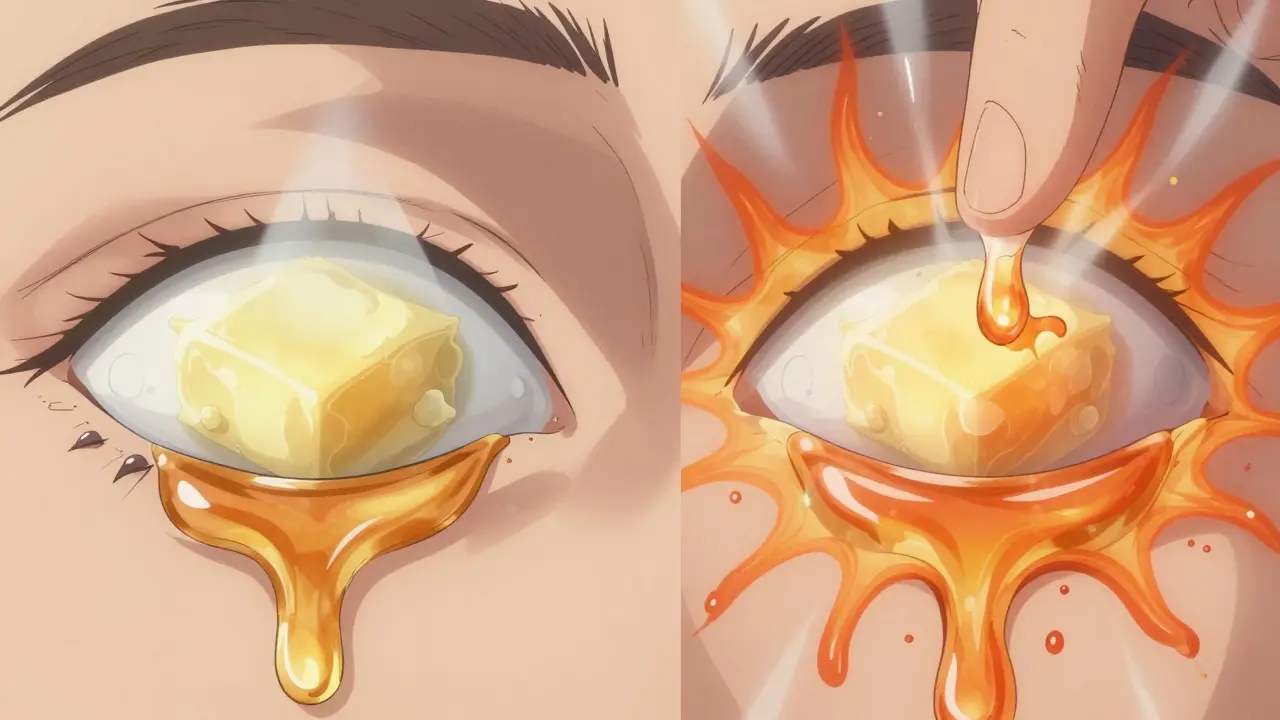
Here’s why it works: The meibomian glands in your eyelids produce oil that keeps your tears from drying out. When those glands get clogged, the oil turns thick and waxy-like butter left in the fridge. Warm heat melts that buildup, letting the oil flow again. Studies show that applying heat at 40-45°C for 10-15 minutes twice a day improves gland function by 68% after just three weeks.
Temperature matters. Too cold (below 38°C) and nothing changes. Too hot (above 48°C) and you risk burning your eyelids. The sweet spot is just warm enough to melt the gunk, not scald your skin. That’s why many people switch from washcloths to microwavable gel packs-they hold heat longer. One study found gel packs stayed at therapeutic temperature for 12.3 minutes, while washcloths cooled off in just 8.7 minutes.
How to Use Warm Compresses Correctly
It’s not just about heat. Technique makes all the difference. The right method is a 4-step process:
- Apply heat for 10 minutes at 40-45°C. Use a clean, microwavable mask or a warm, damp washcloth. Reheat if it cools too fast.
- Massage gently right after. Use your clean fingertip to rub your upper eyelid downward and your lower eyelid upward in a slow, windshield-wiper motion. Do this for 30 seconds. This helps squeeze out the melted oil.
- Clean the lid edge with a preservative-free lid scrub or diluted baby shampoo on a cotton swab. Gently wipe along the lash line to remove flakes.
- Use artificial tears if your eyes still feel dry. This isn’t always needed, but it helps if irritation lingers.
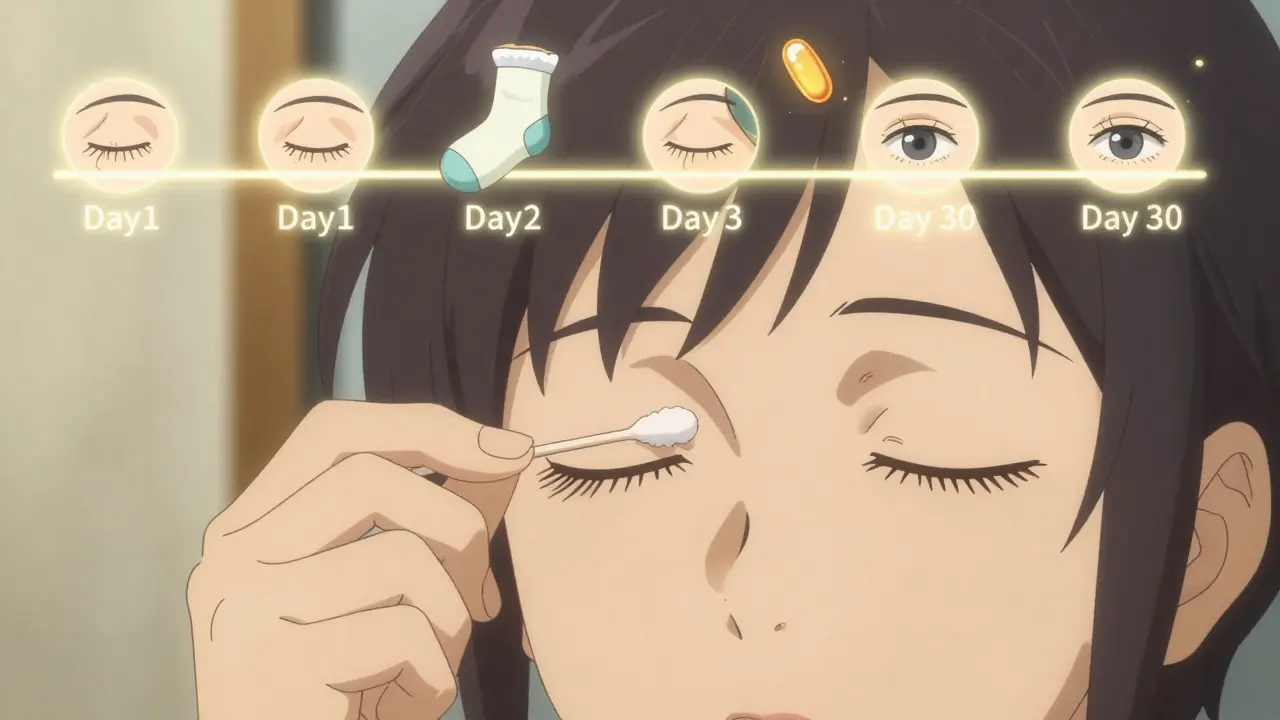
Doing this twice a day-morning and night-is ideal, but morning is the most critical. That’s when overnight buildup is at its worst. Most people see improvement within 14 to 21 days. By day 30, 85% of those who stick with it report major symptom reduction.
Why Most People Fail at Warm Compresses
It’s not the compress-it’s the execution. A study of over 1,200 patients found that 10% saw no benefit at all. Why? Three reasons:
- Too short: Most people apply heat for only 5 minutes. You need at least 10.
- Inconsistent: Skipping days breaks the cycle. Daily use for 30 days is the minimum to reset gland function.
- No massage: Heat alone melts the oil, but you still need to express it. Without massage, the glands stay clogged.
On Reddit’s r/EyeHealth, 81% of users who initially thought warm compresses didn’t work said they finally got results after watching a video or getting a demo from their eye doctor. Many don’t realize they’re pressing too hard during massage or using water that’s too hot. Proper technique is learnable-and it’s worth the 15 minutes a day.
Commercial Devices vs. DIY: What Works Best?
You don’t need to spend $40 on a fancy mask. But if you struggle with consistency, a commercial device might help. The Bruder Moist Heat Eye Compress, the most popular brand, holds temperature better than washcloths and has 83% user satisfaction. Other FDA-cleared devices like the TearCare System deliver precise 43°C heat for 15 minutes with built-in timers-great for people who forget or hate reheating cloths.
But here’s the truth: Blepharitis treatment success depends on consistent technique, not the gadget. A 2023 study showed that patients using a $5 washcloth, but doing it right every day, improved just as much as those using expensive masks. The real difference? Adherence. People using commercial masks stuck with treatment 27% longer than those using washcloths. If you’re the type who forgets, invest in a timer or a device that beeps when it’s done.
What Doesn’t Work (And What to Avoid)
Don’t rely on antibiotic drops or steroid creams unless your doctor recommends them. These are for flare-ups, not daily care. Overusing them can make your eyes more sensitive over time.
Also skip harsh scrubs, alcohol wipes, or rubbing your eyes. These irritate the lid skin and make inflammation worse. And don’t assume your makeup is fine. Even clean mascara wands can harbor bacteria. Replace eye makeup every 3 months and avoid applying liner on the inner lid edge.
Omega-3 supplements (2,000 mg EPA/DHA daily) can help improve oil quality, but they’re an add-on-not a replacement-for warm compresses. One study showed combining them with compresses boosted results by 34%.
When to See a Doctor
If you’ve done warm compresses correctly for 4 weeks with no improvement, it’s time to see an eye specialist. You might need a slit-lamp exam to check for collarettes (cylindrical debris around lashes) or telangiectasia (visible blood vessels), both signs of chronic blepharitis.
Also see a doctor if you notice:
- Blurred vision that doesn’t clear after blinking
- Pain or swelling that spreads beyond the eyelid
- Eye redness that looks like a bloodshot eye, not just a puffy lid
- Loss of vision or light sensitivity
These aren’t typical blepharitis symptoms. They could signal something more serious like an infection or autoimmune issue.
Long-Term Management Is the Key
Blepharitis doesn’t go away. It’s like dandruff for your eyelids-manageable, but never cured. The goal isn’t to eliminate it completely, but to keep it quiet. After the first 30 days of twice-daily compresses, most people can reduce to once a day for maintenance.
Think of it like brushing your teeth. You don’t stop after a week because your gums feel better. You keep going because the problem comes back if you stop. Same here. Skip a few days, and the crusting returns. Stay consistent, and you’ll go from ‘glued shut’ mornings to barely noticeable flakes.
With proper care, 80% of mild-to-moderate cases improve without any medication. And with rising awareness, more eye doctors now teach this technique in-office. Ask for a demo. Watch a video from the Mayo Clinic (it’s been viewed nearly half a million times). You don’t need to suffer through blurry, gritty eyes every morning. The fix is simple. It just takes discipline.
Can blepharitis cause permanent damage to my eyes?
No, blepharitis itself doesn’t cause permanent vision loss. But if left untreated for years, it can lead to complications like chronic dry eye, eyelash loss, or misdirected lashes that scratch the cornea. In rare cases, this can cause corneal scarring. That’s why consistent eyelid hygiene is so important-it prevents long-term damage.
How long should I use warm compresses each day?
Start with 10-15 minutes twice a day for the first 30 days. After that, you can reduce to once daily for maintenance. The key is sustaining the heat at 40-45°C for the full time. If your compress cools too fast, reheat it. Ten minutes is the minimum for effective oil liquefaction.
Can I use a rice sock or towel as a warm compress?
Yes, a warm, damp washcloth or a rice sock heated in the microwave works fine. But make sure it’s not too hot-test it on your wrist first. Microwavable gel packs hold heat longer and are more consistent, which helps with compliance. The material matters less than the temperature and duration.
Do I need to clean my eyelids every time I use a warm compress?
Yes. Heat melts the gunk, but you still need to remove it. Use a preservative-free lid scrub or a cotton swab dipped in diluted baby shampoo to gently wipe the lash line after massaging. Skipping this step means the debris stays on your lid and keeps irritating your eyes.
Is blepharitis caused by poor hygiene?
Not exactly. While hygiene helps manage it, blepharitis is often linked to skin conditions like rosacea, seborrheic dermatitis, or bacterial overgrowth-not dirt. Even people who wash their face daily can have it. It’s more about gland function and oil quality than cleanliness.
Will eye drops cure blepharitis?
No. Artificial tears can relieve dryness, and antibiotic or steroid drops may help during flare-ups, but they don’t fix the root cause: blocked oil glands. Warm compresses and lid hygiene target the source. Eye drops are temporary relief, not a cure.
Can children get blepharitis?
Yes, though it’s less common. Kids with chronic dandruff, eczema, or rosacea are more prone. Treatment is the same: gentle warm compresses and lid cleaning. Avoid harsh products. Always consult a pediatric eye doctor before using any medicated scrubs or drops on children.
How soon will I see results from warm compresses?
Most people notice less crusting and grittiness within 10-14 days. Significant improvement-like waking up with open eyes instead of stuck lids-usually happens by day 21-30. The key is consistency. Skipping days delays results.

12 Comments
Write a comment