
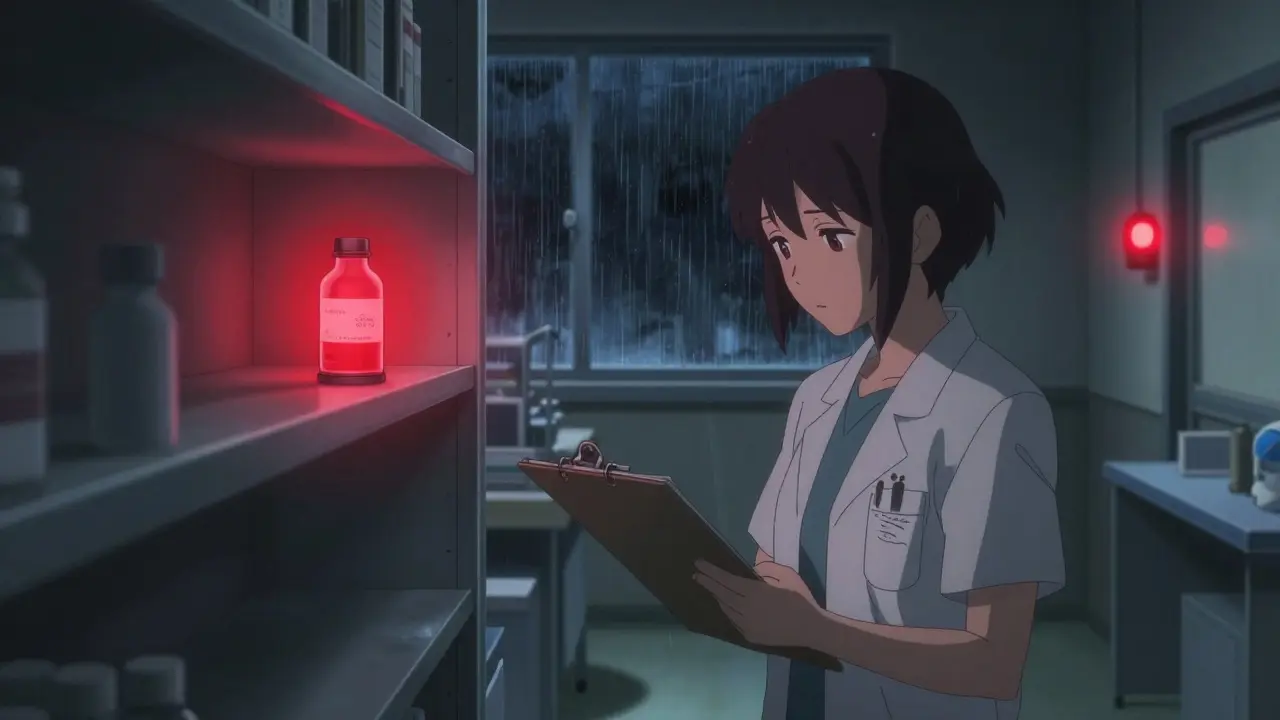
When your IV bag runs out, the hospital can’t just order more
Imagine needing an IV drip of normal saline to stay hydrated after surgery. You’re in pain, tired, and waiting for relief. But the pharmacy is out. Not just low-out. No backup. No substitute that works the same. This isn’t a scene from a movie. It’s happening in hospitals across the U.S. right now.
Injectable medications-those drugs given through IVs, shots, or infusions-are the backbone of hospital care. They’re used in emergency rooms, ICUs, operating rooms, and cancer wards. And they’re vanishing. As of July 2025, there were 226 active drug shortages in the U.S., and nearly 60% of them involve sterile injectables. Hospital pharmacies are bearing the full weight of this crisis. While your local pharmacy might run low on a pill now and then, hospitals are facing daily, life-or-death gaps in the medicines they rely on to keep people alive.
Why injectables? It’s not just about pills
Not all drugs are created equal. Oral medications-pills and liquids-can often be swapped out. A patient can take a different brand of blood pressure pill, or switch from one antibiotic to another with similar effects. But injectables? Not so easy.
Sterile injectables require a level of purity and precision that oral drugs don’t. They’re made in clean rooms, tested for bacteria, and packaged to prevent contamination. One tiny mistake in the manufacturing process can shut down a whole batch. That’s why production is concentrated in just a few facilities-80% of the active ingredients come from just two countries: China and India.
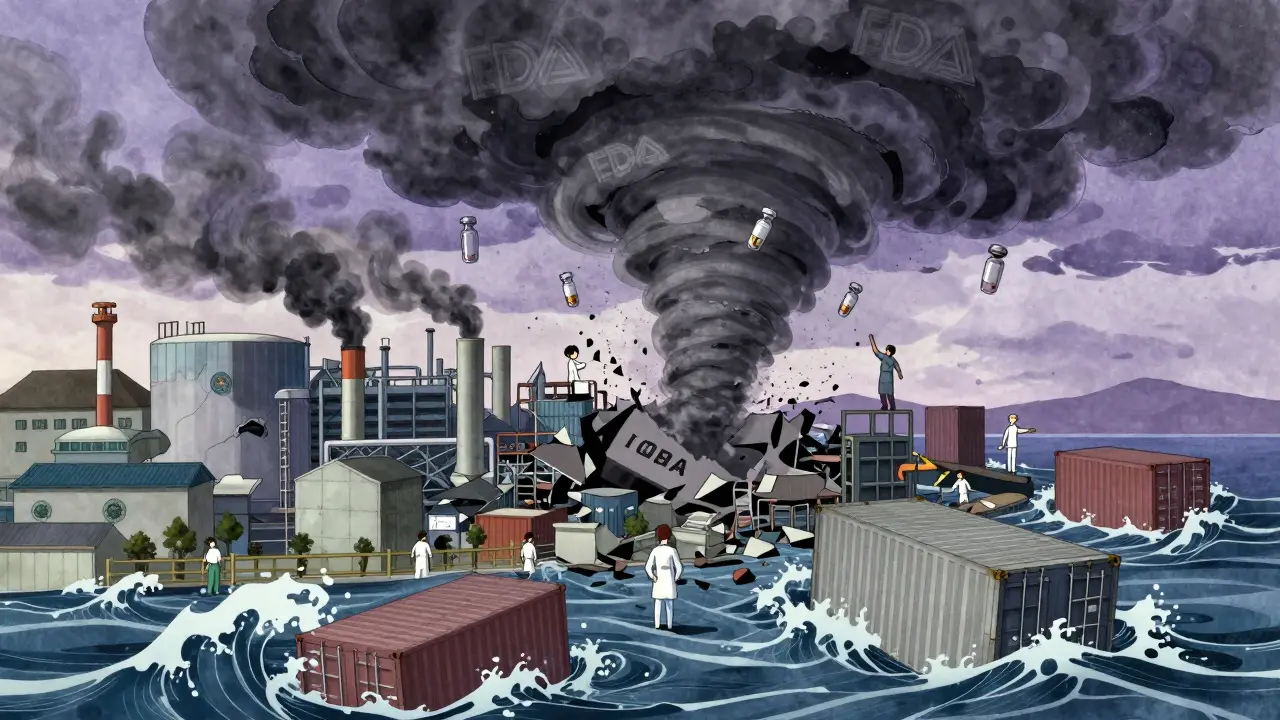
And when something goes wrong? A tornado hits a plant in North Carolina. A quality inspection flags contamination in India. A machine breaks down. The entire supply chain for a critical drug like cisplatin or anesthetic agents freezes. There’s no quick fix. You can’t just print more labels or order extra boxes. These drugs take months to make, test, and approve.
Even worse, the profit margins are razor-thin. Most generic injectables make manufacturers just 3% to 5% profit. Why invest in better equipment, backup systems, or new facilities when you’re barely breaking even? So when a supplier faces a hiccup, they often don’t have the resources to recover fast-or at all.
Hospitals are getting hit harder than anywhere else
Community pharmacies might see 15% to 20% of their inventory affected by shortages. Hospital pharmacies? That number jumps to 35% to 40%. And it’s not just volume-it’s impact.
Think about it: a retail pharmacy can tell a patient to come back next week. A hospital can’t. A cancer patient needs their chemotherapy on schedule. A heart attack patient needs epinephrine now. A newborn in the NICU needs calcium gluconate to stabilize their blood sugar. Delay means deterioration. Delay means death.
The most affected drugs? Anesthetics (87% shortage rate), chemotherapy agents (76%), and cardiovascular injectables like dopamine and norepinephrine (68%). These aren’t optional. They’re the difference between life and death in critical moments.
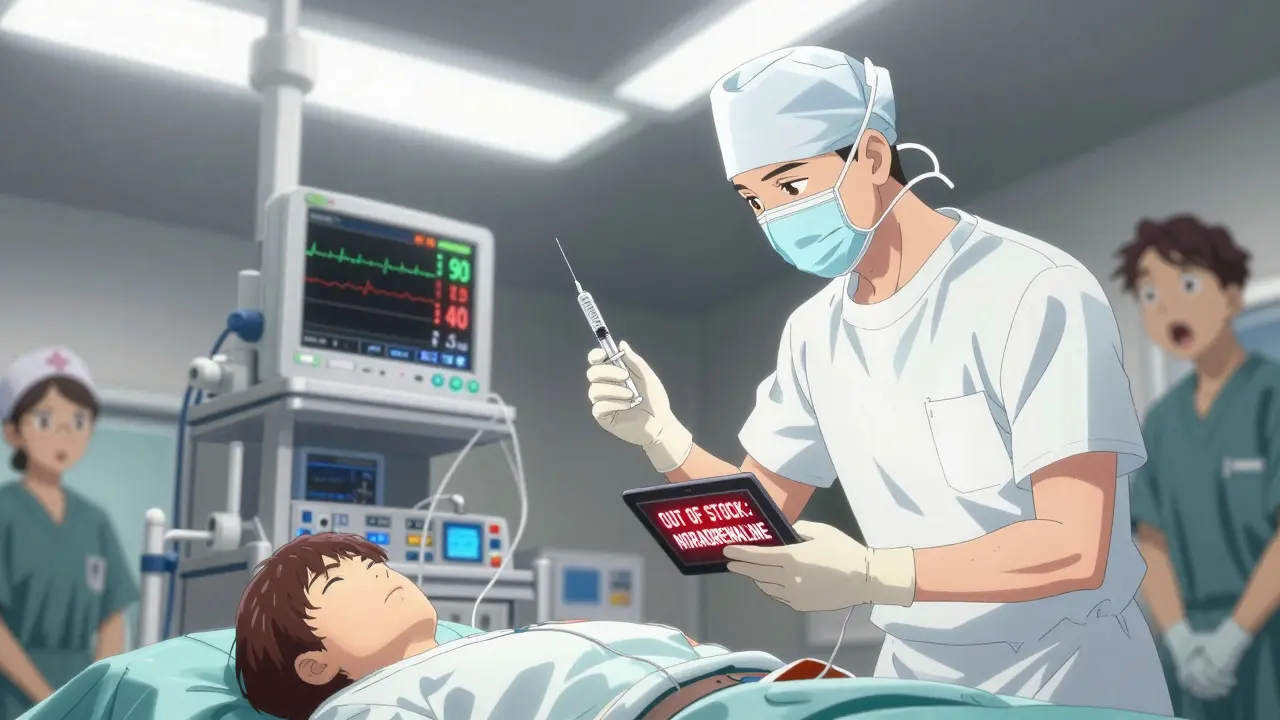
Academic medical centers-where the sickest patients go-are hit 2.3 times harder than community hospitals. Why? Because they handle complex cases that require specialized injectables with no alternatives. A patient with septic shock doesn’t have a backup plan. If norepinephrine is out, there’s no oral version. No pill. No substitute. Just silence from the pharmacy.
The human cost: delays, dilemmas, and desperation
Behind every shortage statistic is a nurse, a pharmacist, and a patient caught in the middle.
One nurse manager in Massachusetts reported postponing 37 surgeries in just three months because they couldn’t get anesthetics. Patients rescheduled. Families anxious. Operating rooms empty. Meanwhile, pharmacists are spending nearly 12 hours a week just trying to find replacements-calling suppliers, checking with other hospitals, begging for leftover stock.
And then comes the ethical nightmare. Sixty-eight percent of hospital pharmacists say they’ve faced impossible choices. Do you give the last vial of epinephrine to the 70-year-old with heart failure-or the 28-year-old in trauma? Do you use a less effective drug because it’s available, even if you know it won’t work as well?
One pharmacist on Reddit shared how they resorted to giving post-op patients oral fluids because they ran out of saline for three straight weeks. “Never thought I’d see the day,” they wrote. That’s not innovation. That’s adaptation under duress.
And it’s getting worse. A December 2024 survey found that 68% of hospital pharmacy directors expect shortages to stay the same-or get worse-through 2026. There’s no sign of relief.
Why hasn’t this been fixed yet?
People talk about supply chains. Governments pass laws. The FDA says they’re working on it. But here’s the truth: the system is broken, and no one has the power-or the will-to fix it.
The FDA can’t force manufacturers to make more. They can’t require backup suppliers. They can’t mandate price increases to make production profitable. Their hands are tied. Even the 2023 law that required earlier shortage notifications? It reduced the length of shortages by just 7%.
The government pledged $1.2 billion to boost domestic manufacturing in 2024. Sounds good. But experts say it’ll take 3 to 5 years to see results. Meanwhile, patients are still waiting.
Only 12% of manufacturers use modern continuous manufacturing systems that could make production faster and more reliable. Why? Because upgrading costs millions-and there’s no guarantee they’ll get paid back.
And the market? It’s a monopoly in disguise. Three companies control 65% of the supply for basic injectables like saline and potassium chloride. One plant goes down? Half the country goes without.
What hospitals are doing to survive
Hospitals aren’t sitting still. They’ve had to become emergency responders to their own supply chain.
Many have created shortage management teams-pharmacists, doctors, nurses-who track inventory, find alternatives, and approve substitutions. But only 32% of these teams feel properly funded or staffed. The rest are running on fumes.
Some hospitals are consolidating stock-keeping all scarce items in one central location so they’re not spread thin across departments. Others are rewriting standing orders to include approved alternatives before a shortage hits. That’s proactive. But it takes time, training, and documentation-and only 45% of hospitals have formal, updated protocols.
One hospital in Ohio spent eight months building a network of 12 regional suppliers just to get enough anesthetics. They now have a backup plan. But most hospitals don’t have that luxury.
And even when they find alternatives, it’s not perfect. A different brand of lidocaine might work-but it could cause more pain. A substitute for dopamine might be less stable. Every swap carries risk. Every change is a potential error.
What’s next? The clock is ticking
There’s no magic solution. No quick fix. The problem runs deep: low profits, fragile manufacturing, geographic concentration, and zero accountability.
Until manufacturers are paid enough to invest in resilience, until regulators can enforce quality standards without waiting for disasters, and until we stop treating life-saving injectables like commodities-we’re going to keep seeing this same story play out.
Hospital pharmacies are the canary in the coal mine. When they run out of saline, epinephrine, or chemotherapy drugs, it’s not just a supply chain issue. It’s a public health emergency.
The next time you hear about a drug shortage, don’t think about your local pharmacy. Think about the ICU. The OR. The patient on a ventilator who needs one more dose of a drug that no longer exists on the shelf.
They’re not waiting for a solution. They’re waiting for someone to care enough to fix it.
10 Comments
Write a comment