
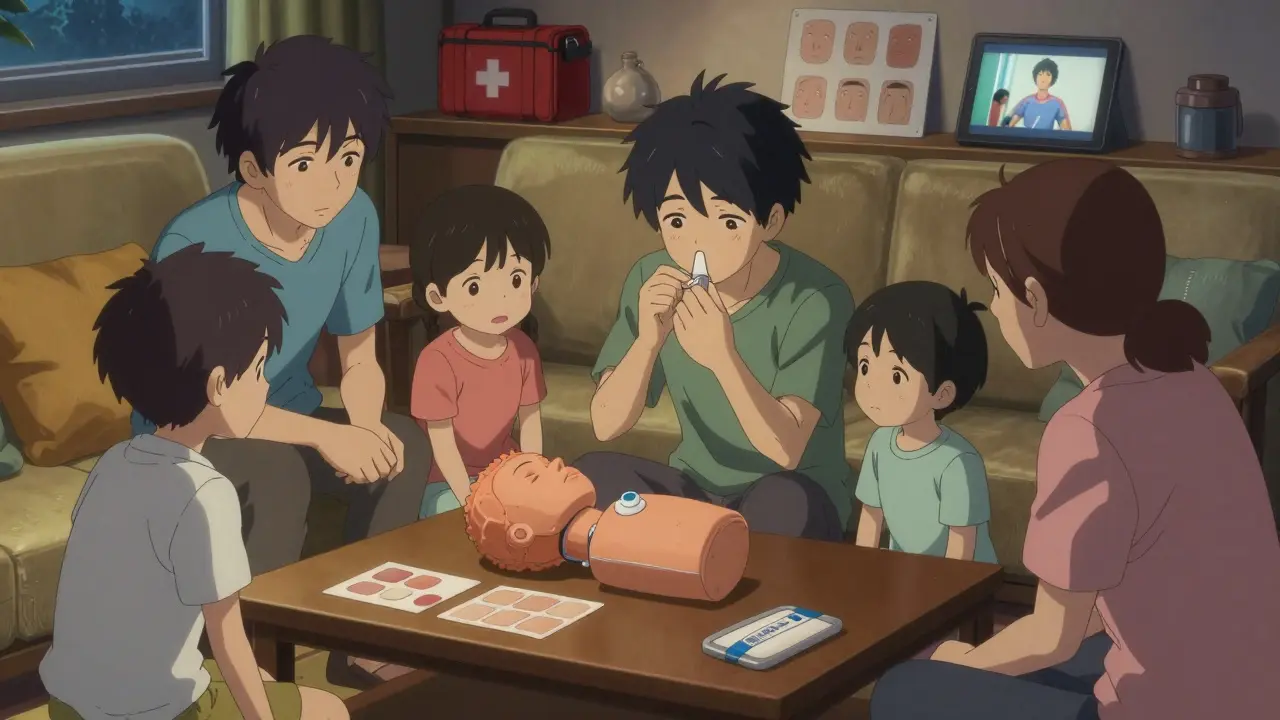
Every year, more than 100,000 people in the U.S. die from drug overdoses. Most of these deaths happen at home - not in hospitals or emergency rooms. That means the first person to notice something is wrong isn’t a doctor. It’s a parent, sibling, spouse, or child. If you’re reading this, you probably know someone who uses drugs - or you’re worried they might. The good news? You can learn to spot the signs of an overdose. And if you act fast, you can save a life.
What an Overdose Really Looks Like
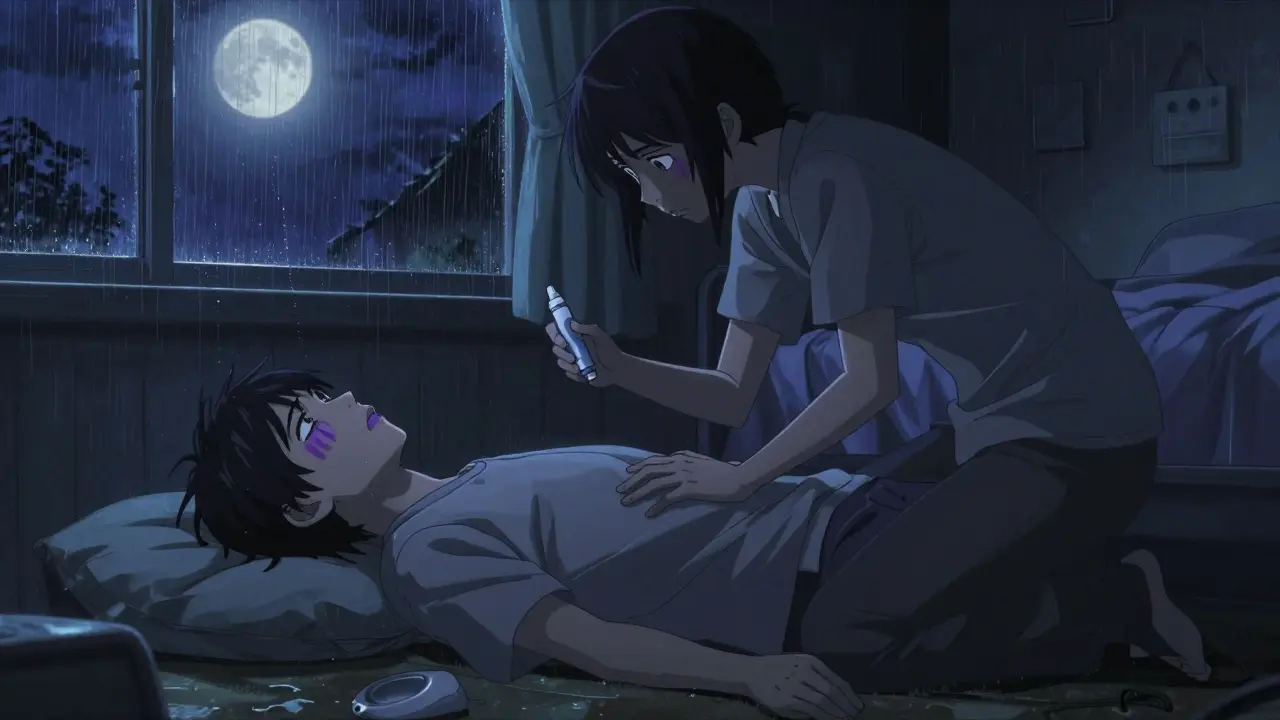
People often confuse being high with an overdose. That’s dangerous. Someone who’s high might be slurring words, laughing too loud, or stumbling. But someone overdosing won’t respond at all. They won’t wake up when you shake them or shout their name. They might look like they’re sleeping - but they’re not breathing properly. For opioids like heroin, fentanyl, or prescription painkillers, there are three key signs, known as the opioid triad:- Unresponsiveness - no reaction to a sternum rub (firmly rub the center of the chest with your knuckles)
- Slow or stopped breathing - fewer than one breath every five seconds, or no breathing at all
- Blue or purple lips and fingernails - this is cyanosis, caused by lack of oxygen
- Body temperature over 104°F (40°C)
- Seizures or violent shaking
- Chest pain or racing, irregular heartbeat
- Extreme confusion or hallucinations
Why Family Members Are the First Line of Defense
Over 78% of overdose deaths happen in private homes. Emergency services take minutes to arrive. In that time, brain damage can start. Without oxygen for just four minutes, cells begin dying. But if you act in those first few minutes, you can reverse it. Research shows that when family members recognize an overdose and act fast, death rates drop by up to 40%. In one study, 87 individuals trained by a Georgia health district used their skills to respond to real overdoses. 94% of those people survived. That’s not luck. That’s training. And here’s the truth: most people don’t call 911 because they’re scared. They’re afraid of police, judgment, or legal trouble. But naloxone - the overdose reversal drug - works even if you don’t call for help. And in 31 states, you can get it without a prescription. You don’t need permission to save a life.How to Teach It - Without Scaring People
You can’t just hand someone a pamphlet and expect them to remember. People forget lectures. But they remember what they do. The most effective training uses the Recognize-Respond-Revive method:- Recognize - Practice identifying the signs using photos, videos, or mannequins. Show how skin color changes differently - grayish on darker skin, bluish on lighter skin.
- Respond - Practice calling 911 while someone else checks breathing. Stress: Call first, then act. You don’t have to wait.
- Revive - Use a training naloxone kit (they’re cheap - around $35) to practice spraying into the nose. No needles. No fear. Just press, spray, wait.
What You Need to Get Started
You don’t need a medical degree. You need these five things:- Training naloxone kits - These are non-functional, safe replicas. Used for practice. No drugs inside.
- Real naloxone - Get it from your pharmacy. In most states, no prescription needed. Ask for Narcan or Kloxxado.
- Skin tone reference cards - Download free ones from the CDC or Rady Children’s Hospital. Show how color changes differ by skin tone.
- Scenario cards - Write down real-life situations: “Your daughter is unresponsive after using pills she found online.” Practice what you’d do.
- A quiet time - Don’t do this during an argument or when someone’s high. Wait for a calm moment. Say: “I care about you. I want to know what to do if something goes wrong.”
What to Do When You See an Overdose
If you think someone is overdosing - even if you’re not sure - act. Don’t wait. Don’t hope it’ll pass. Here’s the exact step-by-step:- Shout their name and shake their shoulders. If they don’t respond, move to step two.
- Call 911. Say: “Someone is not breathing. I think they’re overdosing.” Don’t apologize. Don’t make excuses. Just call.
- Give naloxone. Spray one dose into one nostril. If you have two doses, give the second after 2-3 minutes if there’s no change.
- Start rescue breathing. Tilt the head back, pinch the nose, give one breath every 5 seconds. Watch for chest rise.
- Stay with them. Even if they wake up, they can relapse into overdose. Don’t let them go to sleep. Wait for EMS.
Common Mistakes Families Make
People think:- “They’re just sleeping.” - No. Sleeping people wake up. Overdose victims don’t.
- “I’ll wait to see if they get better.” - You don’t have time. Brain damage starts fast.
- “I’m scared to use naloxone.” - It’s impossible to overdose on naloxone. It’s not a drug. It’s a blocker.
- “They’ll be mad if I intervene.” - Most people who survive say: “I’m so glad they didn’t wait.”
- “I don’t know how to tell if it’s an overdose.” - That’s why you practice. You don’t need to be perfect. You just need to act.
How to Keep This Knowledge Alive
Training once isn’t enough. Memory fades. Fear grows. Practice makes it automatic. - Keep the naloxone kit visible and easy to reach. Not in a locked cabinet. Not buried in a drawer. - Review the signs every 3 months. Use a family text thread: “Quick reminder - what are the 3 signs of opioid overdose?” - Watch a 5-minute video together. The Overdose Lifeline YouTube channel has free, real-life demos. - Talk about it. Not like a lecture. Like a safety plan. “If I ever pass out after taking something, I want you to do this.” The goal isn’t to scare people. It’s to give them power.What Happens After You Save a Life
Saving someone doesn’t fix the problem. But it gives you a second chance. Many people who survive overdoses feel shame. They don’t want to talk. They don’t want help. But you can still be there. - Don’t lecture. Say: “I’m glad you’re alive. I’m here if you want to talk.” - Offer to help them find a counselor, a support group, or a medication-assisted treatment program. - Keep naloxone in the house. One overdose doesn’t mean it’s over. The risk stays high. You’re not a therapist. You’re not a doctor. You’re the person who knows what to do when everything else fails. And that’s enough.Can I get naloxone without a prescription?
Yes. In 31 states, you can walk into a pharmacy and ask for Narcan or Kloxxado without a prescription. In other states, you may need to complete a short training - but that’s often free and takes less than 15 minutes. Check your state health department’s website or call your local pharmacy.
Will naloxone work on cocaine or meth overdoses?
No. Naloxone only reverses opioid overdoses. It has no effect on stimulants like cocaine, meth, or Adderall. For those, you need to call 911 immediately and focus on cooling the person down and keeping them calm until help arrives. Don’t delay calling - even if you think it’s not opioids.
What if I’m not sure if it’s an overdose?
If someone is unresponsive, not breathing normally, or turning blue or gray, treat it like an overdose. Naloxone is safe. Giving it won’t hurt someone who didn’t use opioids. Waiting could kill them. It’s better to act and be wrong than to wait and be right - too late.
How long does naloxone last?
Naloxone lasts 30 to 90 minutes. But many opioids, especially fentanyl, last much longer. That means the person can slip back into overdose after naloxone wears off. Always call 911 and stay with them until emergency responders arrive - even if they wake up.
Is it safe to give naloxone to a child or teenager?
Yes. Naloxone is safe for people of all ages, including children. The dose doesn’t change based on age or weight. If a teen overdoses on opioids, giving them naloxone is the right thing to do - and it’s not illegal. Many schools and youth programs now carry it.
Can I train myself at home without a class?
Yes. Free training videos from the CDC, Overdose Lifeline, and NIDA are available online. Practice with a training kit - they’re inexpensive and come with step-by-step instructions. But if you can, join a live class. Hands-on practice with feedback improves retention by over 80% compared to watching alone.
What if the person doesn’t wake up after naloxone?
Keep giving rescue breaths. Call 911 again if you haven’t already. Give a second dose of naloxone after 2-3 minutes if you have it. Stay with them. Don’t give up. Even if they don’t wake up right away, your actions are still saving their life. Emergency responders need to know what you’ve done.
This is the most irresponsible garbage I've seen all week. You're literally telling people to hand out naloxone like candy and not call 911? That’s not empowerment-that’s negligence. People don’t just ‘wake up’ after an overdose. They die in parking lots because someone thought spraying a nose spray was enough. You’re glorifying ignorance with a shiny pamphlet.
And don’t get me started on ‘no judgment’-you think families aren’t already drowning in shame? This isn’t CPR training. This is enabling with a side of performative activism. I’ve seen too many bodies. Don’t pretend you’re saving lives when you’re just making yourself feel better.
Also, why are you ignoring the fact that most overdoses happen because people are using black market fentanyl laced with xylazine? Naloxone doesn’t touch that. But hey, let’s just spray and pray, right? 😒
Okay but who’s actually gonna do this? My cousin’s boyfriend uses and he’s literally a ghost-won’t talk, won’t listen, won’t even look at me. You think he’s gonna sit through a 20-minute ‘family training’? Nah. This is just guilt-tripping families into becoming unpaid EMTs while the system burns.
Also, why is everyone acting like naloxone is magic? It’s not. It’s a bandaid on a bullet wound. The real problem is the pharmaceutical industry, the DEA, and the fact that no one’s talking about safe consumption sites. But sure, let’s blame moms for not knowing how to rub a sternum.
And don’t even get me started on the ‘download the app’ nonsense. My grandma can’t open a PDF. 😭
Training =/= cure. You teach recognition but not root cause. Addiction is trauma response. Not a moral failure. Not a lack of knowledge. You hand out naloxone like a fire extinguisher-but the house is still on fire. 🤷♂️
Also, ‘gray skin’ on dark skin? That’s not universal. Melanin masks cyanosis. You need real data, not CDC fluff. And why no mention of fentanyl test strips? That’s the real frontline.
Stop romanticizing survival. Survival isn’t victory. It’s just another day in hell.
So let me get this straight… we’re gonna teach grandma to spray nose mist like she’s using an air freshener, and that’s our big solution to a systemic collapse? 😏
Meanwhile, the same people who wrote this guide are probably sipping oat milk lattes while their kid’s friend OD’d last Tuesday. ‘Practice every few months!’ Sure, Jan. Between yoga and brunch.
At least we got the emojis. 💉😭❤️
Also-‘don’t wait for a crisis’? Honey, the crisis is already here. You’re just late to the funeral.
PS: I’m keeping my naloxone next to my yoga mat. You’re welcome, America.
This guide is exceptionally well-researched and critically important. The distinction between opioid and stimulant overdoses is often misunderstood, and your clear delineation of the opioid triad provides actionable clarity. The emphasis on non-judgmental, repeated practice is evidence-based and aligns with behavioral psychology principles regarding skill retention.
The inclusion of skin tone variation in cyanosis recognition is particularly commendable-this addresses a documented gap in emergency response training. Furthermore, the recommendation to store naloxone alongside first aid supplies is a simple yet transformative behavioral nudge.
I urge every community center, school, and faith-based organization to adopt this protocol immediately. The data speaks for itself: 94% survival rate when families intervene. That is not luck. That is preparedness.
YES. YES. YES. This is exactly what we need. I’ve been begging my sister to learn this for years-she’s terrified she’ll do it wrong. Now I’m printing this out and laminating it. I bought two Narcan kits last week-one for her house, one for mine.
Also, the ‘gurgling’ detail? That’s the one thing no one talks about. My cousin was overdosing and we thought he was snoring. If I’d known about that sound… I might’ve saved him. I didn’t. I’m still sorry.
PLEASE share this with your aunt, your neighbor, your kid’s coach. It’s not about politics. It’s about not losing someone because you didn’t know how to press a button.
And yes-nobody’s mad you saved them. They’re alive. That’s the only thing that matters. 💪❤️
I appreciate the intent here, but I worry this puts too much burden on families. We’re asking parents to become emergency responders while the system fails them at every level-no access to treatment, no mental health support, no safe supply.
It’s not that I don’t believe in naloxone. I do. But this feels like a Band-Aid on a hemorrhage. We need decriminalization, harm reduction centers, and funding for housing and therapy-not just training manuals.
Still… if this saves one life today, it’s worth doing. I’ll share it with my family. But I won’t stop demanding more.
Just got back from my local pharmacy. Walked in, asked for Narcan. The pharmacist said, ‘Oh, you’re one of those?’ and handed it to me with a smile. No ID. No questions. Just said, ‘You’re doing good.’
Went home and showed my 16-year-old nephew how to use the training kit. He laughed at first-‘You think I’m gonna need this?’ Then he paused. Said, ‘My friend’s brother died last year.’
We practiced. He got it right on the third try.
He didn’t say much after that. But he kept the kit in his backpack.
That’s all it takes. One conversation. One moment. One person who didn’t look away.
❤️🩹🇺🇸