
For over a decade, the U.S. healthcare system has been quietly saving trillions of dollars-not by cutting services, reducing staff, or raising premiums-but by switching to generic medications. In 2024 alone, generic and biosimilar drugs saved patients and the system $467 billion. That’s more than the entire annual GDP of Australia. Over the last ten years, those savings added up to $3.4 trillion. And it’s still growing.
How Do Generic Drugs Save So Much Money?
Generic drugs are exact copies of brand-name medications, approved by the FDA after the original patent expires. They contain the same active ingredients, work the same way, and are held to the same safety standards. The only difference? Price. In 2024, Americans filled 3.9 billion prescriptions for generic drugs. That’s 90.2% of all prescriptions. Yet those generics made up just 12% of total prescription spending. Meanwhile, brand-name drugs-only 10% of prescriptions-accounted for 88% of the spending, costing $700 billion compared to $98 billion for generics. It’s a simple math problem: if you can get the same medicine for 80-90% less, you save money. And when millions of people do it every day, the numbers explode.Biosimilars: The Next Big Savings Wave
Biosimilars are the next frontier. These are not exact copies like generics-they’re highly similar versions of complex biologic drugs, used for conditions like cancer, rheumatoid arthritis, and diabetes. They’re harder to make, harder to approve, and historically more expensive. But they’re changing the game. Since the first biosimilar entered the market in 2015, they’ve saved the system $56.2 billion. In 2024 alone, they saved $20.2 billion. That’s not small change. It’s enough to cover the annual healthcare costs for a city the size of Chicago. And the growth is accelerating. The biosimilar market grew 22.7% in 2024 and is projected to keep rising through 2029. As more biosimilars get approved and gain interchangeability status-meaning pharmacists can swap them for brand drugs without doctor approval-savings will climb even higher.The Top Savings Generators
Not all generics save the same amount. The biggest savings come from drugs used to treat the most common chronic conditions. In 2023, the top 10 most prescribed generic drugs saved $89.5 billion. The top 10 by total savings-meaning they’re expensive drugs with high volume-saved $127 billion. That’s nearly 28% of all generic savings in one year. The biggest winners? Drugs for high blood pressure, high cholesterol, and type 2 diabetes. Amlodipine, metformin, atorvastatin, lisinopril-these are the unsung heroes of healthcare affordability. Millions take them daily. And because they’re cheap, people actually fill their prescriptions instead of skipping doses because they can’t afford them.Why the U.S. Leads the World in Generic Use
The U.S. fills 90% of prescriptions with generics. Most European countries? Between 60% and 80%. So why does America do better? It’s not because Americans are more health-conscious. It’s because of the 1984 Hatch-Waxman Act. This law created a fast-track approval process for generics, allowing companies to skip expensive clinical trials if they prove their drug is bioequivalent to the brand. It also gave the first generic company 180 days of exclusive rights to sell their version after a patent expires. That incentive sparked competition. Dozens of companies started making the same drug. Prices dropped fast. And patients won.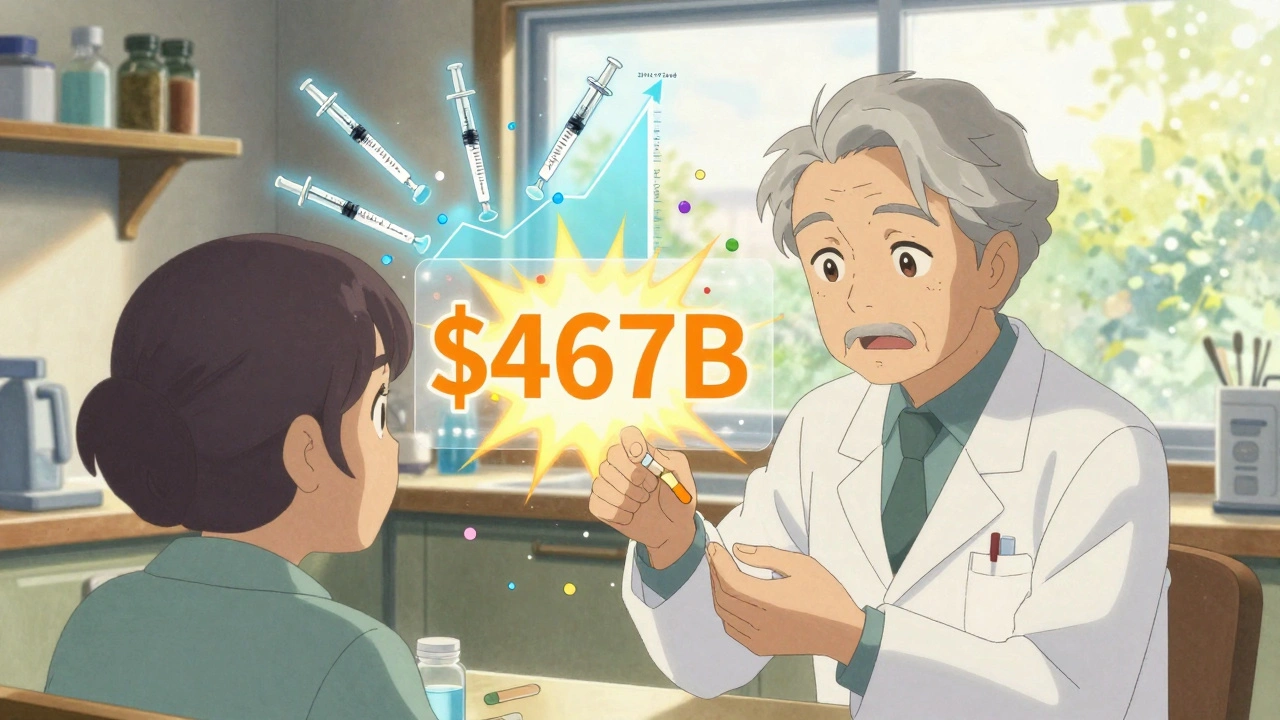
Where the System Still Fails
Despite the savings, the system is rigged in places. Big pharmaceutical companies use tricks to delay generics. One tactic is “patent thickets”-filing dozens of minor patents on a single drug to block competitors. A 2024 study found that just four brand-name drugs, protected by these thickets, cost the system over $3.5 billion in lost savings over two years. Another trick? “Product hopping.” A company slightly changes a drug’s form-say, from a pill to a capsule-and pushes doctors to switch patients. Then they file a new patent. The old drug loses protection, but the new one doesn’t. Generics can’t enter. Patients pay more. Then there’s “pay-for-delay.” Brand companies pay generic makers to hold off on launching their cheaper version. In 2023, Blue Cross Blue Shield estimated these deals cost the system $12 billion a year. $3 billion of that was paid by Medicare and Medicaid.How PBMs and Pharmacies Shape Your Costs
Pharmacy Benefit Managers (PBMs) like Express Scripts and CVS Caremark control which drugs are covered and at what price. They negotiate rebates with drugmakers. But sometimes, those rebates come from brand drugs-not generics. In 2023, Express Scripts saved $18.3 billion by pushing generics. But other PBMs still steer patients toward expensive brand drugs if they get a bigger kickback. That’s why some people get a $800 brand prescription when a $10 generic is available. And it’s not just PBMs. Prior authorization requirements for generics have jumped 47% since 2019. Some insurers make you jump through hoops to get the cheaper option. That’s not saving money-that’s creating friction.State Differences: Who’s Winning, Who’s Losing
Savings aren’t evenly spread. California saved nearly $38 billion in 2023. Alaska? Just $600 million. Why? It comes down to policy. California has mandatory substitution laws-pharmacists must switch you to the generic unless the doctor says no. That’s why 98% of prescriptions there are generic. Texas, on the other hand, lets pharmacists choose. Only 87% of prescriptions are generic. That 11% gap? It’s billions in missed savings.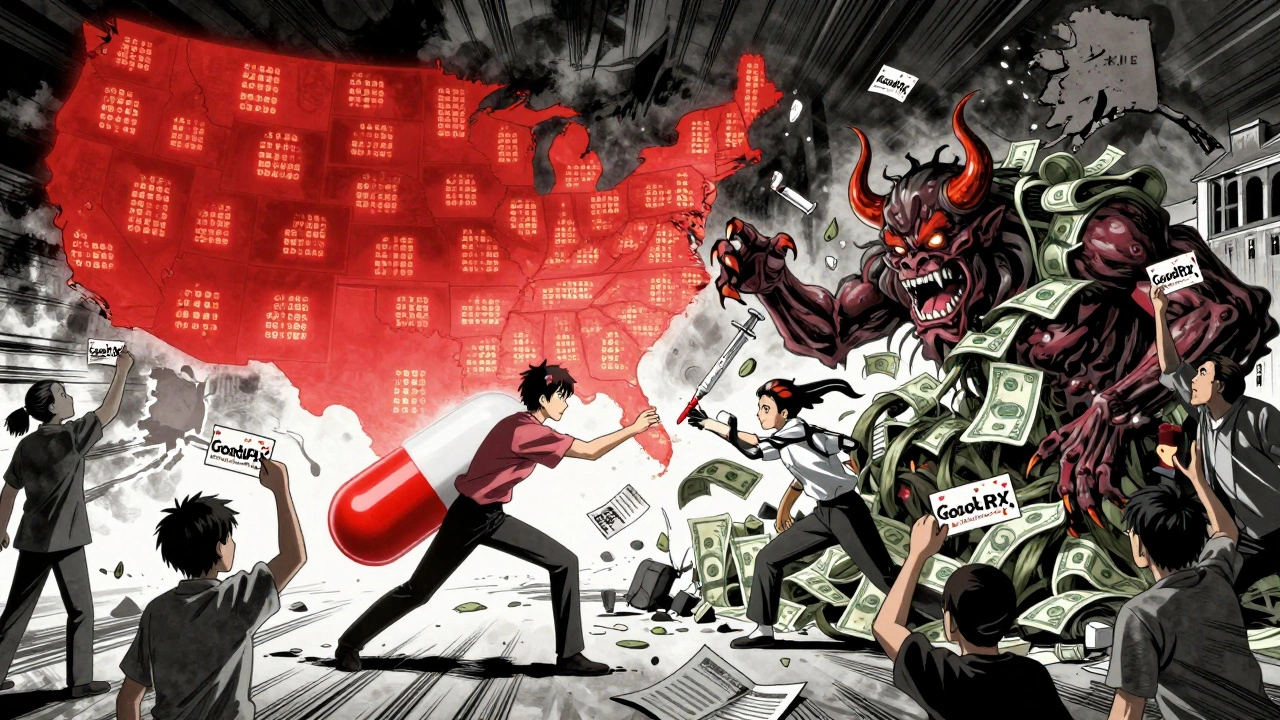
What Patients Really Think
Most people who switch to generics are happy. A Drugs.com analysis of over 15,000 reviews showed 87% rated the cost as “excellent” or “good.” And 89% of patients who switched due to cost said they were satisfied with the results. But not everyone. About 37% of reviews questioned whether generics worked as well. Some report different side effects, or that the pill looks different and feels “off.” That’s not always placebo. Some generics use different fillers or coatings. For most drugs, it doesn’t matter. But for narrow-therapeutic-index drugs-like warfarin, thyroid meds, or seizure drugs-even tiny differences can matter. That’s why doctors sometimes stick with brand.What’s Next? The $5.1 Trillion Forecast
The IQVIA Institute projects that by 2034, generic and biosimilar drugs will have saved the U.S. healthcare system a total of $5.1 trillion. That’s not fantasy. It’s based on current trends: more generic approvals (1,145 in 2024), more biosimilars coming online, and new legislation like the Affordable Prescriptions for Patients Act, which aims to stop patent abuse. But there are risks. Drug shortages affected 287 generic medications in late 2024. Many are made overseas, and supply chains are fragile. Also, the top 10 generic manufacturers now control 63% of the market-up from 51% in 2015. Less competition means less price pressure.What You Can Do
You don’t need to wait for Congress to fix this. Here’s what works:- Always ask your pharmacist: “Is there a generic version?”
- If your insurance won’t cover it, ask for a formulary exception.
- Use mail-order pharmacies-they often have lower copays for generics.
- Check GoodRx or SingleCare before paying at the counter. Sometimes cash price is lower than insurance.
- Don’t assume brand = better. For 90% of drugs, it’s not true.
The Real Cost of Not Using Generics
If the U.S. had the same generic usage rate as Germany-say, 75% instead of 90%-we’d be spending over $150 billion more on prescriptions each year. That’s $1,500 per household. Or enough to pay for 12 million insulin prescriptions annually. Generics aren’t a luxury. They’re the backbone of affordable care. Without them, millions couldn’t afford their meds. Chronic diseases would go untreated. Hospitals would fill up faster. Medicare and Medicaid would collapse under the weight of unchecked drug prices. The numbers don’t lie. The system works-when it’s allowed to.Are generic drugs really as effective as brand-name drugs?
Yes. The FDA requires generics to have the same active ingredient, strength, dosage form, and route of administration as the brand. They must also prove they’re absorbed into the body at the same rate and extent. For 90% of drugs, there’s no meaningful difference in effectiveness. Exceptions exist for narrow-therapeutic-index drugs like warfarin or levothyroxine, where small variations can matter-so always check with your doctor.
Why are generic drugs so much cheaper?
Generic manufacturers don’t have to repeat expensive clinical trials. They rely on the brand’s data to prove safety and effectiveness. They also compete with each other-sometimes dozens of companies make the same drug. That competition drives prices down. Brand drugs, on the other hand, recover R&D costs and make profits during their patent monopoly.
Do insurance plans always cover generics?
Most do-and they usually charge much lower copays for generics. But some plans still favor brand drugs if the manufacturer pays a rebate to the Pharmacy Benefit Manager (PBM). That’s why you might get a brand even when a generic is available. Always ask your pharmacist to check your plan’s formulary or request a generic substitution.
What’s the difference between a generic and a biosimilar?
Generics are exact copies of small-molecule drugs-like pills for blood pressure or cholesterol. Biosimilars are highly similar versions of complex biologic drugs, made from living cells-like injectables for cancer or autoimmune diseases. They’re not identical, but they’re proven to work the same way. Biosimilars are newer, more expensive to make, and slower to enter the market-but they’re saving billions.
Can I switch from a brand to a generic without asking my doctor?
In most cases, yes. Pharmacists can substitute a generic unless the doctor writes “dispense as written” or “no substitution.” Some states require pharmacists to notify you if they switch your medication. Always check the label and ask if you’re unsure. If you notice side effects or changes in how you feel, contact your doctor.
Why do some people say generics don’t work as well?
Some people notice differences in pill size, color, or filler ingredients, which can cause minor side effects or psychological discomfort. In rare cases, bioequivalence standards may not fully capture real-world performance for very sensitive drugs. But large-scale studies show no meaningful difference in outcomes for the vast majority of medications. If you feel a generic isn’t working, talk to your doctor-don’t assume it’s the drug’s fault.
Let’s be real-this whole ‘generics save trillions’ narrative is a distraction. The real cost is in the supply chain chaos, the foreign manufacturing dependencies, and the fact that 60% of generic active ingredients come from China and India. We’re saving money now, but we’re building a fragile house on sand. When the next pandemic hits-or a geopolitical conflict cuts off supply-we’ll be begging for brand-name drugs at triple the price.
90% generic use? That’s not progress-that’s desperation. People aren’t choosing generics because they’re confident-they’re choosing them because they can’t afford the brand. This isn’t a win for healthcare. It’s a win for corporations who priced themselves into a corner and now pretend they’re heroes for letting people live.
I’ve been on metformin for 8 years. Switched from brand to generic when my insurance dropped coverage. No difference in blood sugar, no side effects, no ‘feeling off.’ My grandma took her generic blood pressure med for 12 years-same thing. For most people, it’s not magic, it’s math. The system works when we stop treating medicine like a luxury item.
India makes 70% of the world’s generics-and yet, Americans act like we’re doing them a favor? We export our pollution, import our pills, and then pat ourselves on the back for ‘saving’ money? We don’t deserve these drugs. We deserve better. We deserve to build our own supply chains, not beg for pills from nations we’ve exploited for decades. This isn’t healthcare-it’s colonialism with a pharmacy label.
It’s fascinating how the Hatch-Waxman Act created a domino effect-once generics could enter the market without full clinical trials, competition exploded, prices plummeted, and patient adherence skyrocketed. But here’s the hidden ripple: with lower out-of-pocket costs, patients are more likely to take their meds consistently, which reduces hospitalizations, ER visits, and long-term complications. That’s where the *real* savings come from-not just the $10 pill instead of $100, but the avoided $50,000 heart attack or $200,000 dialysis. We’re not just saving on prescriptions-we’re saving on the entire downstream cost of untreated disease. And that multiplier effect is what makes this a true public health triumph.
While the data is compelling, one must consider the ethical implications of cost-driven substitution. The FDA’s bioequivalence standards, while rigorous, do not account for individual pharmacokinetic variations across diverse populations. For elderly patients with polypharmacy, or those with metabolic disorders, even minor differences in excipients may precipitate adverse events. Therefore, while generics are statistically sound, blanket substitution without clinical context may be premature. A cautious, patient-centered approach remains paramount.
generics are just pills with different colors. i dont care if they save trillions. if i feel weird after taking one, its not placebo. its my body telling me something's off. why do we pretend science is perfect when it's just corporate math?
90% generic use? 😭 And you call this progress? You’re just letting Big Pharma off the hook. They made billions on patents, then sold the rights to Indian labs who make pills in factories with no OSHA standards. You’re not saving money-you’re outsourcing your health to a country where workers get paid $2/day to package your heart medication. 🤡
This entire article is a distraction. The real reason generics are cheap? Because the FDA lets them skip safety testing. The same companies that make brand-name drugs also make the generics-same factories, same owners. They just slap a new label on it. The ‘savings’? It’s all smoke and mirrors. The government is letting you die slowly so they don’t have to pay for real healthcare. Wake up.
So we’re supposed to be proud that we’re buying Chinese pills because we’re too lazy to make our own? America used to make stuff. Now we just take cheap meds and call it ‘innovation.’ Meanwhile, China’s building aircraft carriers and we’re saving $467 billion by swallowing pills made in a factory with no running water. Real patriotic.
It is profoundly disturbing that a nation which claims to value life so dearly has institutionalized the mass substitution of life-sustaining pharmaceuticals with unverified, profit-driven alternatives. The normalization of this practice reflects a moral collapse-not a triumph. The FDA’s approval process is a charade. The data is cherry-picked. The patients are the collateral. This is not healthcare. This is euthanasia by spreadsheet.
India made this possible, and now americans act like they invented it? We gave you the formula, the labs, the workers, the quality control-and you write articles like you’re the hero? We dont need your praise. We need you to stop calling our medicine ‘cheap’ and start calling it ‘brilliant.’ And maybe, just maybe, pay us more than $1.50 an hour for making your pills.
You think this is about savings? Nah. This is about control. The same people who own the brand drugs own the PBMs. They let generics in just enough to keep you quiet. But they still control the rebates, the formularies, the prior auths. You think you’re saving? You’re just being manipulated to think you have a choice. The game hasn’t changed. The players just changed their suits.