
Echinacea & Immunosuppressant Safety Checker
Is this safe for you?
Echinacea can interfere with immunosuppressant medications. Find out if you're at risk.
Select your answers above to check your safety.
Every year, millions of people reach for echinacea when they feel a cold coming on. It’s in teas, capsules, tinctures - sold as a natural way to boost immunity. But if you’re taking immunosuppressants - drugs meant to calm your immune system - echinacea could be working against you. And not in a small way. In some cases, it’s put lives at risk.
What Echinacea Actually Does to Your Immune System
Echinacea isn’t just another herbal tea. It’s a plant with real, measurable effects on your immune cells. The active compounds - alkamides, polysaccharides, and caffeic acid derivatives - trigger your body’s first responders: neutrophils, macrophages, and natural killer cells. These are the soldiers that hunt down viruses and bacteria. Studies show echinacea increases their movement and activity, especially in the first few days of use.
That’s why people take it. But here’s the twist: after about eight weeks, some research suggests echinacea may start doing the opposite. Instead of stimulating, it begins to suppress. This dual effect - boost first, then dampen - is rare among herbs. And it’s exactly why mixing it with immunosuppressants is so risky.
What Are Immunosuppressants and Who Takes Them?
Immunosuppressants aren’t for colds or flu. They’re life-saving drugs for people whose immune systems are turned against themselves or their own organs. Think:
- Transplant recipients (kidney, liver, heart, lung)
- People with autoimmune diseases like lupus, rheumatoid arthritis, or multiple sclerosis
- Patients with severe inflammatory conditions like pemphigus vulgaris
Common drugs in this group include cyclosporine, tacrolimus, azathioprine, methotrexate, and corticosteroids. These drugs don’t just reduce inflammation - they keep your body from rejecting a transplanted organ or attacking its own tissues. If they stop working, the consequences can be deadly.
The Dangerous Conflict: Boosting vs. Blocking
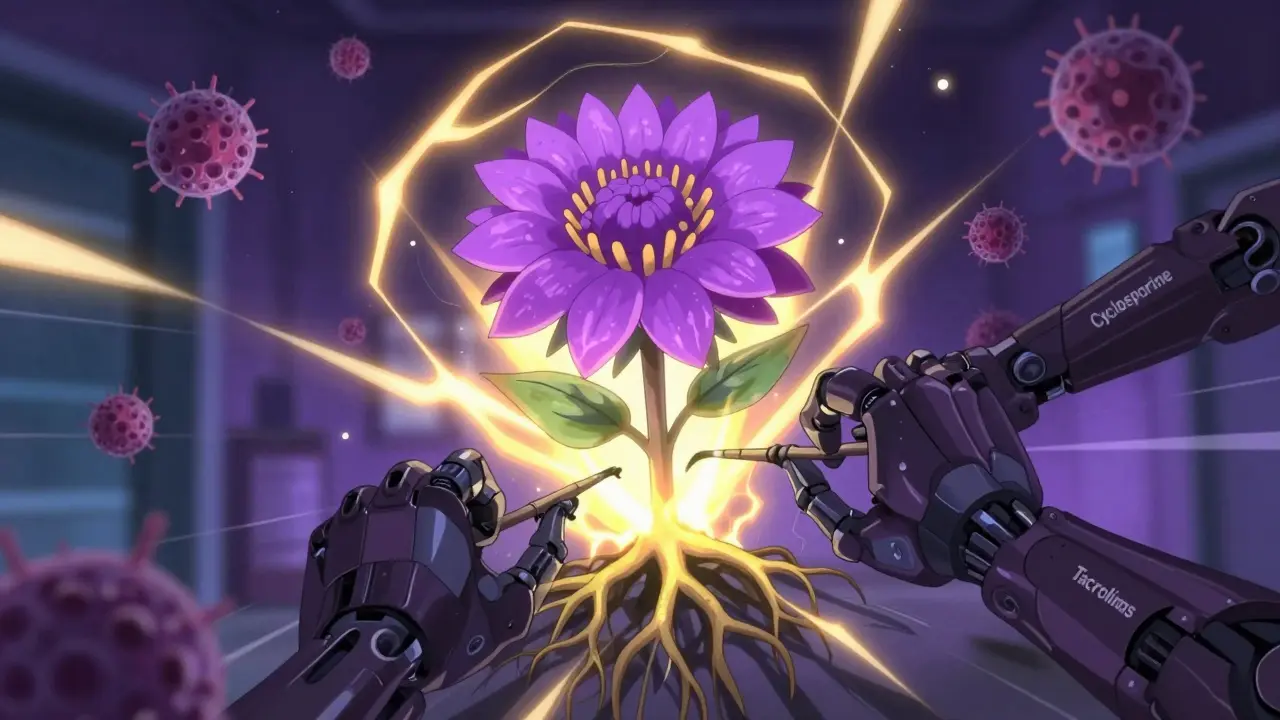
Echinacea tries to turn your immune system up. Immunosuppressants try to turn it down. When you take both, it’s like someone jamming the gas pedal while another person slams the brakes.
Case reports show this isn’t theoretical. A 55-year-old man with pemphigus vulgaris - a rare skin disease - was stable on immunosuppressants. After starting echinacea for a cold, his condition flared. His doctors had to increase his medication dose just to get partial control again. Another patient, a 61-year-old with lung cancer, developed dangerously low platelets after taking echinacea alongside chemotherapy drugs. A 32-year-old man developed a rare, life-threatening blood disorder after using echinacea for a respiratory infection.
These aren’t isolated incidents. A 2021 survey of over 500 transplant patients found that 34% had used echinacea after their transplant. Of those, 12% reported complications that doctors suspected were linked to herbal supplements. On patient forums, dozens have shared stories of increased rejection symptoms, higher drug doses, or hospital visits after starting echinacea.

What Experts Say - And Why They’re Alarmed
Major medical groups don’t mince words:
- The American Society of Transplantation says: Avoid echinacea completely if you’ve had a transplant.
- The American College of Rheumatology advises: Patients on immunosuppressants for autoimmune disease should not take echinacea.
- The Memorial Sloan Kettering Cancer Center states: Echinacea may antagonize the effects of immunosuppressants.
- The European Medicines Agency warns: The risk of interaction cannot be excluded.
Even though large clinical trials are still ongoing, the evidence is strong enough that 87% of transplant centers in the U.S. now have strict policies banning echinacea. The American Society of Health-System Pharmacists classifies the interaction as “moderate” - meaning it’s not just a possibility, it’s a real, documented threat.
Why Other Herbs Are Safer
Not all supplements behave like echinacea. Ginger reduces inflammation but doesn’t directly stimulate immune cells. Milk thistle supports liver function but doesn’t interfere with immune signaling. Turmeric has mild immune-modulating effects, but nothing as targeted or intense as echinacea’s impact on phagocytosis and leukocyte activation.
Echinacea is unique because it doesn’t just gently nudge your immune system - it activates specific pathways that immunosuppressants are designed to shut down. That’s why mixing it with drugs like tacrolimus or cyclosporine is like trying to run a car with the engine and the brakes on at the same time.
What You Should Do If You’re on Immunosuppressants
If you’re taking any of these drugs, here’s what you need to do:
- Stop taking echinacea. Even if you feel fine. The damage might not show up until it’s too late.
- Tell your doctor. Don’t assume they know you’re taking it. Most don’t ask about supplements unless you bring it up.
- Check every product. Echinacea hides in blends - cold formulas, immune gummies, even some skincare products. Read labels carefully.
- Find safer alternatives. If you want to support your immune system, focus on sleep, hydration, stress management, and vitamin D. These have no known interactions with immunosuppressants.
The FDA has issued warning letters to supplement makers for marketing echinacea as an immune booster without disclosing interaction risks. That means even products sold as “natural” or “safe” may be misleading you.
What’s Next? Research Is Still Unfolding
The NIH is currently funding a $2.4 million study (NCT04851234) to see exactly how echinacea affects tacrolimus levels in kidney transplant patients. Results are expected in mid-2025. Until then, we don’t need a full trial to know the risk.
The mechanism is clear. The case reports are real. The guidelines are unanimous. This isn’t a debate. It’s a red flag.
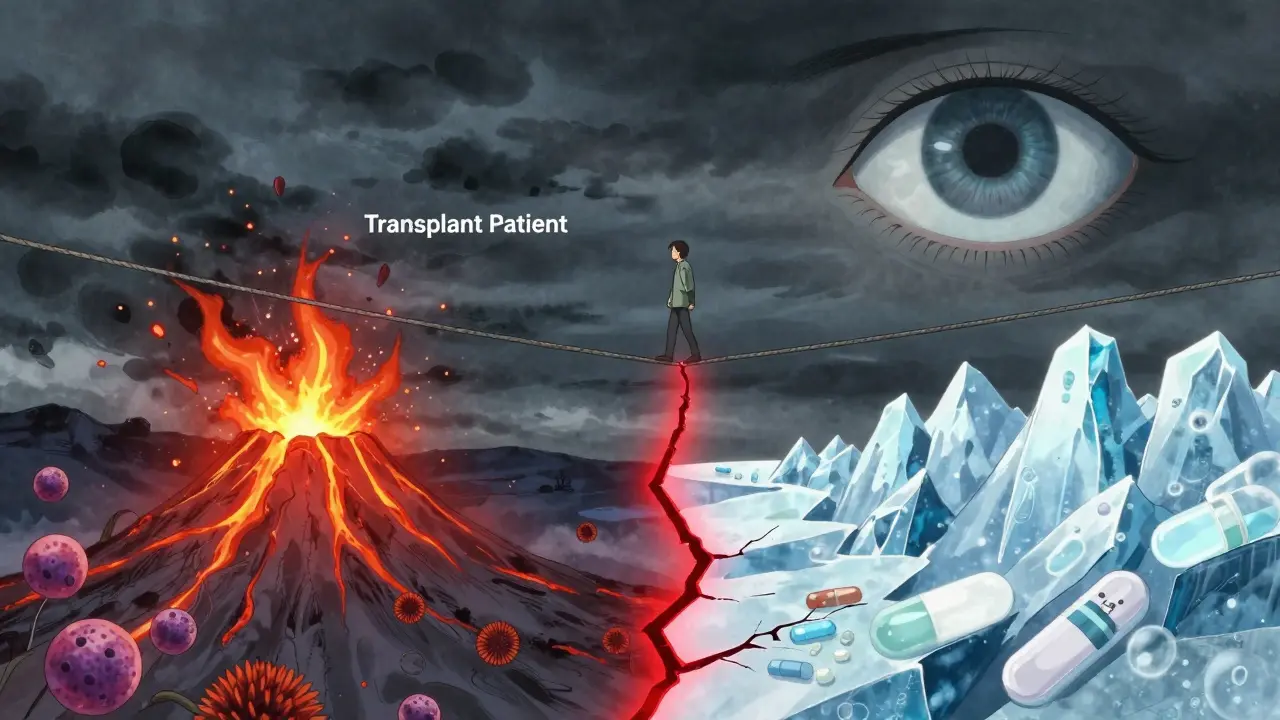
If you’re on immunosuppressants, your immune system is already on a tightrope. Echinacea doesn’t help you walk it - it pushes you off.
Can I take echinacea if I’m not on immunosuppressants?
Yes, for short-term use (under 8 weeks), echinacea is generally safe for healthy people looking to reduce cold duration. But it’s not a magic shield - studies show mixed results on how effective it really is. Avoid long-term use, and never take it if you have an autoimmune condition or are pregnant.
What happens if I accidentally take echinacea with my transplant meds?
Don’t panic, but don’t ignore it either. Stop taking echinacea immediately and contact your doctor or transplant team. They may need to check your drug levels or run blood tests to see if your immune system has become more active. Early action can prevent rejection or flare-ups.
Are all echinacea products the same?
No. Echinacea purpurea is the most studied and generally considered the most active. But extracts vary widely in concentration, and some products contain little to no active compounds. Even “low-dose” versions can still trigger immune responses. There’s no safe threshold when you’re on immunosuppressants.
Why don’t more doctors warn patients about this?
Many doctors simply don’t ask about supplements. Patients often assume herbal products are harmless or don’t think they’re “medicines.” But the data shows up to one-third of transplant patients use echinacea without telling their team. The problem isn’t lack of evidence - it’s lack of communication.
Is there any benefit to taking echinacea with immunosuppressants?
No. There are no proven benefits that outweigh the risks. Even if echinacea helped prevent colds (which is still debated), the chance of triggering rejection or disease flare is too high. Safer, proven methods exist for immune support without the danger.
This isn't just about echinacea-it's about how we treat 'natural' like it means 'harmless.' I've seen people on transplant lists casually popping echinacea gummies like candy because they read 'no side effects' on the bottle. No one tells them the bottle doesn't list the hidden cost: their graft.
It's not just dangerous-it's a betrayal of trust. You're trusting your life to science, then undermining it with a tea bag labeled 'ancient wisdom.'
I lost a friend to a rejected kidney because she thought 'herbal' meant 'safe.' She didn't even tell her doctor. That's the real tragedy here-not the science, but the silence.
Brothers and sisters, this is why we need to talk about health like it's family-not a product label.
I come from Nigeria, where herbs are part of our blood, our rituals, our healing. But even in our villages, we know: some things don’t mix. You don’t pour palm oil into a sacred fire and expect peace.
Let’s honor our roots without endangering our lives. If your doctor says ‘no,’ it’s not because they hate nature-it’s because they love you enough to say no.
Share this with your auntie who swears by her echinacea tea. Love her. Save her life.
so like… echinacea is just a glitch in the matrix? like the immune system is a program and this plant is a virus that reboots it? and immunosuppressants are the firewall?
why does everythign have to be so complicated? i just want to feel better when i get a cold without turning my body into a warzone.
also why is the fda even involved? why not just let people choose? its not like we dont have enough other stuff to worry about.
also i think the real problem is doctors dont ask. they just assume. its all a system failure.
There’s something profoundly human about wanting to control our vulnerability. We’re terrified of illness, of dependency, of being fragile-and so we reach for something that feels like agency. Echinacea is not medicine. It’s a ritual. A talisman against the inevitability of our own biology.
But when you’re on immunosuppressants, your body has already surrendered its autonomy. You’re not just managing disease-you’re negotiating with your own immune system every single day. To introduce a botanical that plays both sides of that negotiation? It’s not just dangerous. It’s spiritually dissonant.
It’s like holding hands with someone who’s trying to pull you in two directions at once. And yet, we do it. Because we want to believe in magic. Even when the evidence screams otherwise.
The real tragedy isn’t the interaction. It’s that we still feel the need to believe in a natural solution to a deeply unnatural condition.
Look, I get it. Natural is good. America is freedom. But if you're on transplant meds, you're not in a yoga retreat-you're in a war zone. This isn't about organic vs. synthetic. It's about survival.
Why do we let people market this stuff like it's a health hack? It's not. It's a biological landmine. And if you're dumb enough to pop it, you're not just risking yourself-you're risking the system that keeps you alive.
Stop romanticizing herbs. Start respecting science. And if you're not willing to do that, don't take the meds. But don't play Russian roulette with your transplant.
As a clinical pharmacist with 18 years in transplant care, I’ve seen this play out too many times. The patient comes in with a 'mild' upper respiratory infection. They say they took 'just a little echinacea.'
Then their tacrolimus level drops 40%. Their creatinine spikes. Their biopsy shows acute rejection. All because they thought 'herbal' meant 'safe.'
We don't have the luxury of 'maybe.' We have the responsibility of 'definitely.' Echinacea is not a gray area. It's a red flag with a siren. And every time a patient ignores it, we lose ground.
Education isn't optional. It's life-saving. If your provider doesn't ask about supplements, ask them. Demand it.
👏👏👏 This is the kind of post that should be mandatory reading before you buy any supplement.
Let me say this gently but firmly: if you’re on immunosuppressants, your body is already doing the heavy lifting. You don’t need to 'boost' it-you need to protect it.
Echinacea isn’t the villain. The real villain is the myth that 'natural = safe' and that 'if it’s sold in a store, it must be okay.'
Here’s what you *can* do: sleep 8 hours. Drink water. Walk outside. Manage stress. Eat colorful veggies. These are the real immune supports-and they don’t come with a warning label.
Be kind to your body. It’s carrying you through hell. Don’t hand it a grenade and call it a gift. 💪❤️
did you know that the fda banned echinacea in 1998 but the pharmaceutical companies lobbied to reverse it because they make more money selling immunosuppressants than they do selling echinacea?
also the whole 'immune boost' thing is a scam designed by big herbal to make you feel guilty for being sick
and why is everyone acting like this is new info? it's been in medical journals since 2003
the real story is that doctors are lazy and don't want to explain why your tea is dangerous
also i think echinacea is just a placebo anyway so why are we even talking about this
There’s a quiet revolution happening in patient advocacy-and it’s not about shouting louder. It’s about asking better questions.
Why do we assume that if a supplement is sold over the counter, it’s safe? Why do we treat herbs like they’re exempt from pharmacology? Why do we let marketing language-'immune support,' 'natural defense'-override clinical wisdom?
This isn’t about banning herbs. It’s about demanding transparency. Labeling echinacea as 'may interfere with immunosuppressants' should be mandatory. Not a footnote. Not a disclaimer. A bold, red warning.
Patients deserve to know the truth-not the illusion of safety. And we, as a community, need to stop normalizing ignorance in the name of 'natural living.'
Knowledge isn’t elitist. It’s protective.
Been on tacrolimus for 12 years. Never touched echinacea. Never will.
My kidney’s still working. That’s all I need to know.
Don’t risk it.
echinacea is just a scam
people are dumb
drugs are expensive
and the system is rigged
end of story