
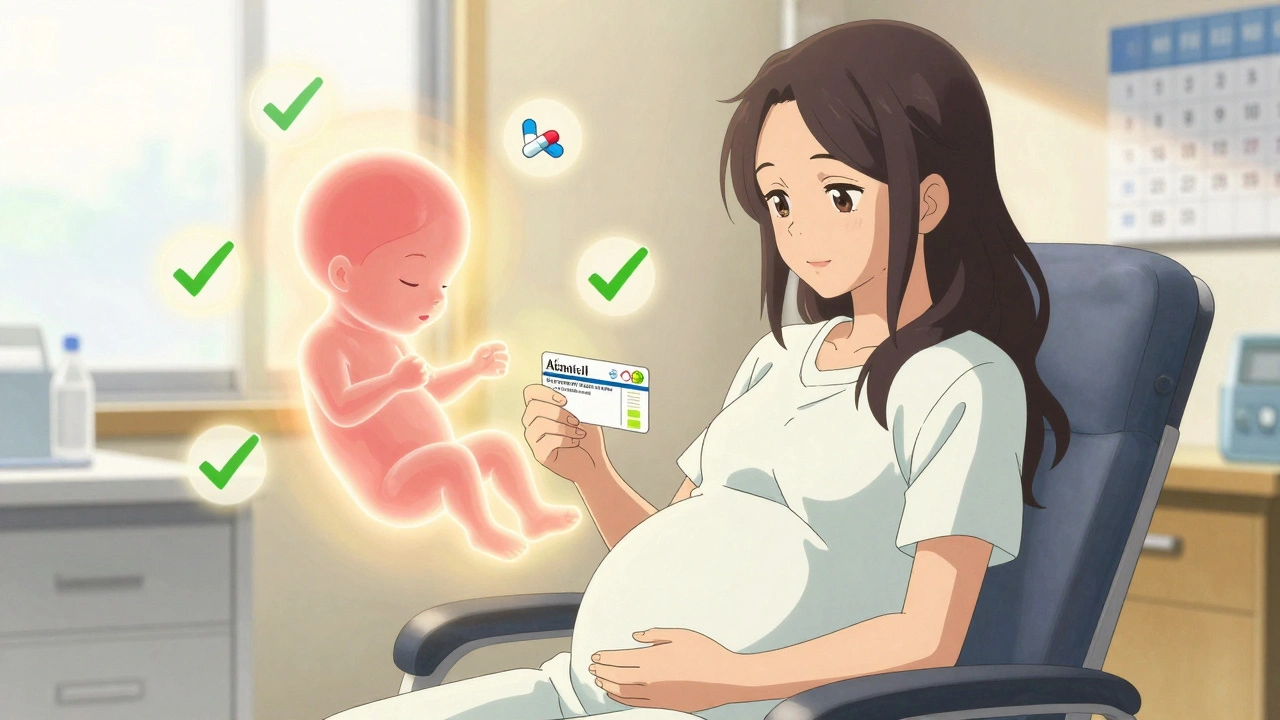
When you're pregnant, even a simple infection can feel overwhelming. You don’t want to risk your baby’s health, but you also can’t ignore a bacterial infection that could lead to preterm labor, sepsis, or other serious complications. The good news? Many antibiotics are safe to take during pregnancy. The challenge? Knowing which ones, when to use them, and what side effects to watch for.
Which Antibiotics Are Actually Safe During Pregnancy?
Not all antibiotics are created equal when you’re expecting. Some are well-studied and trusted, while others carry clear risks. The safest options fall into two main groups: penicillins and cephalosporins.Amoxicillin is the go-to choice for most infections during pregnancy - from sinus infections to urinary tract infections (UTIs). It crosses the placenta, but studies show no increase in birth defects. In fact, over 100,000 pregnancies have been tracked, and amoxicillin has consistently shown no harmful effects. It’s even used to prevent Group B Strep transmission during labor. Ampicillin works the same way and is often used in hospitals.
Cephalexin (Keflex) and cefaclor are cephalosporins, often used when someone has a penicillin allergy. They’re also Category B, meaning no proven risk in humans. But be careful with ceftriaxone - it’s great for serious infections, but if given within 72 hours of delivery, it can displace bilirubin and raise the risk of kernicterus, a rare but serious type of brain damage in newborns.
Clindamycin is another safe bet, especially for bacterial vaginosis or dental infections. It reaches the fetus at about 30-40% of the mother’s level, but no pattern of birth defects has been found. It’s often used when penicillin isn’t an option.
Nitrofurantoin (Macrobid) is the top choice for uncomplicated UTIs - but only after the first trimester. In the first 12 weeks, it’s linked to a slightly higher risk of cleft lip or palate (about 2.4% increase). After that, it’s one of the safest options because it doesn’t cross the placenta much.
Antibiotics to Avoid During Pregnancy
Some antibiotics should never be used during pregnancy - or only in extreme cases.Tetracyclines - including doxycycline and minocycline - are a hard no after week five. These drugs bind to developing bones and teeth, causing permanent yellow, gray, or brown staining in the baby’s teeth. They can also slow bone growth. Even a short course can cause lasting damage.
Sulfonamides like Bactrim or Septra carry risks in the first trimester. Studies show a 2.6 times higher chance of neural tube defects like spina bifida. After the first trimester, they’re sometimes used if no other option works - but only after careful discussion with your provider.
Aminoglycosides like gentamicin and tobramycin are used for serious infections like sepsis, but they can damage the baby’s hearing. The risk is 10-20% if used at standard doses. Doctors only use them when absolutely necessary and monitor blood levels closely to keep them as low as possible.
Macrolides like erythromycin and clarithromycin are tricky. Azithromycin (Zithromax) is generally safe and often used for chlamydia. But erythromycin and clarithromycin have been linked to a 2.3 times higher risk of infantile hypertrophic pyloric stenosis - a condition that causes severe vomiting in newborns. That’s why azithromycin is preferred.
Metronidazole (Flagyl) is another gray area. Animal studies at very high doses showed possible DNA damage, so oral metronidazole is avoided in the first trimester. But in the second and third trimesters, it’s considered safe - especially for bacterial vaginosis. Topical gel? No issues at all.
Common Side Effects and How to Handle Them
Even safe antibiotics can cause discomfort. Most side effects are mild, but knowing what to expect helps you stay on track.Nausea is the most common complaint, especially with amoxicillin. About 15-20% of pregnant people feel this. Take it with food - not on an empty stomach. Ginger tea or small, bland snacks can help. If nausea is severe, talk to your provider about switching to a different antibiotic or adding an anti-nausea medication that’s safe in pregnancy.
Diarrhea happens in 5-25% of cases, depending on the drug. It’s usually mild and goes away after finishing the course. But if it lasts more than 48 hours after you stop the antibiotic, or if you have fever, bloody stool, or severe cramps, you could have Clostridioides difficile (C. diff) infection. This is rare but serious. Don’t ignore it - call your doctor right away.
Yeast infections are common after antibiotics, especially in the second and third trimesters. Hormonal changes already make you more prone, and antibiotics can upset your vaginal balance. Over-the-counter clotrimazole creams are safe to use. If you’re unsure, ask your OB-GYN.
Allergic reactions are rare but serious. A rash, swelling, or trouble breathing means stop the drug and get help immediately. But here’s something important: 90% of people who say they’re allergic to penicillin aren’t actually allergic. Many had a rash as a child or got sick while on the drug - not a true allergy. If you think you’re allergic, ask for a simple skin test. It could open up safer, more effective treatment options.

Why Counseling Matters - More Than Just a Prescription
Too often, antibiotics are handed out with a quick, “Take this twice a day for seven days.” But in pregnancy, that’s not enough.Good counseling means explaining three things: why you need the antibiotic, why this one is safe, and what to watch for.
For example, if you have a UTI, your doctor should say: “Untreated, this infection can spread to your kidneys and increase your risk of preterm birth by up to 70%. We’re prescribing nitrofurantoin because it’s been studied in over 10,000 pregnancies and doesn’t cross the placenta much. You might get mild nausea - take it with food. If you get diarrhea that lasts more than two days after finishing, call us.”
Studies show that when patients get this kind of detailed counseling, they’re 37% less likely to stop the antibiotic early. And they’re 29% more likely to finish the full course - which reduces the risk of antibiotic resistance and recurring infections.
Don’t be afraid to ask questions: “Is this really necessary?” “Are there safer options?” “What if I don’t take it?” Your provider should welcome these questions. In fact, the American College of Obstetricians and Gynecologists (ACOG) says shared decision-making is part of standard care.
What’s New in 2025?
The field is changing fast. For years, pregnant people were excluded from clinical trials - leaving huge gaps in safety data. That’s starting to shift.In 2024, the NIH launched the Antimicrobial Resistance in Pregnancy (AMRIP) study, tracking 15,000 pregnancies exposed to antibiotics. This is the largest study of its kind and will give us clearer answers about long-term effects on babies.
Also, ACOG updated its guidance on azithromycin in early 2024. New data from the Pregnancy Exposure Registry shows no increased risk of heart defects - a concern that had made some providers hesitant. Now, azithromycin is even more widely recommended for chlamydia and other STIs.
And while fluoroquinolones like ciprofloxacin are still banned in Europe, the FDA now says they can be considered for life-threatening infections when no other option works - based on a 2022 Danish study showing no increased risk of joint or muscle problems in children exposed in utero.
But here’s the hard truth: by 2030, 60-70% of antibiotics used today will still lack solid safety data for pregnant people. That’s why choosing the right one - and using it only when needed - matters more than ever.

Real-World Scenarios: What to Do When You’re Pregnant and Sick
- UTI symptoms (burning, frequent urination): Nitrofurantoin (after first trimester) or amoxicillin. Avoid sulfonamides in early pregnancy.
- Sinus infection or strep throat: Amoxicillin is first-line. Cephalexin if allergic.
- Bacterial vaginosis: Clindamycin or metronidazole (after first trimester). Topical metronidazole gel is safest in early pregnancy.
- Chlamydia: Azithromycin is now preferred over erythromycin. Single dose, safe, effective.
- Severe infection (like pyelonephritis): Hospitalization. Ceftriaxone or ampicillin with gentamicin - but only under strict monitoring.
- Dental infection: Amoxicillin or clindamycin. Avoid tetracyclines at all costs.
Remember: treating an infection is safer than leaving it alone. A fever, untreated UTI, or dental abscess can harm your baby more than the antibiotic.
Is amoxicillin safe during all three trimesters?
Yes. Amoxicillin is considered safe throughout pregnancy. It’s been studied in over 100,000 pregnancies and shows no increased risk of birth defects, preterm birth, or low birth weight. It’s even used during labor to prevent Group B Strep infection in newborns. If you’re prescribed amoxicillin, you can take it with food to reduce nausea, but no other special precautions are needed.
Can I take antibiotics for a cold or flu?
No. Colds and flu are caused by viruses, not bacteria. Antibiotics don’t work on them - and taking them unnecessarily increases your risk of side effects and antibiotic resistance. If you have a fever, sore throat, or cough, your provider should test for strep or other bacterial infections before prescribing antibiotics. Don’t pressure your doctor for a prescription - it’s not helping you or your baby.
What if I took an unsafe antibiotic before I knew I was pregnant?
Don’t panic. Most antibiotics taken in the first few weeks of pregnancy - before you even know you’re pregnant - don’t cause harm. The embryo is either unaffected or doesn’t survive. If you took a tetracycline or sulfonamide early on, talk to your OB-GYN. They’ll review the timing, dose, and drug. In most cases, no further action is needed. But if you’re concerned, a detailed ultrasound at 18-22 weeks can check for major structural issues.
Do antibiotics affect my baby’s gut health after birth?
Yes, but the long-term impact isn’t fully understood. Antibiotics can change the baby’s microbiome, especially if given late in pregnancy or during labor. Some studies suggest a possible link to higher rates of asthma or eczema later in childhood, but the evidence isn’t strong enough to avoid needed treatment. The bigger risk is leaving an infection untreated. If you’re concerned, breastfeeding helps rebuild healthy gut bacteria. Talk to your pediatrician about probiotics if your baby has ongoing digestive issues.
Can I take probiotics while on antibiotics during pregnancy?
Yes. Probiotics like Lactobacillus rhamnosus and Saccharomyces boulardii are safe during pregnancy and may reduce antibiotic-related diarrhea and yeast infections. Take them 2-3 hours apart from your antibiotic dose. Don’t rely on them to prevent all side effects - but they can help. Look for products labeled “pregnancy-safe” or ask your pharmacist for recommendations.
Final Thoughts: Trust the Science, Not the Fear
Pregnancy doesn’t mean you have to suffer through infections. It means you need smarter, more informed care. The antibiotics we use today are far safer than they were 30 years ago - thanks to decades of research, registries, and real-world data.Don’t let fear of side effects stop you from getting the treatment you need. Untreated infections pose a far greater threat to your baby than the medications used to treat them.
Work with your provider. Ask questions. Get clear answers. And remember - the goal isn’t to avoid all medication. It’s to use the right one, at the right time, in the right dose. That’s how you protect both of you.

Amoxicillin has held up remarkably well across decades of use in pregnancy. The data is solid, and it’s reassuring to see it recommended as first-line. I’ve prescribed it to dozens of patients, and not once have I seen a pattern of harm.
So glad this was written clearly. So many people panic about antibiotics in pregnancy. I had a UTI at 28 weeks and was terrified until my OB explained why nitrofurantoin was safe after the first trimester. Knowledge is power.
Clindamycin for BV in the second trimester saved me from preterm labor. I was skeptical at first but my midwife had the data. Trust the science, not the fear. This post nails it.
OMG I literally just read this and I’m crying 😭 like why is this not on every OB’s website?? Also, tetracyclines = baby teeth stained like a 90s rockstar 🤘
Of course the FDA says fluoroquinolones are ‘maybe okay’ now - next they’ll say smoking’s fine if you’re pregnant and ‘in moderation.’
They’re all just pushing drugs. The real issue is why are we so sick? Corporate labs, glyphosate, EMF radiation - antibiotics are a bandaid on a bullet wound. You think amoxicillin fixes anything? Nah. It just masks the real problem: the system.
Important note: When using metronidazole in the second or third trimester, always confirm the indication - bacterial vaginosis is the most evidence-backed use. Avoid for routine sinus infections. Also, probiotics should be taken at least two hours before or after the antibiotic dose - this minimizes disruption to the microbiome. And yes, Lactobacillus rhamnosus GG has the strongest data for reducing diarrhea risk.
YASSS to this!! I was terrified of every pill I took during my pregnancy - but after I learned that a fever could hurt my baby more than amoxicillin? Game changer. 🙌 You’re not being ‘toxic’ by taking meds - you’re being a warrior mom. Keep fighting the good fight!
One thing missing here is the importance of culture testing before prescribing. Too many providers skip it and just throw antibiotics at symptoms. A urine culture for UTI, a rapid strep test - these aren’t luxuries. They’re essential to avoid overuse. Especially in pregnancy.
When I was 32 weeks and got a UTI, I was so scared I almost didn’t take the meds. Then my doula showed me the ACOG guidelines. I cried. I felt so stupid for being afraid. But now I’m telling every pregnant friend I know. This info saves lives. Thank you for writing this.
The real philosophical tension here isn’t about antibiotics - it’s about our cultural relationship with control. We want to eliminate all risk, but biology doesn’t work that way. The fetus is not a sealed container. It’s a dynamic system. Antibiotics are interventions, not violations. The goal isn’t purity - it’s balance. And sometimes, balance requires a pill.
I mean… if you’re going to take antibiotics during pregnancy, shouldn’t you at least be a doctor? Or at least have a PhD in microbiology? It’s irresponsible to trust ‘studies’ without reading the original papers. Most people don’t even know what a Category B drug means. We’re all just guessing.
Probiotics help - I took them with my amoxicillin and didn’t get a yeast infection. Also, ginger tea for nausea works better than any pill. And yes, 90% of penicillin allergies aren’t real. Get tested. Seriously. It’s a 10-minute skin test.
One thing that’s rarely discussed is the cumulative impact of multiple antibiotic courses during pregnancy. While each individual course may be considered safe, repeated exposure - especially in the third trimester - may have subtle effects on neonatal microbiome colonization that could influence immune development. The AMRIP study may shed light on this, but we’re still in early days. For now, the principle remains: use the narrowest spectrum possible, for the shortest duration necessary, and always confirm the bacterial cause before prescribing. And if you’re taking antibiotics, please, please, please finish the full course - even if you feel better. Stopping early doesn’t just risk your health - it risks the global fight against resistance.