
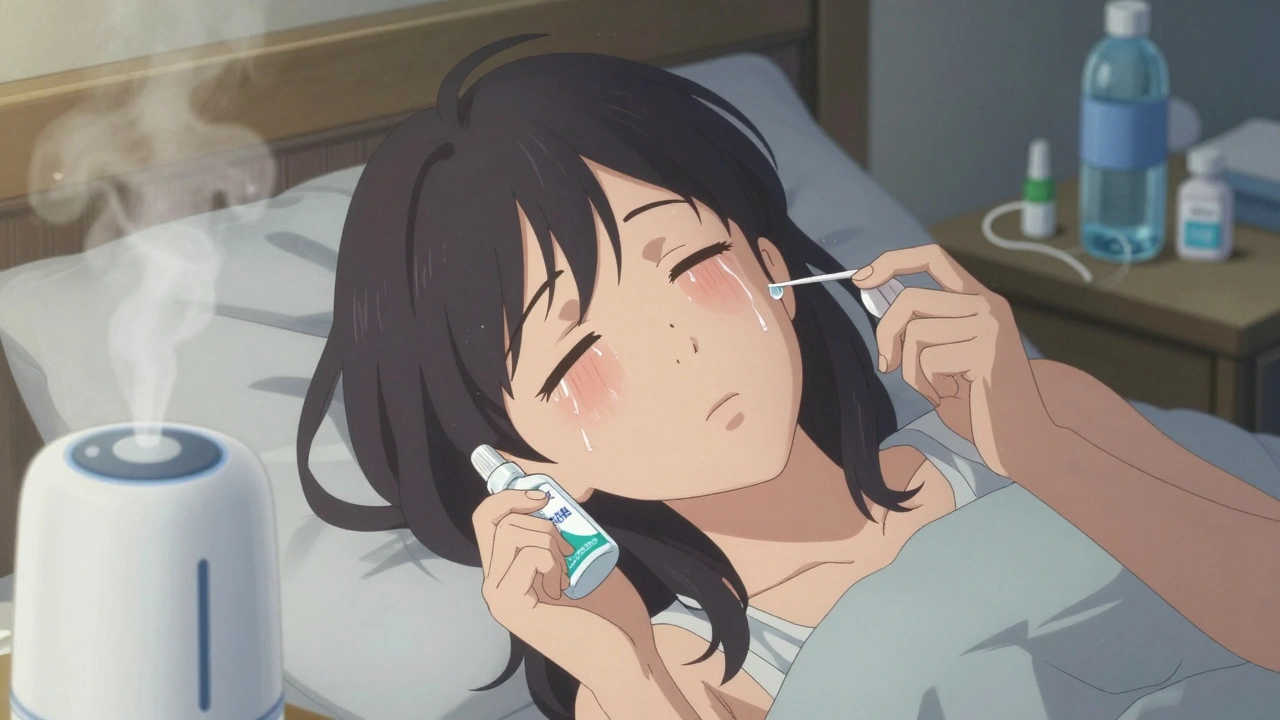
Sjögren’s Syndrome isn’t just about dry eyes or a parched throat. It’s an autoimmune attack on the very glands that keep you moist - the ones that make tears, saliva, and other fluids your body needs to function. Imagine your immune system, which is supposed to protect you, turning on your own tear ducts and salivary glands like they’re invaders. That’s what happens in Sjögren’s. And while it starts with discomfort, it doesn’t stop there. For millions, it becomes a full-body condition that steals sleep, ruins meals, and makes everyday tasks feel like climbing a hill.
It Starts With Dryness - But It Doesn’t End There
Most people first notice it in small ways. Waking up with sticky eyes. Needing to sip water constantly just to swallow a bite of toast. A persistent scratchy feeling in the throat. These aren’t just signs of dehydration or aging. They’re red flags. Sjögren’s Syndrome targets the exocrine glands - the ones that secrete fluids. The lacrimal glands (tears) and salivary glands (spit) are the most common targets. But it doesn’t stop there.Up to 50% of women with Sjögren’s experience vaginal dryness. About 25% develop a chronic, unexplained cough from dry airways. Skin becomes flaky, itchy, and prone to rashes. Joints ache like they do in arthritis. Fatigue hits hard - not the kind you shake off with coffee, but the kind that makes you feel like you’re dragging cement blocks through your day. And brain fog? Real. People report struggling to find words, forgetting appointments, or zoning out in meetings. It’s not laziness. It’s inflammation in the nervous system.
The American College of Rheumatology says these symptoms don’t appear overnight. They creep in over months, sometimes years. That’s why so many people see four or five doctors before getting diagnosed. One person on Reddit said their primary care doctor thought it was allergies. The ENT blamed acid reflux. The dentist said they just needed to drink more water. It took three years to get the right diagnosis.
Who Gets Sjögren’s - And Why?
About 4 million Americans live with Sjögren’s Syndrome. Ninety percent of them are women. Most are diagnosed between 45 and 55. It’s rare in kids, but not impossible - there are documented cases in children as young as 8.The cause? Not fully understood. But we know it’s a mix of genes and triggers. Some people have genetic markers that make them more vulnerable. Then something - a virus, a bacterial infection, or even extreme stress - flips a switch. The immune system starts attacking moisture-producing tissues. Researchers have found a specific T-cell signature in 78% of primary Sjögren’s patients, which could one day lead to a blood test for early detection.
There are two types: primary and secondary. Primary Sjögren’s stands alone. Secondary happens alongside other autoimmune diseases - like rheumatoid arthritis or lupus. About half of all Sjögren’s cases fall into this second group. That’s why it’s often missed. Doctors focus on the bigger, more obvious disease and overlook the dryness as a side effect.
How Doctors Diagnose It
There’s no single test for Sjögren’s. Diagnosis is like putting together a puzzle. You need at least three months of persistent dryness symptoms, plus objective proof.For dry eyes, doctors use the Schirmer’s test. A small strip of paper is placed under the lower eyelid for five minutes. If it absorbs less than 5 millimeters of moisture, that’s a red flag. They also stain the eye to check for surface damage.
For dry mouth, they measure how much saliva you produce over 15 minutes without stimulation. If it’s under 1.5 milliliters, it’s abnormal. A biopsy of a minor salivary gland from the lip can show immune cells clustered around the glands - a telltale sign.
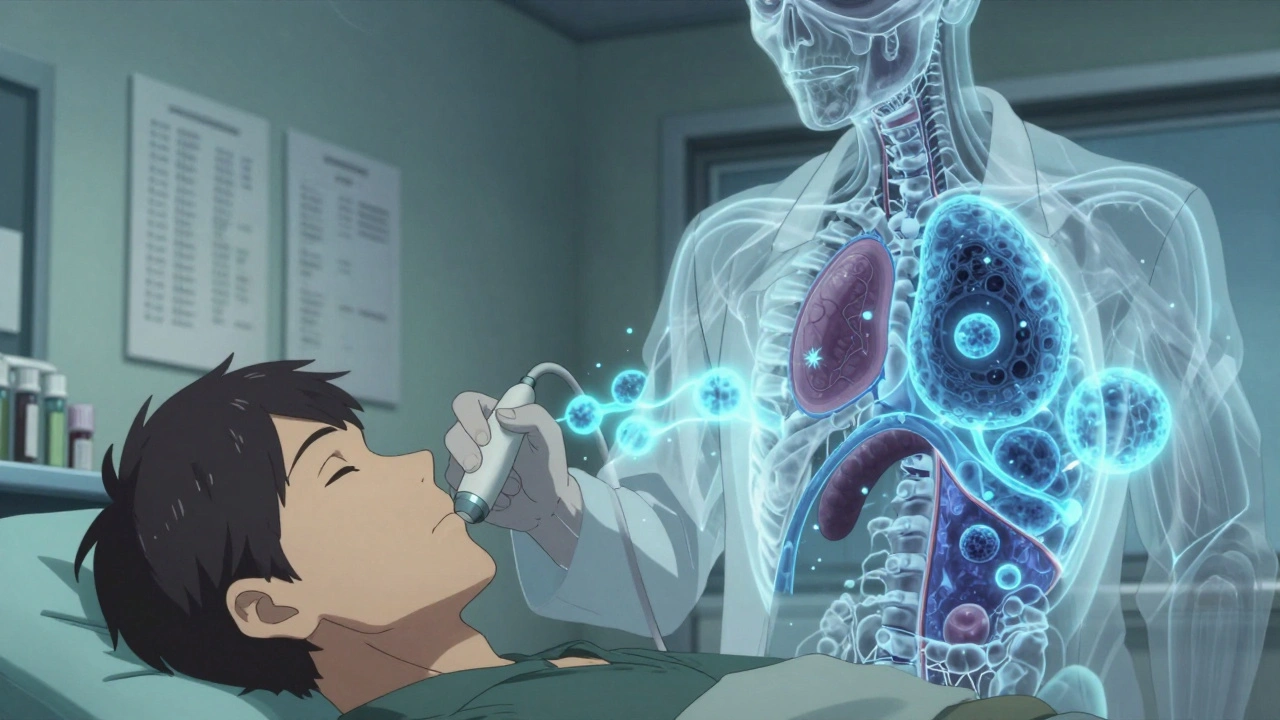
Blood tests check for two key autoantibodies: anti-SSA/Ro and anti-SSB/La. They’re present in 60 to 70% of cases. But here’s the catch: you can have Sjögren’s without them. That’s why doctors also use newer tools like salivary gland ultrasound. A 2022 study showed it detects the disease with 85% accuracy.
It’s not fast. Most people need three to four specialist visits - rheumatologist, ophthalmologist, dentist - over two to three months. And even then, it’s easy to get misdiagnosed.
What Makes It Different From Other Conditions
Dry eyes and mouth happen to everyone sometimes. But Sjögren’s is different.Age-related dryness? It’s mild. It doesn’t come with joint pain, fatigue, or nerve damage. Medication-induced dryness? Stop the drug, and it goes away. Sjögren’s? The damage lingers. Even if symptoms improve, the immune system is still active.
Compared to lupus or rheumatoid arthritis, Sjögren’s doesn’t destroy joints or kidneys as quickly. But it’s sneakier. It doesn’t show up on X-rays or blood panels the same way. That’s why it’s called the “great imitator.”
And then there’s sicca syndrome - dryness without autoimmunity. The difference? No autoantibodies. No lymphocytic infiltration in biopsies. No increased risk of lymphoma. Sjögren’s has all of those.
Treatment: Managing Symptoms, Not Curing the Disease
There’s no cure. But there are ways to live well.For dry eyes: preservative-free artificial tears. Not the cheap ones with chemicals that burn. Use them 8 to 10 times a day. Gel drops at night. Sometimes, tiny plugs are inserted into tear ducts to keep tears from draining too fast.
For dry mouth: sugar-free gum, lozenges, or sprays. Drink water constantly. Avoid alcohol, caffeine, and dry foods like crackers. Use a humidifier at night. Brush and floss after every meal - your risk of cavities is 5 to 10 times higher.
Prescription drugs like pilocarpine (5mg three times daily) or cevimeline (30mg three times daily) can stimulate saliva and tear production. About 60 to 70% of users report noticeable improvement. One Reddit user said pilocarpine “transformed my ability to eat normally.”
For systemic symptoms - joint pain, fatigue, nerve issues - hydroxychloroquine is often prescribed. It helps about a third of patients. For more severe cases, newer drugs like Efgartigimod (Vyvgart Hytrulo), approved by the FDA in June 2023, have shown a 35% improvement in dry mouth symptoms in clinical trials.
Dentists play a huge role. Patients need check-ups every 3 to 4 months, not 6. Fluoride treatments, sealants, and special toothpaste are non-negotiable.
What’s New in Treatment and Research
The last 18 months have brought real progress.In June 2023, the FDA approved Efgartigimod - the first new Sjögren’s treatment in 20 years. It works by blocking antibodies that attack glands. Clinical trials showed it didn’t just ease symptoms - it changed the disease course for some.
The National Institutes of Health launched the Sjögren’s Precision Medicine Network in March 2023. It’s tracking 5,000 patients across 25 U.S. sites to match treatments to individual biomarkers. Think of it like personalized medicine for autoimmune disease.
A $15 million research initiative called TARGET is now hunting for genetic markers that predict who will get severe symptoms. And 12 new therapies are in clinical trials - including biologics that target B-cells, the immune cells driving the attack.
Even diagnosis is improving. Salivary gland ultrasound is now part of European classification guidelines. It’s faster, cheaper, and less invasive than biopsies.

The Hidden Costs - Beyond the Physical
The financial toll is staggering. Annual healthcare costs for Sjögren’s patients are nearly three times higher than for healthy people of the same age. Dental care makes up 35 to 40% of that. Lost productivity? $3.8 billion a year in the U.S. alone.But the emotional cost? Harder to measure. A 2022 survey by the Sjögren’s Syndrome Foundation found that 87% of patients struggled with daily tasks because of dry mouth. 79% said eye pain affected their work. 63% felt isolated. 42% reported depression - more than five times the national average.
One woman on MySjogrensTeam wrote: “It took 18 months to find a gynecologist who understood vaginal dryness was part of my autoimmune condition.” That’s not just medical neglect - it’s systemic silence.
How to Live With It
You can’t cure Sjögren’s. But you can control it.- Hydrate constantly. Water isn’t optional. Keep a bottle with you everywhere.
- Use a humidifier. Keep indoor humidity between 40% and 60%. Especially at night.
- Protect your eyes. Avoid fans, wind, and screens without breaks. Use preservative-free drops.
- Watch your diet. Avoid dry, salty, or spicy foods. Choose moist meals. Chew slowly.
- See specialists regularly. Rheumatologist, ophthalmologist, dentist - all three. Don’t skip appointments.
- Track your symptoms. Use a journal or app. Note what makes symptoms better or worse.
- Find your community. Online groups like Reddit’s r/Sjogrens or MySjogrensTeam aren’t just support - they’re education.
And remember: this isn’t in your head. The fatigue, the brain fog, the pain - they’re real. If a doctor dismisses you, find another. You deserve care that sees the whole person.
What’s the Long-Term Outlook?
The good news? 90% of people with Sjögren’s live a normal lifespan. It’s not fatal - unless it leads to complications.The biggest risk? Non-Hodgkin lymphoma. People with Sjögren’s have a 4 to 5% lifetime risk - ten times higher than the general population. That’s why regular check-ups matter. Watch for swollen lymph nodes, unexplained weight loss, or night sweats.
Quality of life? That’s the real challenge. Studies show people with Sjögren’s report 30 to 40% lower quality of life than healthy peers. But with the right care, many find ways to adapt. They learn to eat differently. They schedule breaks. They use tech to remind them to blink. They speak up.
It’s not the life you planned. But it’s still a life worth living - if you have the right tools, the right team, and the right mindset.
I didn't realize how much I was normalizing my dry mouth until I read this. I used to chug water like it was my job just to get through dinner. Now I keep a little spray bottle in my purse and a humidifier on my nightstand. It's not glamorous, but it's life-changing.
Also, the part about brain fog? Yeah. I once forgot my own birthday. My mom had to remind me. I thought I was just tired. Turns out, my immune system was throwing a rave in my nervous system.
Don't let anyone tell you it's 'just aging.' It's not.
While the phenomenological experience of xerostomia and keratoconjunctivitis sicca is undeniably debilitating, one must interrogate the epistemological framework underpinning the diagnostic criteria. The reliance on subjective symptom reporting, coupled with the absence of a definitive biomarker, renders Sjögren’s Syndrome a constructivist diagnostic category rather than a discrete pathophysiological entity.
Furthermore, the proliferation of therapeutic interventions-particularly pilocarpine and cevimeline-exemplifies a pharmacological overreach predicated on symptom suppression rather than root-cause modulation. The immune dysregulation remains unaddressed, and the medical-industrial complex profits handsomely from perpetual palliation.
Bro. I’ve been living with this for 12 years. I used to cry because my lips cracked open like a dry riverbed. Then I found preservative-free drops and a humidifier that sounds like a tiny rainforest. Game. Changer.
And yeah, the brain fog? Real. I once tried to text my boss ‘meeting at 3’ and sent ‘meating at 3’ and then just… stared at my phone for 20 minutes wondering why he didn’t reply.
But here’s the thing - Efgartigimod? That’s the future. It’s not magic, but it’s the first thing in decades that actually made me feel like my body wasn’t trying to eat itself. I’m not crying, you’re crying. 😭💧
Oh wow. Another ‘you’re not alone’ sob story wrapped in a glossy NIH pamphlet. Let me guess - you also think the moon landing was real and that ‘self-care’ is a legitimate medical intervention?
Did you know that 90% of people with Sjögren’s are women? That’s not coincidence. That’s biology. And biology is inconvenient for the woke medical establishment. So now we’re treating dry eyes like a moral crusade?
Meanwhile, real autoimmune diseases like MS get ignored because they don’t come with cute Instagram hashtags like #SjogrensWarrior.
Wake up. This is performative medicine.
So… I read this whole thing. And I’m just sitting here wondering if I’m supposed to be impressed that someone finally wrote a 2000-word essay on… dry mouth?
Also, I tried the ‘preservative-free drops’ and they tasted like regret and plastic. Thanks for the tip.
Also also - who wrote this? It reads like a pharmaceutical ad written by someone who just got their first LinkedIn badge in ‘Autoimmune Advocacy.’
Let’s be clear - Sjögren’s is a symptom of systemic immune collapse driven by environmental toxins, processed food, and chronic stress. The medical establishment ignores root causes because profit lies in symptom management. Your ‘salivary gland ultrasound’? A Band-Aid on a hemorrhage.
True healing requires gut restoration, heavy metal detox, and circadian rhythm alignment. No pill will fix what your lifestyle broke. You’re not broken - your environment is.
I just spent 3 hours crying because I couldn’t swallow my oatmeal. Then I read this and felt seen. Then I cried harder because I realized I’ve been apologizing for my dry mouth for 8 years.
Like… I used to say ‘sorry, I’m just really thirsty’ when I asked for water at dinner. Like it was rude to need moisture.
Turns out I wasn’t being dramatic. I was just sick.
Thank you for writing this. I’m not alone. And I’m not weird. And I’m not being dramatic.
…I’m just tired. And I need a hug.