
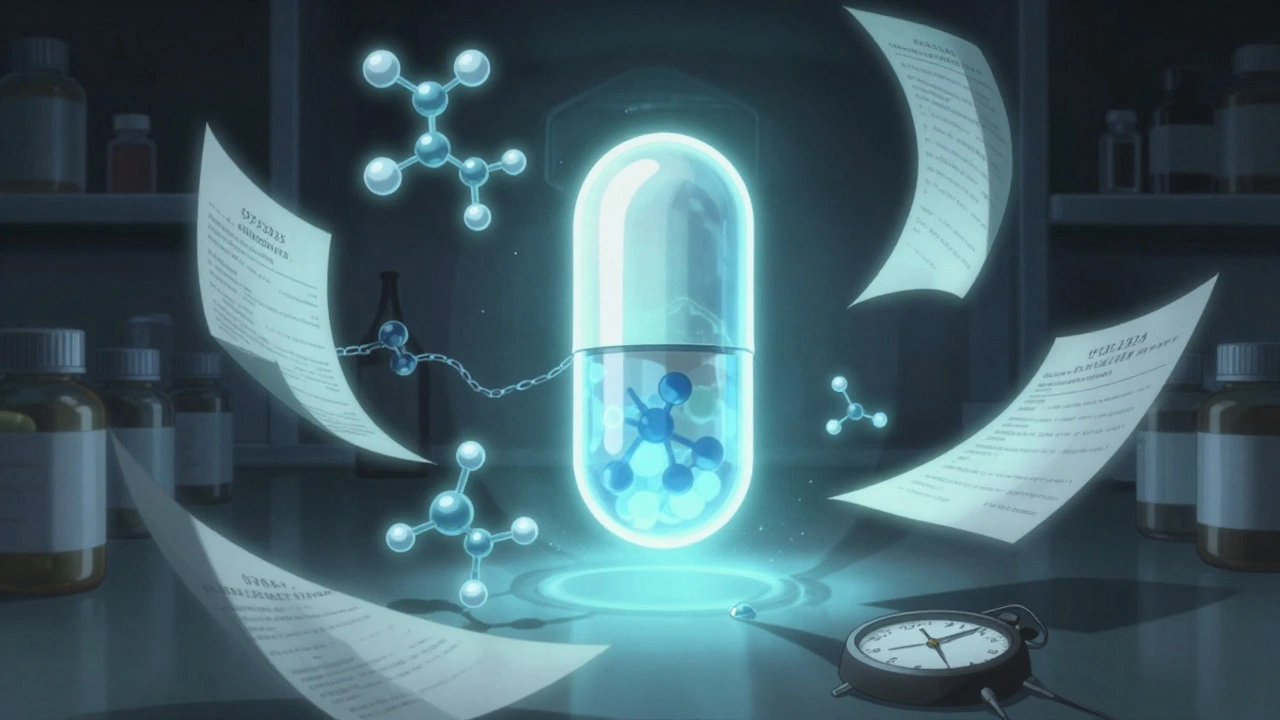
When a drug hits the market, the clock starts ticking on its monopoly. The primary patent - the one that protects the active chemical - usually expires after 20 years. But for many blockbuster drugs, the real money doesn’t stop when that patent runs out. That’s because companies have learned how to stretch their exclusivity using secondary patents. These aren’t new drugs. They’re tweaks. And they’re powerful enough to delay generic competition for years, sometimes decades.
What Exactly Are Secondary Patents?
Secondary patents don’t protect the active ingredient itself. That’s the primary patent’s job. Instead, they cover everything else: how the drug is made, how it’s taken, what form it’s in, or even what disease it treats. Think of it like upgrading your phone. The core technology is the same, but you get a new color, a better battery, or a new app that makes it feel like a different product. There are 12 common types of secondary patents in pharma. Some protect new crystal forms of a drug (polymorphs). Others cover specific doses, like a once-daily pill instead of three times a day. Some protect new combinations - say, adding a second drug to reduce side effects. Then there are method-of-use patents, which claim a drug works for a new condition. Thalidomide, once banned for morning sickness, got a new patent for treating leprosy and later multiple myeloma. That’s not a new drug. It’s a new use. And it’s enough to block generics. Formulation patents are especially common. AstraZeneca’s Nexium is a classic example. The original drug, Prilosec, was a mix of two mirror-image molecules. Nexium is just one of those molecules - the more effective one. It’s not a new chemical. But because it was patented as a new formulation, AstraZeneca extended its market control for nearly eight years. By the time generics hit, Nexium had become the dominant brand, and doctors and patients were used to it.How Do They Delay Generic Drugs?
Generic manufacturers can’t enter the market until all listed patents expire. In the U.S., the FDA keeps a public list called the Orange Book that includes patents a company claims protect its drug. Only certain types of patents can be listed - mainly formulation and method-of-use patents. But companies don’t list all of them. They keep some as "reserve" patents, ready to be used if a generic challenger gets too close. The result? A patent thicket. A web of overlapping protections. For Humira, AbbVie filed 264 secondary patents. The primary patent expired in 2016. But because of the thickets, the first biosimilar didn’t enter the U.S. market until 2023. That’s seven extra years of monopoly pricing. During that time, Humira brought in over $20 billion in annual revenue. Without those secondary patents, that money would’ve gone to cheaper alternatives. Drugs with secondary patents face generic entry delays that are, on average, 2.3 years longer than those without. And it’s not just time - it’s cost. Generic manufacturers spend $15 to $20 million just to fight these patent battles. Many don’t even try. The legal risk is too high.Who Benefits? Who Pays?
The pharmaceutical industry says secondary patents drive innovation. PhRMA argues they lead to better dosing, fewer side effects, and new uses for existing drugs. They point to chemotherapy formulations that reduced nausea by 37% - improvements that matter to patients. But critics call it "evergreening." Harvard’s Dr. Aaron Kesselheim found that only 12% of secondary patents represented real clinical improvements. The rest? Minor changes - like switching from a capsule to a tablet - with no real benefit to patients. Yet they cost billions. Pharmacy benefit managers like Express Scripts say secondary patents raise their costs by 8.3% each year. That’s money pulled from insurance funds, out-of-pocket expenses, and Medicare. Patients pay more. Taxpayers pay more. And the biggest winners? Companies with the deepest pockets. Pfizer alone holds over 14,200 active secondary patents. The top 10 drugmakers control 73% of them. And it’s not random. The more a drug earns, the more patents it gets. For every extra billion in annual sales, a company’s chance of filing a secondary patent jumps by 17%. It’s not about innovation. It’s about protecting revenue.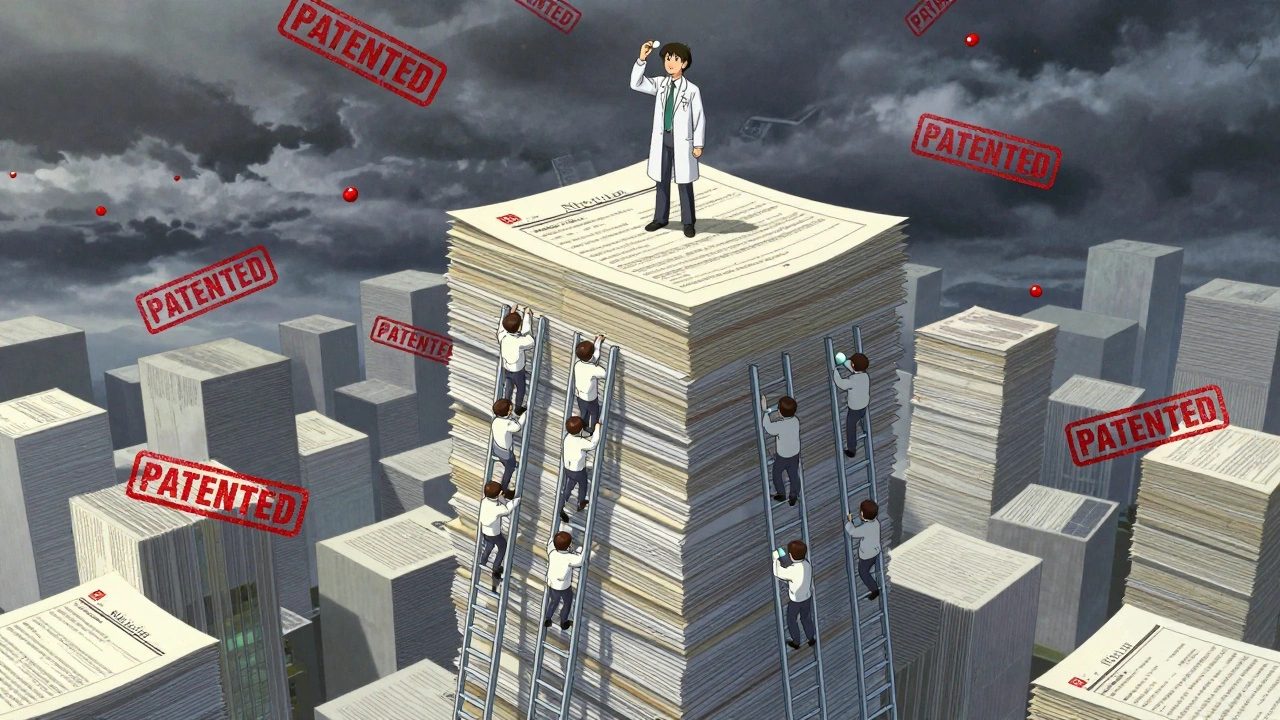
Global Differences: Where It Works and Where It Doesn’t
Not every country plays by the same rules. India’s patent law, Section 3(d), blocks patents on new forms of known drugs unless they show a significant increase in efficacy. In 2013, Novartis lost its bid to patent a new crystal form of Gleevec. The court ruled it wasn’t innovative enough. That decision opened the door for affordable generics across the developing world. Brazil requires health ministry approval before a patent can be enforced. The European Union demands "significant clinical benefit" for certain secondary patents. In contrast, the U.S. has been permissive. The Hatch-Waxman Act of 1984 created the framework that made secondary patents possible - and profitable. This creates a global patchwork. A drug like Tamiflu kept its U.S. exclusivity until 2016 thanks to secondary patents. But in India, generics were available by 2011. The same drug. Different prices. Different access.How Companies Plan Their Patent Strategy
Secondary patenting isn’t accidental. It’s a planned, multi-year operation. Lifecycle management teams start working on it five to seven years before the primary patent expires. Formulation patents are filed three to four years out. Method-of-use patents often come after the drug is already on the market. Timing matters. Companies often launch a new version - say, a longer-acting pill - one or two years before the old patent expires. This is called "product hopping." It’s not illegal. But it’s strategic. Doctors switch patients to the new version. Pharmacies stock it. Patients get used to it. By the time generics arrive, the old drug is nearly gone. Each secondary patent costs $12-15 million to file and defend. Big pharma employs 15-20 patent attorneys per major drug. They monitor generic filings 7-10 years in advance. They build legal defenses before the threat even appears.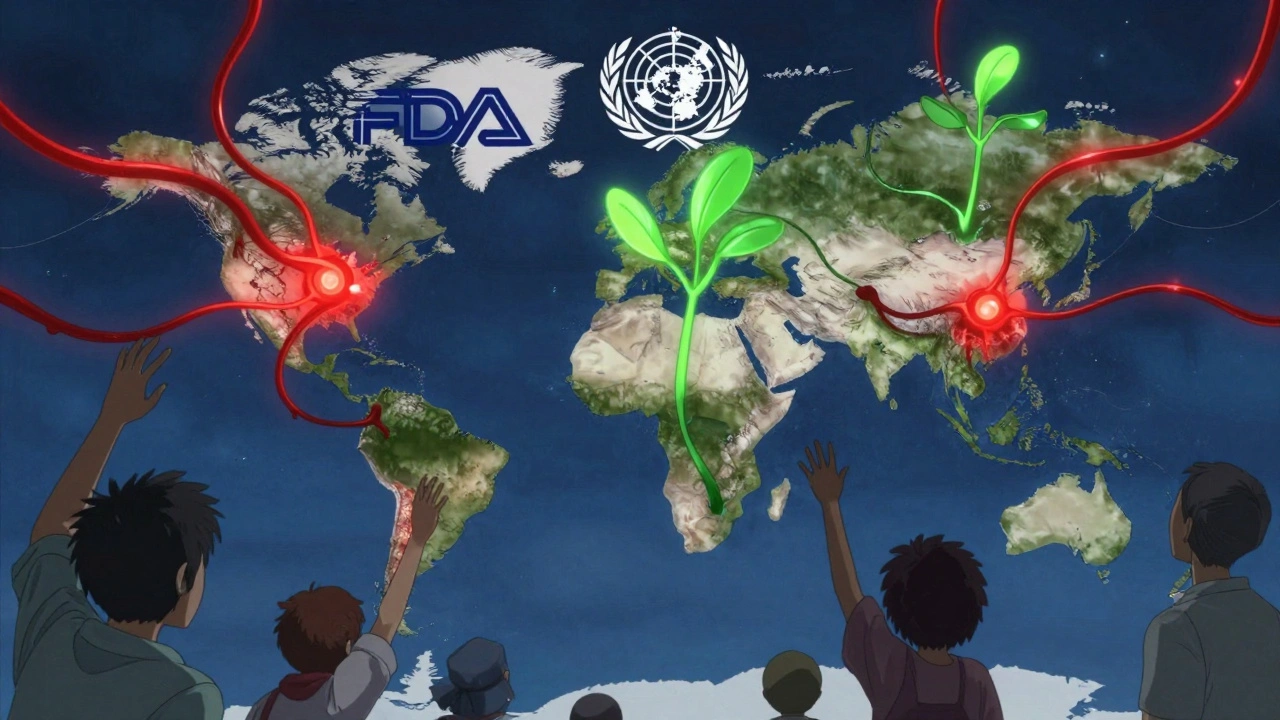
So let me get this straight - we’re paying $20k a year for a drug that’s chemically identical to a $20 generic, just because some lawyer figured out how to patent the color of the pill? Brilliant. Absolute genius. I’m sure the patients are thrilled they can now take their life-saving med in a slightly shinier capsule.
in india we stopped this crap with section 3(d) back in 2013. novartis tried to patent gleevec’s new crystal form and lost. now generics are cheap and people live. usa is just letting big pharma rob everyone. no wonder so many indians come to usa for treatment - they can’t afford it here!
It’s not just secondary patents - it’s the entire regulatory capture. The FDA, Congress, the courts - they’re all on Big Pharma’s payroll. The system is designed to fail patients. End of story.
man i just want to take my meds without feeling like i’m being scammed. i get that companies need to make money, but this is next-level greed. like, can we at least make the pills taste better or something? 😅
India’s patent law is a joke. You think you’re helping the poor by allowing generics? You’re killing innovation. Without patents, no one invests in R&D. The West builds the drugs - you just copy them. That’s not progress, that’s theft dressed up as morality.
Did you know the FDA is secretly owned by Pfizer? They’ve been inserting patent loopholes since 1984. The Inflation Reduction Act? A distraction. They’re just buying time while they patent the *air* around the pill. Soon, you’ll need a license just to breathe near your own medicine.
Let’s be honest: this isn’t about innovation - it’s about maximizing shareholder value at the expense of human life. The fact that Humira’s 264 patents were allowed is a national disgrace. The system isn’t broken - it’s working exactly as intended. For them.
As someone from the UK, I’ve seen this play out in the NHS. We’ve got a system that tries to push back - but even we’re starting to buckle under the pressure. The US model? It’s a capitalist nightmare dressed in white coats. And the worst part? People believe it’s normal.
Change is coming - slowly, but it’s coming. More courts are seeing through the tricks. More patients are speaking up. And yes, generic manufacturers are finally getting better at fighting back. We’re not powerless. Keep pushing. Keep asking why. The system can be fixed - if we refuse to look away.
It’s worth noting that while secondary patents are often criticized, they do occasionally yield meaningful improvements - such as reduced dosing frequency or fewer side effects. The problem isn’t the concept - it’s the abuse. A balanced approach, grounded in clinical outcomes rather than corporate strategy, would serve patients and innovation far better than outright elimination.
Oh wow, Myson, you’re right - what if we just… asked for real improvements? Like, maybe a version that doesn’t cost $1,200 a month? Maybe one that doesn’t require a PhD to file a patent application? Maybe one that doesn’t involve bribing Congress? Just a thought.